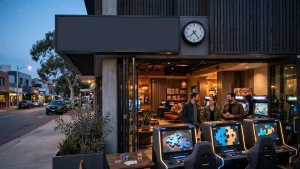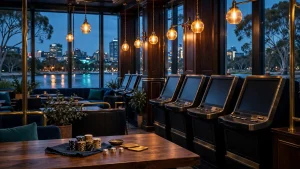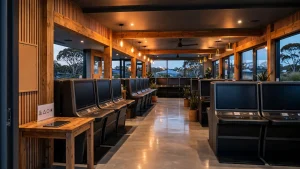
Venue opening listings may not confirm gaming-room access, so current venue information and a direct check matter before setting out.
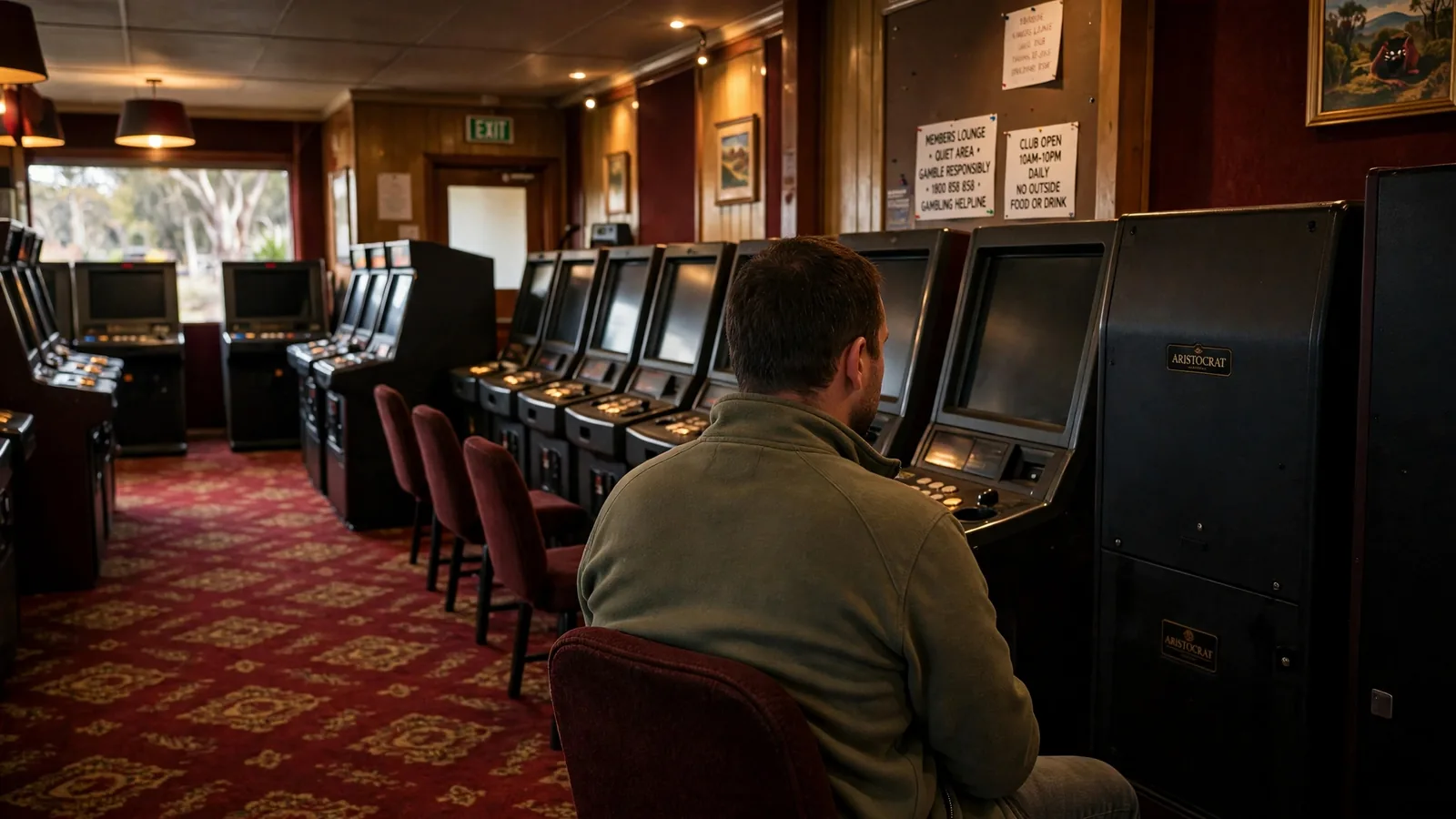
A result that labels a Tasmanian pokies venue “open now” is a starting point, not confirmation that its gaming room is available when you arrive. Search listings can be incomplete or out of date, and a venue’s general opening status does not necessarily tell you whether every part of it is operating. If the trip depends on playing, check directly with the venue before setting out.
Start with information published by the venue itself. Look for a current notice on its official website or its own social media page, and check whether the information refers to the date you plan to visit. A search result may display opening details without making clear when they were last checked. Treat an undated listing as a prompt to verify, rather than a reliable answer.
Then confirm the detail that matters: whether the gaming room is open at the time you intend to arrive. Asking whether the venue is open may not settle that question. If a phone number is provided through an official channel, contact the venue and ask specifically about access to the pokies. You can also ask whether any temporary change affects the time you have in mind. A direct answer is more useful than a broad label attached to a listing.
The word “open” can describe different things. A venue may be open for one purpose while a particular area is unavailable, or its usual schedule may have changed. The point is not to assume that this is happening at any particular Tasmanian venue; it is to avoid treating a general opening status as proof that the gaming room is operating.
When you check, keep the question precise. Ask whether the gaming room is open now, whether it will be open when you expect to arrive, and whether the answer applies to the date of your visit. If you are planning around an early or late arrival, say so plainly. There is little value in confirming a venue’s daytime schedule if your plans depend on a different part of the day.
For a visit planned ahead, check again close to departure. A schedule viewed earlier may not reflect a later change. If the venue’s own information gives different answers in different places, do not choose the most convenient one and call the matter settled. Contact the venue and ask which information applies. Keep the answer tied to your intended arrival rather than relying on a generic weekly schedule.
An “open now” label is useful for narrowing down possibilities, but it may not show whether the information comes from the venue or whether it covers the gaming room. It may also be tied to a general listing rather than a notice about current operations. That distinction matters when you are making a trip specifically to play pokies.
The same caution applies to opening times copied across directories and maps. A listing can look definitive while leaving out an exception, a temporary change, or the difference between the venue and its gaming area. Even when several listings agree, they may not answer the exact question you need answered. Multiple copies of an unclear detail do not make it clear.
Searching for early access, late access, or a particular time does not remove that uncertainty. A time appearing in a result is not, by itself, confirmation that the room will be open then. Check the venue’s own current information and ask directly if the answer is not explicit. Avoid setting out on the strength of a search snippet alone.
Use a short sequence: identify the venue through its official information, check for a current notice, confirm that the detail refers to the gaming room, and contact the venue if anything remains unclear. If you cannot confirm the time, plan on that uncertainty rather than treating a search label as a promise. Do not assume that a past visit or an old listing tells you what is happening today.
It also helps to check the date attached to any notice. A statement about regular hours is not necessarily a confirmation for a particular day, especially if you are travelling specifically for the gaming room. If the venue’s information does not say whether an exception applies, ask. A clear answer about the intended visit is better than inferring one from a broad schedule.
For searches such as “pokies open in Tasmania,” there is no single answer that applies to every venue and every arrival time. The useful result is not simply a place marked open; it is current, venue-specific confirmation that the gaming room will be accessible when you plan to go. Treat “open now” as a lead to check, not the final word.
If you’re looking for pokies options in Tasmania in 2026, this list gives you a concise reference point for reviewing the available operator details. Check the information that matters to you before choosing where to play.
SkyCrown
You can note SkyCrown’s Tobique Gaming Commission license and A$30 minimum deposit. Its stated payout times are around 10–15 minutes for crypto and 1–5 days for fiat.
Kingmaker
You can make a minimum deposit of A$30 at Kingmaker. Its stated payout times are around 90 minutes for crypto and 1–5 days for fiat.
LevelUp Casino
You can note LevelUp Casino’s Curacao eGaming license, listed as OGL/2023/174/0082 under Dama N.V. Its minimum deposit is A$15.
Neospin
You can note Neospin’s Curacao Gaming Control Board license, listed as OGL/2023/176/0095 under Hollycorn N.V.
House of Pokies
You can use PayID to deposit from A$10 at House of Pokies; its stated minimum deposit is A$30 generally. The source describes its license as an international iGaming licence but does not name the jurisdiction, and gives PayID payout times of 1–24 hours.
Uptown Pokies
You can note Uptown Pokies’ Curacao license and that it has been operating since 2017. Its minimum deposit is A$20.
LuckyVibe
You can note LuckyVibe’s Curacao Gaming Control Board license, listed as OGL/2023/176/0095 under Hollycorn N.V.
Wild Tokyo
You can make a minimum deposit of A$10 at Wild Tokyo, which lists a Curacao license. Its stated payout times are 30–60 minutes for crypto and 1–5 days for fiat.
7Bit Casino
You can note that 7Bit Casino is operated by Dama N.V. and lists a Curacao license.
DragonSlots Casino
You can note DragonSlots Casino’s Curacao Gaming Authority license and that it is operated by Jumpman Gaming Ltd.
“Best” needs a criterion. If you are comparing pokies in Tasmania, first decide whether you mean a published return setting, a particular style of play, or simply a game you find enjoyable. Those are different tests, and one pokie cannot be declared the winner on all of them.
For a comparison based on potential returns, start with the game’s stated return to player (RTP), then check that the figure applies to the version and setting offered at the casino you are considering. RTP is a theoretical measure, not a forecast of what you will receive from a session. A higher published setting can be a useful point of comparison, but it does not make a particular result more likely on your next spin.
The detail matters because some providers allow casinos to choose between different RTP settings for the same pokie. A specialist review has reported that this can mean one game carries different return percentages at different casinos. So the game’s name alone is not enough to establish that two versions offer the same setting. Look for casino-specific information, and treat a figure that is not clearly tied to the version as an incomplete comparison.
| Comparison question | What it tells you |
|---|---|
| Is an RTP stated for this casino’s version? | Whether you have a figure you can compare |
| Does the information identify the relevant setting? | Whether it appears to describe the version actually offered |
| Are you judging theoretical return or a short session? | Whether the comparison is about a published measure or a result that can vary |
Without the setting, a ranking by title can suggest a precision it does not have.
The phrase “best paying” also needs care. A return figure does not identify a machine that will pay out for you, nor does it tell you when a payout will happen. Each spin is generated independently by the game’s random number generator. The result of an earlier spin does not set up the next one, and a run of wins or losses does not turn a machine into a predictable choice.
That distinction helps separate a comparison from a prediction. You can compare published information where it is available; you cannot use a past sequence to know what the next spin will do. A pokie with a higher stated return setting is not a promise of a better individual session. The average is not your receipt.
Other preferences can matter too, but they should be labelled as preferences rather than evidence of better returns. You may care more about a game’s pace or presentation than its published setting. If so, “best” means the one whose style suits you, not the one with a proven advantage. Keep that judgement separate from claims about payouts.
A practical scorecard can therefore be short: identify the exact game, record the casino-specific RTP information if it is stated, and note whether your choice is based on that measure or on personal preference. If the return setting is unclear, do not fill the gap with a ranking, a story about a lucky machine, or a confident-sounding claim. Mark it as unknown and compare only what is actually stated.
This approach applies whether you are considering a casino in Tasmania or trying to make sense of a broader list of pokies. The setting, not just the title, is relevant to a return comparison; randomness, not a machine’s recent history, governs an individual spin. Your preferred choice depends on which criterion matters most to you. If the criterion is theoretical return, compare the applicable published settings. If it is enjoyment, say so plainly. Those are honest answers to different questions.
A neat ranking may look decisive, but neatness is not evidence. The useful comparison is the one that makes its criterion visible, distinguishes a stated setting from a personal preference, and does not turn an average into a promise.
“Near the airport” is not a complete location. Tasmania has more than one airport, and a result labelled simply as being in Tasmania may refer to a different arrival point or destination from yours. Before planning a trip around pokies, identify the airport you will use and the town or area you intend to visit. A broad regional label does not tell you whether a place fits your route.
The same applies to searches for pokies near the CBD. Confirm which city’s central area you mean, then compare the result’s mapped position with your actual starting point and destination. A venue can appear in a broad CBD search without being a practical stop for your particular journey. The useful measure is not whether a result carries the right label, but whether its location works for your itinerary.
For an airport-to-destination trip, compare the whole route rather than judging from a pin alone. Check the address against a map, look at the roads or public transport options you would use, and consider whether the stop requires a detour. If you are travelling with other people, carrying luggage or collecting a hire car, those details can change what “nearby” means in practice. A result that looks close on a map may still be awkward to reach.
A short list is more useful than a broad search. Note the airport or CBD you will start from, the destination you are travelling to, and any area you are willing to visit along the way. Then compare candidate locations against those points. This avoids treating “near me” as a reliable description when your device location may be imprecise, unavailable or set to a different place.
North Tasmania is also too broad to serve as a travel plan by itself. Narrow it to the town or district that matters to your trip, then assess locations in relation to that destination. If you are heading somewhere outside the main urban area, do not assume a regional label means a convenient stop is on your route.
People arriving from Victoria may also find that a search combining Tasmania and Victoria returns results tied to different parts of a trip. Keep the state or destination you mean clear when comparing map results. The wording of a label is not a substitute for checking the actual address.
Before setting out, verify that the mapped location is the one you intend to visit and that the route makes sense from your starting point. If a result does not show a usable address, or its position is unclear, do not build your travel plan around it. For location planning, a precise destination and a realistic route are better criteria than a loose promise of being close.
A useful venue comparison is about how a place handles its responsibilities, not just whether it has pokies. Before settling on a venue, consider what you can confirm about its safeguards and how staff respond when gambling appears to be causing harm. That gives “best” a practical test: the stronger choice is the one whose procedures are clear and whose staff can explain them.
A report by regionriverina.com.au says that, from 1 July, a venue operating more than 20 gaming machines must have a dedicated responsible gambling officer (RGO) on duty whenever those machines are running. The threshold matters: this requirement is described for venues above it, not for every venue regardless of size. If you want to know whether the rule applies at a particular place, ask how many machines it operates and whether an RGO is on duty while they are in use.
An RGO is a venue-level safeguard, not a promise that gambling will be risk-free. For a visitor, the practical point is whether staff can identify who holds that responsibility and how a patron can raise a concern. A direct answer is more useful than a general statement about responsible play. If you are unsure whom to approach, ask staff rather than trying to infer the process from a sign or a machine.
The same report says venues are required to keep a gambling incident register. It is intended to capture details of relevant occurrences, including behaviour indicating that a patron may be at risk of gambling harm or already affected by it. This makes the register more than a record of complaints: it concerns observed situations where intervention may be needed. The report does not mean a visitor can inspect private incident records; the useful question is whether staff know how concerns are handled and who is responsible for recording them.
When comparing Tasmanian pokies venues, keep the check specific:
These are questions about operations, not guarantees of a particular outcome. A venue may have formal procedures, but their value depends on staff recognising a concern and responding appropriately. You can judge the clarity of the answers without asking for personal details about other patrons or access to confidential records.
If you are choosing between places, write down the answers rather than relying on a vague impression. Compare the same points at each venue: who is responsible, how a concern reaches them, and whether the incident-recording process is understood. That is a more defensible basis for calling one venue a better fit than relying on an unsupported label such as “best”. Clear procedures matter.
A trip on the Spirit of Tasmania and a search for pokies in Tasmania are separate matters. Do not assume gaming machines are available aboard the ferry: treat that as unconfirmed unless the operator’s current passenger information specifically says otherwise. A vessel’s entertainment or onboard services do not, by themselves, establish that it has pokies.
Legal Risk
No Australian online casino licences have been issued; using offshore sites means you have no local legal recourse if a provider refuses to pay winnings.
The same distinction applies to casino names attached to Tasmania. A search phrase that combines “Crown” and “Tasmania” does not establish that a particular casino is in Tasmania, or that it has a connection to the ferry. Check the actual venue and location rather than treating a name in a search result as proof.
Online play raises a different issue: Australian law. The Interactive Gambling Act 2001 makes it illegal for companies to provide real-money online pokies to people in Australia without a domestic licence. No Australian online casino licences have been issued, so there is no Australian-licensed online casino.
That matters when an offer is presented as a way to play for real money from Tasmania. A “no deposit” bonus does not change the legal status of the service offering it. The key distinction is not whether you deposit first, but whether an online casino is legally permitted to provide real-money play to people in Australia. There is no domestic licence for such a casino.
There is also a practical risk beyond the legal position. If an offshore casino refuses to pay your winnings, you have no legal recourse in Australia to recover them. That leaves you without the local legal protection a reader might assume comes with a casino-style website. A bonus cannot fix that. Not a small detail.
Keep the questions separate when planning: confirm ferry facilities through the operator’s current information, and do not mistake an online casino promotion for a lawful local option. Pokies aboard a ship, a physical venue in Tasmania and real-money play on a website are three different propositions. A shared word such as “casino” does not make their availability or legal position the same.
A claim that pokies are available around the clock is useful only if it applies to the particular venue you plan to visit. A general description, an old listing or a result marked “open now” does not establish that a Tasmanian gaming room is currently operating, or that its machines are available at the time you arrive. Opening arrangements can differ between venues and can change, so treat broad claims as a prompt to confirm—not as confirmation.
For a dependable answer, check the venue’s own current information and contact it directly if the hours are unclear. Ask specifically whether the gaming room is open at your intended time; a venue may have other services or areas operating under different arrangements. If you are travelling late at night or making a special trip, confirm close to departure rather than relying on a saved page or a search result that may not reflect a recent change.
The distinction matters because “24-hour” can be read in more than one way. It might describe the venue’s overall operation, a particular service, or access to machines. Those are not interchangeable. A listing that leaves the detail vague does not tell you whether the pokies themselves are available continuously. There is no reliable shortcut from a broad claim to a confirmed opening time.
There is also a separate staffing requirement. A report by regionriverina.com.au says that, from 1 July, venues operating more than 20 gaming machines are required to have a dedicated responsible gambling officer (RGO) present while those machines are running. That requirement concerns staffing during machine operation; it does not set a venue’s opening hours or establish that any Tasmanian venue is open all day and night.
Keep the two checks separate: confirm the hours with the venue, then understand that the RGO rule applies during machine operation at venues above the stated machine threshold. The staffing condition is not evidence of continuous access. A rule about who must be on duty is not a timetable.
If the venue cannot clearly confirm that its gaming room will be open when you plan to arrive, do not treat a broad “24-hour” label as enough. Check again through a current venue channel before setting out. For this kind of trip, a direct answer is more useful than a confident-looking listing.
A run of wins can make a pokie seem “hot”; a run of losses can make it seem overdue. Neither impression tells you what the next spin will do. Each spin is generated separately by a Random Number Generator (RNG), so previous outcomes do not set up, delay or predict a later result.
That matters when you are trying to decide what “best” means. A machine that has just paid out is not thereby more likely to pay again, and one that has gone quiet is not building toward a win. The pattern is tempting to read. It is not a forecast.
A record of earlier spins describes what has already happened. It cannot reveal the result of a future spin. Even a long sequence that looks unusually generous or unusually poor does not turn the next spin into a predictable event.
This is why stories about a machine being ready to pay are not a sound basis for choosing where to play. A visible sequence may feel meaningful, especially when you are watching several outcomes in a row, but the outcomes remain separate random events. Memory also favours striking moments: a win is easier to recall than a stretch of ordinary spins.
If you are considering pokies in Tasmania, treat “hot” as a casual description of recent results, not as evidence of an advantage. The same applies to claims that a machine is cold, due or likely to produce a particular outcome. Those labels describe a belief about the past, not reliable information about the next spin.
Each spin is generated independently by a Random Number Generator (RNG), meaning previous outcomes cannot be used to forecast future results.
Questions about maximum bets or the largest possible cash payout can sound like questions about which machine is most likely to produce a major win. They are not the same thing. A possible payout does not tell you how likely it is to occur, and a recent result does not make it more likely on the next spin.
The Random Number Generator does not provide a readable sequence for players to use as a forecast. There is no dependable timing clue in the last result, the length of a losing run or the size of a previous win. A large bet does not make a future result predictable either.
For a grounded view of the best pokies in Tasmania, separate what you can observe from what you cannot infer. You can see an outcome after it happens. You cannot use that outcome to know what comes next. That is less exciting than a “due” machine story. It is also the useful distinction.
Set your own spending and stopping point before you play, rather than changing your plan because a machine appears to be on a streak. A streak is a description, not a signal.
A request for online pokies in Tasmania can sound like a local venue search, but an internet service is a different legal question. The location in the wording does not change the rules: Australia has no licensed online casino, and the Interactive Gambling Act 2001 prohibits operators from providing real-money online casino games to people in Australia.
The law is directed at the businesses providing the service, not at individual players. Australians are not made criminally liable simply for playing on an offshore site that accepts them. That distinction matters, but it does not make an offshore casino a safe or locally protected option.
The practical risk is clearest if a site refuses to pay winnings. Australian players have no legal recourse in Australia against an offshore casino in that situation. A website may display terms, payment options or claims about its oversight; none of those removes the difficulty of pursuing a dispute with a business operating outside Australia. A displayed licence from another country is not an Australian online-casino licence.
That is the key limit behind searches for online pokies near Tasmania or for a casino online from Tasmania: an online service is not a Tasmanian gaming room, and no Australian-licensed online casino is available. A local-sounding name or a page aimed at Australian readers does not establish that the operator is authorised here.
Likewise, phrases such as “best paying” or “high limit” do not establish that an online offer is lawful, reliable or likely to pay. They describe claims a site may make, not protection you can enforce in Australia. Treat the distinction between a promotional promise and a remedy for a withheld payout as decisive. Fine print cannot create a local legal route where one does not exist.
If your aim is to play pokies in Tasmania, keep the online and in-person questions separate. An online result is not evidence of a physical venue, and a local reference on a website does not provide the protections of an Australian-licensed online casino. The operator’s legal position and your ability to recover money are not the same thing. That is a material risk, not a technicality.
Attention: An online result is not evidence of a physical venue, and a local reference on a website does not provide the protections of an Australian-licensed online casino.
A club’s location does not tell you whether it has pokies, and a CBD label is not a measure of how well its safeguards work. If you are comparing clubs, focus on the protections that apply to gaming-machine venues and how staff respond when gambling appears to be causing harm.
A report by regionriverina.com.au described a requirement for venues to keep a gambling incident register. It is intended to record occurrences, including situations where a patron’s behaviour suggests they may be at risk of gambling harm or already affected by it. The register is an operational safeguard: it gives the venue a formal way to document incidents rather than treating each one as an isolated conversation.
The same report described a one-month grace period for venues to remove signage and introduce responsible gambling officers (RGOs). It also reported that venues with more than 20 gaming machines must have an RGO on duty while the machines are operating. These are distinct measures: signage changes affect what patrons are directed towards, while an RGO is a staff role on duty during machine operation. A sign being present or absent cannot establish how a venue handles a difficult interaction.
Sign placement matters. Signage directing patrons to gaming lounges should be removed if it is within eyeshot of ATMs or EFTPOS terminals. Signs directing patrons to ATMs should be removed if they are within eyesight of gaming machines. These restrictions are relevant when you assess the environment around a gaming area, not just the room itself.
Self-exclusion is another responsible-gambling tool. It is a way for a person to restrict their own access to gambling, rather than a measure for identifying which club is “best”. If this option matters to you, consider whether you can find clear information about how a venue handles a request and who can explain the process. The usefulness of a safeguard depends on whether it can be understood and acted on.
For a club comparison, separate what you can observe from what you need to ask: how incidents are recorded, whether an RGO is on duty when required, and whether signage is positioned appropriately. Those criteria are more meaningful than assuming every club in a CBD has pokies or provides the same experience. Safeguards, not labels.
A cashless option may sound like a simple feature to compare, but the label can cover different arrangements. It might mean paying for play without handling cash, or using a card or another payment method at a machine. Those descriptions do not establish that a particular Tasmanian venue offers cashless pokies, or explain how its system works.
For a practical comparison, look for confirmation from the venue itself. Check what payment methods are accepted, whether cashless play applies to the machines you intend to use, and whether any account, card or registration is required. Ask how funds are added and withdrawn, and whether a cash option remains available. These details matter more than a general claim that a venue is cashless.
Treat availability as unconfirmed unless the venue provides current, specific information. A payment logo, a general description of a venue or an old third-party listing is not enough to settle the question. The comparison criterion is clear: confirmed machine-level availability beats a broad payment claim.
The Newcastle wording needs the same care. It does not, by itself, identify a Tasmanian venue or establish that a place with that name belongs in a Tasmania-focused comparison. Before relying on a result, check the full location and the venue’s own details; otherwise, you may be comparing places that are not in the same area.
If you are making a table, record the venue, the exact cashless method described, where it can be used and when the information was confirmed. Leave any unconfirmed cell blank rather than turning an assumption into a recommendation. That is a less dramatic result, but a more useful one.
You must be at least 18 years old to gamble online in Australia.
You can legally play on offshore sites that accept Australian players, but offering real-money online pokies to Australians without a domestic licence is illegal for operators. No Australian-licensed online casinos exist, and you have no legal recourse in Australia if an offshore casino withholds your winnings.
Each spin is determined by a random number generator and is independent of previous spins. The same game can have different RTP settings at different casinos, so check the setting for the specific version you’re playing.
It’s the amount you must bet before you can withdraw bonus-related winnings, usually calculated as a multiple of the bonus or deposit plus bonus. For example, a $500 bonus with a 40x requirement means $20,000 in bets before withdrawal.
Compare the RTP stated for the specific game version and casino, but remember it is a long-term theoretical measure, not a prediction for your session. Each spin is independent, so previous results do not provide a way to predict the next one.
There is no Australian-licensed online casino, and playing at an offshore site leaves you without legal recourse in Australia if it refuses to pay. Treat claims of safety cautiously and consider whether you are willing to accept that risk.