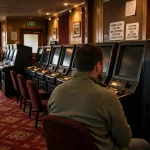
The name alone does not confirm a specific title, version, maker or availability, so game details and session rules need checking.

“Big Red” can be read as a clue to what you want to find, but it does not identify a particular pokie by itself. A name in a web address, page title or casino menu is not enough to establish which game is meant, who made it or whether the same name is used consistently. Treat the wording as a starting point for identification, not as proof that a specific title or version is available.
That distinction matters when you are looking for Big Red online pokies in Australia. Several phrases can point toward the same general interest—an online pokie associated with the words “Big Red”—without naming a confirmed game. A result might use the phrase as a category label or describe a product in its own terms. Until the actual game and its details are clear, comparisons based only on the name have little value.
Before drawing conclusions from a page, look for information that identifies the game itself. A clear title and consistent product details are more useful than a prominent heading that repeats “Big Red”. If those details are vague, contradictory or absent, you cannot reliably tell what the page is offering. Nor should you assume that two pages using similar wording refer to the same product.
If you’re looking for Big Red pokies online in Australia in 2026, this list gives you a quick reference to the operators’ stated licensing and payment details. Use those specifics to see which options may fit what you’re looking for.
SkyCrown
SkyCrown lists a Tobique Gaming Commission licence. You can deposit from A$30, with crypto payouts stated at around 10–15 minutes and fiat payouts at 1–5 days.
Kingmaker
Kingmaker states crypto payout times of around 90 minutes and fiat payouts of 1–5 days. Its minimum deposit is A$30.
LevelUp Casino
LevelUp Casino lists Curacao eGaming licence OGL/2023/174/0082, held by Dama N.V. You can deposit from A$15.
Neospin
Neospin lists a Curacao Gaming Control Board licence, OGL/2023/176/0095, held by Hollycorn N.V.
House of Pokies
House of Pokies lists an international iGaming licence, though its jurisdiction is not named. PayID payouts are stated at 1–24 hours; the minimum deposit is A$30, or A$10 with PayID.
Uptown Pokies
Uptown Pokies lists a Curacao licence and has operated since 2017. Its minimum deposit is A$20.
LuckyVibe
LuckyVibe lists a Curacao Gaming Control Board licence, OGL/2023/176/0095, held by Hollycorn N.V.
Wild Tokyo
Wild Tokyo lists a Curacao licence. Its stated payout times are 30–60 minutes for crypto and 1–5 days for fiat, with a minimum deposit of A$10.
7Bit Casino
7Bit Casino lists a Curacao licence and is operated by Dama N.V.
DragonSlots Casino
DragonSlots Casino lists a Curacao Gaming Authority licence, held by Jumpman Gaming Ltd.
The same caution applies to claims about a provider. A familiar-looking name or a polished game image does not, by itself, establish who made the pokie. Provider identity should be supported by clear information connected to the game, rather than inferred from the wording of an advertisement or the appearance of a page. If the identification is unclear, the sensible comparison is between what each page actually discloses—not between assumed versions of a game.
This is a practical limit, not a technicality. A search result can sound specific while leaving the central question unanswered: what, exactly, is being described? Keep that question separate from whether you want to play, and from whether a particular site can lawfully serve people in Australia.
The legal position does not depend on what a game is called. Under the Interactive Gambling Act 2001, companies cannot lawfully provide real-money online pokies to people in Australia without a domestic licence. No domestic online casino licences have been issued, so there is no Australian-licensed online casino.
The law places the relevant prohibition on operators, not on individual players. Australians are not made criminally liable simply for playing on an offshore site that accepts them. That distinction should not be mistaken for a sign that an offshore casino is locally regulated or that an Australian authority can resolve a dispute with it. If an offshore casino withholds winnings, Australian players have no legal recourse in Australia against that operator.
Access can also be affected by enforcement. The Australian Communications and Media Authority (ACMA) blocks access to illegal offshore gambling sites, and internet service providers must follow its blocklist. As a result, a site that appears in a listing or is reachable at one moment is not evidence that access will remain available. A blocked page is not proof that a different site using similar wording is legitimate; the name and the access question are separate.
For a useful first assessment, put the claims into a simple comparison:
| What you see | What it can establish |
|---|---|
| “Big Red” in a page heading | The page uses that label |
| A clearly identified game title | What product the page says it offers |
| Clear provider information tied to that title | Who the page says made the game |
| A site accepting Australian visitors | That it accepts visitors, not that it holds an Australian casino licence |
The last distinction is particularly important. Acceptance of Australian customers does not turn an offshore casino into a locally licensed one. Equally, a page being reachable does not settle whether its description of the game is accurate. Keep product identification, site access and legal status as separate checks; none answers the other automatically.
If you are trying to understand what “Big Red” refers to, begin with the product details rather than assumptions attached to the phrase. Then assess the site separately, with the Australian legal position in view. The name may point you toward the subject you had in mind, but it cannot supply the missing identification or remove the risks of dealing with an offshore operator. Two different checks.
A free-play option can help you explore a pokie without putting money on a spin, but first check what the option actually provides. A page mentioning Big Red free play does not, by itself, establish that a playable version is available. Look for a clear description of the mode and whether it involves any payment or wager. If the terms are unclear, do not treat the word “free” as a guarantee that no money is at risk.
Attention: Do not treat the word “free” as a guarantee that no money is at risk if the terms of the play mode are unclear.
The distinction matters because a no-wager session and a cash session are not interchangeable. In free play, you can become familiar with the general experience offered by the page, but you are not testing what happens when you stake money. Nor should a run of wins or losses in a free session be treated as a forecast for a later session. The useful question is narrower: what can you learn without paying, and what remains unknown?
Check the page or game information for an explicit statement that play is free. If access requires a deposit, a paid subscription, or another charge, it is not simply a no-cost way to try the game. Also check whether the session is described as a demonstration or practice mode, and whether anything in the terms changes how it works. Do not infer details from a button label or an image.
A clear explanation should let you tell whether you can start playing without making a deposit and whether the session uses simulated credits rather than money you can withdraw. If the wording leaves that uncertain, pause. A clean distinction is more useful than guessing from the interface.
You can also check what the page asks you to do before play. A request for payment information deserves particular scrutiny when the stated purpose is free play. Do not enter financial details merely to discover whether the session is actually free. The point is to understand the offer first, not to find out its conditions after you have committed.
A pokie uses a Random Number Generator to determine the outcome of a spin. Each result is separate from the one before it. A losing spin does not make a win due, and a winning run does not mean another win is more likely to follow. This applies in free play as well as when money is involved.
That independence limits what a short session can show. A sequence of results is not evidence of a pattern you can use to predict the next spin. It cannot establish that a game is “warming up,” that it owes a payout, or that a particular point in a session is more favourable. Those interpretations turn random outcomes into a story; the story does not change the next result.
A pokie uses a Random Number Generator (RNG) to ensure each spin is an independent event, meaning past results cannot predict future outcomes.
If free play is available, use it to observe practical features you can actually assess: whether the controls are understandable, how the game presents its rules, and whether you can stop the session easily. Avoid treating a few spins as a test of how the game will behave over time. They are a small set of independent outcomes, not a forecast.
Free play removes the wager from that session, but it does not make time unlimited or guarantee that you will keep the session separate from later spending. Decide in advance how long you want to spend exploring and stop when that time is up. If you feel pulled to continue, take that as a reason to close the page rather than as a signal to switch to a paid session.
Responsible-gambling controls can include deposit limits, loss limits, session time limits and self-exclusion. These tools matter when a site offers them for gambling activity, but their presence is not proof that the free mode has particular safeguards. Check the controls and their terms directly rather than assuming they apply to every mode in the same way. A free session should not be a reason to weaken a limit or ignore one you have already set.
It can help to define the purpose of the session before starting. For instance, you might want to learn how the controls work, not to decide whether a pokie is likely to pay. Keep that purpose in view and leave if the experience stops being useful. Free access is not a reason to keep playing indefinitely.
Use a simple comparison: what the page claims, what it asks of you, and what you can reasonably learn. If the terms say play is free and no payment is required, you can assess the session on that basis. If access depends on a deposit or the wording is vague, do not assume it is free. If the session produces a streak, remember that each new spin still has an independently determined result.
This approach keeps free play in its proper place: a way to inspect an experience without staking money, if such access is offered. It cannot promise a particular outcome, establish a predictable pattern, or tell you what a future cash session would produce. Check the terms, set a stopping point, and do not spend merely to answer a question that the free option cannot settle.
A useful test, not a forecast.
A search for a Big Red pokie played for cash can make the choice sound like a simple matter of finding a site and deciding whether to deposit. In Australia, the first distinction is legal: the Interactive Gambling Act 2001 prohibits operators from providing real-money online pokies to people in Australia without a domestic licence. No Australian online casino holds one.
Legal Risk
Under the Interactive Gambling Act 2001, no online casino is lawfully licensed to provide real-money pokies to people in Australia.
That restriction is directed at the operator, not the individual player. Australians are not made criminally liable merely for playing on an offshore site that accepts them. But this does not make an offshore casino locally licensed, supervised as an Australian casino or subject to an Australian system for resolving player disputes. The legal position of the operator and the position of the player are separate questions.
If an offshore casino refuses to pay winnings, an Australian player has no legal recourse in Australia against it. That is a more practical concern than whether a site’s page describes a game in familiar terms: money deposited or winnings shown in an account may be difficult to recover if a dispute arises and the operator will not resolve it.
A site accepting Australian customers should not be confused with a site authorised under Australian law. Nor does a game name, a polished presentation or the ability to open an account establish that an Australian regulator can compel the operator to pay. The key comparison is not simply which site appears to offer the most attractive version of a pokie; it is whether you are prepared to accept the limits on protection when the operator is offshore.
There is no Australian-licensed online casino for real-money play. The absence of a local licence also means there is no domestic casino regulator overseeing such an operator as an Australian online casino. If you proceed on an offshore site, you are dealing with a business beyond the ordinary Australian route for seeking payment or resolving a complaint.
The Australian Communications and Media Authority (ACMA) enforces the Interactive Gambling Act 2001. It blocks access to illegal offshore gambling sites, and internet service providers must comply with its blocklist. So a site’s availability at one moment does not establish that it is approved locally or will remain accessible. Blocking is part of the Australian enforcement environment, not a sign that a player has found a locally regulated alternative.
For a real-money decision, separate three questions: whether the operator is permitted to provide the service in Australia, whether you personally face liability simply for playing, and what remedy you would have if your money were withheld. The answers differ. The operator faces the prohibition; the player is not the target of that rule; and an Australian player has no Australian legal recourse if an offshore casino refuses to pay.
That distinction matters before any wager. “The law targets operators” is not the same as “your funds are protected”. The practical downside is plain: an offshore site may accept a player, while Australian law offers no local route to force payment of disputed winnings. A familiar game label cannot change that position.
Treat any decision to stake money as a decision about the operator as well as the pokie. If the central question is whether you can enforce a payout in Australia, the answer for an offshore casino is no. The risk is not a minor detail attached to the game; it is part of the real-money choice itself.
Before assessing a pokie presented as “Big Red”, check the conditions that shape a session rather than relying on a name or a screen’s appearance. The useful comparison is not simply which option looks more appealing. It is whether you understand the game’s stated settings, how randomness works and which controls are available to help you stop.
In Australia, the legal age for gambling, including online pokies, is 18. Do not create an account or take part if you are under that age. If you are checking a site or game on someone else’s behalf, remember that access to a screen does not change the age rule.
A pokie uses a Random Number Generator (RNG) to determine each spin. Spins are independent: a run of losses does not make a win “due”, and a recent win does not make another one more likely. The machine has no memory of what happened before.
That matters when you decide whether to continue. Patterns can feel persuasive, especially during a long session, but they do not predict the next result. A previous outcome is not a signal to increase a stake, recover losses or wait for a supposed turning point. The next spin remains uncertain.
Return to player (RTP) is a theoretical measure of the proportion of stakes a game is designed to return over a large number of plays. It is not a forecast for your session, and it does not tell you what an individual spin will produce.
A specialist review reports that some providers let casinos choose between multiple RTP settings for the same pokie. As a result, the same game may have different stated return percentages at different casinos. Check the game information where it is offered, and compare the specific setting rather than assuming that a familiar title has identical terms everywhere. If the setting is not clearly stated, you cannot make a meaningful RTP comparison.
Even when the figure is available, it is not a measure of how likely you are to win during a short session. A higher theoretical return does not remove volatility or guarantee a payout. It is one comparison criterion, not a promise.
Responsible-gambling tools can include deposit limits, loss limits, session time limits and self-exclusion. Check which controls are available and how they work before deciding whether to participate. A limit is most useful when it is set in advance, before a session or its results can influence your judgement.
Choose a spending boundary you can afford to lose, and do not treat it as a target to reach. A time limit can also help you notice how long you have been engaged, while a loss limit can put a defined stopping point on spending. Self-exclusion is a stronger option for stepping away when limits are not enough.
The practical comparison is straightforward: the better setup for your needs is the one whose rules you can understand and whose controls you can actually use. If the RTP setting is unclear, the random outcomes are being mistaken for a pattern, or the available limits do not suit your needs, pause rather than filling in the gaps with assumptions. A screen can make uncertainty look like momentum. It is still uncertainty.
If you want to try a pokie described as Big Red without staking money, first establish what the play mode actually does. A free session may let you interact with a game without placing a cash wager, but the name alone does not confirm that a particular title has such an option. Check the screen and its terms rather than assuming that a result labelled “free” means the same thing everywhere.
The practical dividing line is simple: in a no-wager session, you are not risking your own deposited funds on each spin. In cash play, a stake is involved, so losses can affect your balance. That difference matters more than whether the reels look alike. A free session can help you understand the interface or see how a game behaves on screen; it cannot show you what you will win or lose if you later stake money.
Use a no-wager mode, if one is available, to inspect the parts of the experience that do not depend on money being at stake. You can take note of the controls, how the displayed balance changes, and whether the instructions are clear. If the rules are difficult to find or understand, that is useful information about the experience—not a reason to move to cash play to find out more.
Be precise about what you are observing. A run of wins or losses in free play is not a forecast. Each spin is generated through a Random Number Generator, and the outcome of one spin does not set up the next. A streak on screen does not make a cash win more likely to follow, just as a string of losing results does not mean a win is due. The reels have no memory. Dry, but important.
Free results do not provide a dependable estimate of what cash play will deliver. A short session may look generous or bleak by chance, but neither pattern promises to carry over. Nor does seeing a game operate without a stake prove that you will receive the same experience under every cash-play arrangement. Treat the session as a way to inspect the presentation, not as a test that predicts your future balance.
Keep the two modes separate in your own notes, too. If you are comparing games or sessions, label which observations came from free play and which involved a wager. Otherwise, it is easy to remember an entertaining run as evidence that cash play will behave similarly. It is not evidence.
If you decide to move from trying a game to considering a cash wager, pause and set boundaries before depositing. Deposit limits can restrict how much you put in; loss limits can define when you stop after losing; session time limits can help prevent a session from stretching on. Self-exclusion is another responsible-gambling control for stepping away. These tools support a plan; they do not change the random outcome of a spin or guarantee that a limit will prevent harm.
Available controls can include deposit limits, loss limits, session time limits, and self-exclusion to help you manage your engagement and spending.
The better choice depends on your purpose. If you want to inspect the screen and learn the controls, a no-wager session is the relevant option, where offered. If you are weighing whether to stake money, free results cannot answer that question for you. Do not treat practice as proof of a likely return, and do not let a lively run on screen become a reason to raise your stake. A free session and a cash wager may look similar; financially, they are not the same activity.
A demo can show you how a game presents its reels, symbols and controls, if a demo version is offered. It can help you understand the pace of play and what appears on screen. It cannot establish that a particular Big Red demo exists, nor confirm how a cash-play version would behave at a particular casino.
The key limit is randomness. Each pokie spin is an independent event determined by a Random Number Generator. A result in one spin does not make a particular result more or less likely on the next spin. A short run of wins or losses is not a forecast; it is simply a sequence of separate outcomes.
That distinction matters when a demo seems to reveal a pattern. Repeated symbols, a near miss or a stretch without a win can feel meaningful, but none changes the next spin’s random outcome. The screen may show a sequence; it does not provide a dependable signal about what comes next.
Use a demo, where available, to examine presentation rather than predict results. You can see how the controls work and whether the layout is clear to you. Those observations are about the interface, not evidence that the game will produce similar outcomes in another session.
A demo session also cannot establish that the same configuration is used everywhere. Do not treat what you see as proof of a cash-play version’s settings, or as a promise about future results. Keep the conclusion narrow: you have seen how that demonstration behaved during that session.
A run of demo spins does not show that a win is due, that losses are about to stop, or that repeating the same actions will reproduce an outcome. Independent random events do not take account of what happened before. A pattern in a small set of results may be noticeable without being predictive.
If you are comparing demonstrations, use the same criterion each time: clarity of the interface, for instance, rather than an apparent winning streak. The better demo for learning the controls is not necessarily better at predicting anything. No demo can do that.
Treat the session as a preview, not a test of luck or a guide to future cash results. Its value is limited but clear: it can familiarise you with what is on screen, while leaving the next spin uncertain.
Attention: A short run of wins or losses in a demo session is a sequence of separate outcomes and not a forecast for cash play.
A familiar game name is not enough to make two versions directly comparable. The return-to-player setting is one detail worth checking: a specialist review reports that some game providers let casinos choose between multiple RTP settings for the same pokie. As a result, the version offered at one casino may have a different theoretical return percentage from a version with the same name elsewhere.
That difference is about the configured game, not a promise about what you will win. RTP describes a theoretical return over play; it does not predict the outcome of your next spin or establish that one session will match the stated percentage. The useful comparison is therefore between the published settings for the specific version you are considering—not between names alone.
Before treating two listings as equivalent, check whether each gives clear information about the game version and its RTP. If the casino publishes an RTP, look for wording that makes clear which setting applies to that listing. A figure attached only to a general game description may not tell you which configuration is being offered.
| Detail to compare | Why it matters |
|---|---|
| Game name and version | Similar names do not, by themselves, confirm identical configurations. |
| Published RTP | The same pokie may have different settings at different casinos. |
| Version-specific wording | This helps connect the stated return to the particular listing. |
If a listing does not identify the applicable setting, you cannot make a sound RTP comparison from the name alone. Treat unclear information as unresolved, rather than filling the gap with a figure found on another casino’s page. That figure may refer to a different configuration.
A comparison is only useful when the details match. If one listing provides a version-specific RTP and another gives no setting, the first is easier to assess on transparency; that does not establish that its game will pay more in your play. Likewise, a higher stated RTP is a comparison of theoretical return, not a guarantee of a better individual result.
The practical criterion is clarity: can you identify which version is being offered and what RTP setting applies to it? If not, the name tells you less than it appears to. Don’t rank on labels alone.
A page offering a Big Red download does not, by itself, establish that an official app exists or that the file is connected to a particular game or provider. The name alone is not enough to identify what would be installed. Treat a download button as a request to assess a file, not as proof of its source or purpose.
Before opening anything, check who is offering it and what the file is described as doing. Look for a clearly identified publisher, an explanation of the software’s purpose, and terms that match the product being presented. If those details are absent, inconsistent or difficult to verify, do not install the file. A familiar pokie name is not a substitute for a verifiable publisher.
The distinction between a website and an installed program matters. A browser page can display a game without requiring a separate app; a file described as an app or installer makes a different request of your device. Do not assume that a download is necessary just because a page presents it as the next step. Nor does a polished design establish that a file is safe.
There is also a legal context for Australian users. The Interactive Gambling Act 2001 prohibits operators from providing real-money online casino games, including pokies, to people in Australia, and there is no Australian-licensed online casino. An app download does not change that position or demonstrate that an operator is authorised to offer real-money play here. Be wary of treating an installation prompt as evidence of legitimacy.
Downloading software cannot confirm how a game behaves. Each pokie spin is an independent event determined by a Random Number Generator; installing a file does not make future results predictable or establish that a particular version uses a particular setup. Claims about a named Big Red app, its features or its connection to a specific game would need evidence tied to that exact software.
If you cannot establish what the file is, who published it and why it is being requested, the practical choice is not to install it. Do not provide account details or payment information merely to reach a download. Keep the decision narrow: verify the software before allowing it onto your device. A name is not verification.
The word “kangaroo” alongside Big Red may look like a specific title, theme or feature. It does not establish which one is meant—or that a distinct pokie with that name exists. Treat the wording as a clue to investigate, not as confirmation.
Start with the exact title shown in the game’s information panel, then compare the provider name and any identifying details displayed there. If a page uses “kangaroo” in a heading but the game itself is labelled differently, that difference matters: the phrase could be descriptive wording rather than the game’s official name. A familiar animal image or symbol is not enough to identify a separate version.
Use a simple comparison:
| What to check | What it helps establish |
|---|---|
| Exact game title | Whether the displayed name matches the one being described |
| Provider name | Whether two references point to the same supplied game |
| Game information or rules | Whether the claimed theme or feature is actually described |
| RTP disclosure | Whether a return setting is stated for that particular casino |
The RTP point deserves care. A specialist review reports that some providers let casinos choose between more than one RTP setting for a given pokie. That means matching the title alone may not tell you the return percentage in use at a particular casino. Look for the casino’s own game information rather than assuming figures or settings carry across sites.
Keep the comparison narrow. If the title, provider or feature cannot be matched in the available game details, there is no sound basis for treating “kangaroo” as an official variant. Equally, a missing detail on one page does not prove that no related game exists elsewhere; it means that page has not established the identification.
This distinction prevents a common category error: search wording can combine a known-sounding name with a theme, while the actual game catalogue may use another title or provide no matching entry. Do not infer a special version from the wording alone.
The useful result is not a guess about what the name might mean. It is a confirmed match—or a clear decision that the evidence on the page is insufficient. A label is not a title.
Yes, Australians are not criminally liable simply for playing on an offshore site that accepts them, but operators cannot lawfully offer real-money online pokies in Australia without a domestic licence, and none have been issued. If an offshore casino refuses to pay, you have no legal recourse against it in Australia.
Yes, if the game offers a free demonstration or practice mode that requires no payment or wager. Check the terms first, and remember that free-play results do not predict what will happen when you stake money.
It is the amount you must bet before bonus winnings can be withdrawn, usually calculated as a multiplier. For example, a $500 bonus with a 40x requirement means you must place $20,000 in bets.
Yes. Some providers let casinos choose between multiple RTP settings for a game, so the same pokie can have different return percentages at different casinos.
Compare the promotion’s potential value with the turnover needed to meet its wagering requirement and any cash-out cap. For example, a $500 bonus with a 40x requirement requires $20,000 in bets before you can withdraw bonus winnings.