Review game features, demo play, RTP limits and bonus conditions alongside the legal and payment risks of online pokies in Australia.

The legal distinction is between the service provider and the person playing. Under the Interactive Gambling Act 2001, offering real-money online pokie machine games to people in Australia is an offence for the operator. No Australian licence exists for providing that service to Australian residents. This means an offshore operator does not become authorised to offer online pokies here simply because it holds a licence elsewhere.
For a player, the position is different. An Australian resident does not commit an offence under the Act merely by playing real-money pokie games online with an offshore operator. That distinction matters: the law targets the provision of the service, not the resident who uses it. It does not, however, turn an offshore site into a locally licensed or supervised service.
If you are considering a pokie machine online, separate three questions that are easy to blur together: whether the operator may offer the game to people in Australia, whether you as a player are committing an offence, and what protection you would have if a dispute arose. The Act answers the first two differently. The operator’s offer is prohibited; the player’s act of playing is not an offence under that law.
Choosing a pokie machine starts with finding a casino whose available details fit what matters to you. Use these brief verdicts as a starting point when deciding where to play in Australia in 2026.
SkyCrown
SkyCrown lists a Tobique Gaming Commission licence and a A$30 minimum deposit. If you plan to withdraw, its stated payout times are around 10–15 minutes for crypto and 1–5 days for fiat.
Kingmaker
Kingmaker has a A$30 minimum deposit, with stated payouts of around 90 minutes for crypto and 1–5 days for fiat. These details may help you choose a payment method.
LevelUp Casino
LevelUp Casino lists a Curacao eGaming licence, OGL/2023/174/0082, held by Dama N.V. Its minimum deposit is A$15.
Neospin
Neospin lists a Curacao Gaming Control Board licence, OGL/2023/176/0095, held by Hollycorn N.V. You can use the licensing detail as a point of reference when considering the casino.
House of Pokies
House of Pokies lists an international iGaming licence, though the jurisdiction is not named in the available information. Its minimum deposit is A$30, or A$10 when using PayID, with stated PayID payouts of 1–24 hours.
Uptown Pokies
Uptown Pokies lists a Curacao licence and says it has operated since 2017. Its minimum deposit is A$20.
LuckyVibe
LuckyVibe lists a Curacao Gaming Control Board licence, OGL/2023/176/0095, held by Hollycorn N.V. You can consider this licensing information as part of your choice.
Wild Tokyo
Wild Tokyo lists a Curacao licence and a A$10 minimum deposit. Its stated payout times are 30–60 minutes for crypto and 1–5 days for fiat.
7Bit Casino
7Bit Casino is listed as operating under a Curacao licence, with Dama N.V. as its operator. This gives you a licensing and operator detail to consider.
DragonSlots Casino
DragonSlots Casino lists a Curacao Gaming Authority licence held by Jumpman Gaming Ltd. You can use this information as one consideration when choosing where to play.
That is not the same as a legal guarantee that a service is dependable or that you can resolve a problem locally. An offshore operator’s presence on the internet does not establish an Australian licence, and the player’s lack of liability under the Act does not make the operator’s service lawful here. Treat those as separate points, not as a loophole that changes the rules for providers.
The distinction applies to real-money online pokie machine games, not just to a particular title or way of accessing them. Whether a person visits a website or uses software to reach the game does not change the central issue: the operator is offering real-money online gambling to people in Australia. A free online pokie machine or simulator is a different kind of play when no real-money wager is involved; it should not be confused with an authorised route to real-money gambling. Demo outcomes also do not predict real-money results.
The Australian Communications and Media Authority, or ACMA, is the federal regulator that monitors compliance with interactive gambling laws and enforces the Interactive Gambling Act. Its work includes action against prohibited gambling services and the websites that promote them.
ACMA can ask Australian internet service providers to block access to websites that provide prohibited interactive gambling services or advertise them in Australia. A block can make a site harder to reach from within the country, but it does not change the legal distinction between the operator and the player. Nor does a website being reachable at a particular moment establish that its real-money service is permitted.
 Best Pokies in Adelaide: Venue Hours and ChecksLearn how to confirm a venue’s current hours and whether pokies are operating; online listings may not reflect schedule changes or closures.
 Pokies in Brisbane: What Listings Can ConfirmLearn what “open now” can confirm, why hours may change, and how to assess venue details without treating search listings as guarantees.
ACMA reports that, following enforcement action, it has blocked more than 1,455 illegal gambling and affiliate websites since November 2019. The number of services that have withdrawn since ACMA began enforcing the rules in 2017 is reported differently: one figure is more than 210, while another is over 190.
Blocking is an enforcement measure, not a licensing system. A website that is not blocked is not thereby approved for Australian customers, and a site that disappears or changes address has not necessarily changed the nature of its service. The relevant question remains whether an operator is offering prohibited real-money gambling to people in Australia.
When a site invites you to play pokie machine games online for money, do not treat its advertising, game catalogue or offshore status as proof that it can lawfully serve Australian residents. The national framework does not provide a local online-casino licence for that offer. ACMA’s enforcement and blocking powers are part of how the prohibition is applied, while the Act places the offence on operators rather than on Australian residents who play.
This context is useful before comparing an online pokie’s features or considering how it plays. Paylines, software and familiar game names describe the product; they do not answer whether the operator may offer real-money play in Australia. A search result, app listing or working website does not settle that legal question either.
Legal Warning
Offering real-money online pokie machine games to people in Australia is an offence for the operator under the Interactive Gambling Act 2001.
For you, the clearest summary is narrow: offering real-money online pokies to Australians is an offence for operators under the Interactive Gambling Act 2001, while an Australian resident who plays with an offshore operator is not committing an offence under that Act. ACMA enforces the law and can seek website blocking. Those points describe the legal position; they do not amount to an endorsement of offshore services or a promise of local recourse if a dispute occurs.
There is no single best pokie machine for every player. A more useful comparison starts with what the game asks you to follow: its paytable, its paylines and the pattern of wins associated with its volatility. These features shape the experience, even before you consider anything else about a particular pokie.
A paytable sets out the prizes available for the combinations shown by the game. Comparing two paytables can reveal that similarly presented pokies machines reward different combinations differently. Read the table for the specific title you are considering, rather than assuming that familiar artwork or a similar name means the games work alike.
The paytable is also where you can check which combinations matter and how the game describes them. If the information is crowded or unclear, take time to understand it before choosing to play. A game that looks simple on screen may still have a structure you do not find easy to follow. That is a practical reason to move on, not a puzzle to solve at the expense of your attention.
 Best Pokies in South Australia: What to CheckCompare how pokies use a Random Number Generator, what return information is available, and which venue and responsible-play checks matter—not payout promises.
 Best Pokies in Melbourne: Venue and Access ChecksCompare Melbourne pokies venues by location and check practical access and current operating information before making a trip.
Paytables do not tell you which game will produce a win in your session. They describe the game’s prize structure; they do not turn a preference into a prediction. Keep that distinction clear when comparing a pokie machine in Australia, whether you are looking at a title you already know or one you have not played before.
Pokie titles can have different numbers of paylines, and those lines may be fixed or variable. The distinction matters because it affects the game’s structure and the choices presented to you. A fixed-payline game keeps its lines in place, while a variable-payline game allows the line configuration to be changed.
Before settling on a game, check how its paylines work and how they relate to the paytable. The number of lines alone does not tell you whether a game is a better fit: you also need to understand what the game counts as a winning combination. Two machines can therefore feel quite different even if both display a familiar reel format.
A useful comparison is simple: can you follow the paylines, and do you understand which outcomes the paytable rewards? If not, the game may be a poor match for your preferences, regardless of how popular it appears. More lines are not automatically better. Clarity is a criterion too.
Volatility describes the pattern of payouts, not a promise about what will happen next. Low-volatility games pay smaller amounts more often. High-volatility games pay less often but can produce larger wins. If you prefer frequent, more consistent wins, a lower-volatility game may suit you better. If you are comfortable with less frequent payouts in exchange for the possibility of larger ones, you may prefer a higher-volatility structure.
That is a preference comparison, not a forecast. A game’s volatility does not tell you when a win will occur, and choosing a particular style cannot make an individual outcome predictable. Treat the label as a description of the game’s general payout pattern, not as a guide to what your next spins will bring.
When deciding which pokie machine to play, compare the features that affect your experience:
| Criterion | What to check |
|---|---|
| Paytable | Which combinations are rewarded, and can you understand the prize structure? |
| Paylines | Are they fixed or variable, and is their arrangement clear to you? |
| Volatility | Do you prefer smaller, more frequent payouts or less frequent chances at larger ones? |
The best pokie machine for you is the one whose structure fits your preferences, not simply the one with the most lines or the boldest presentation. If you prefer a straightforward layout, prioritise a paytable and paylines you can readily follow. If payout frequency matters more, compare volatility on that basis. The winner depends on your criterion. That is the point.
A free-play mode lets you explore a pokie without putting money on a spin. It is useful for checking whether you enjoy the presentation and pace before deciding whether the game is worth more of your attention. It is not a preview of what will happen if you later stake money.
Treat a demo as a way to get familiar with the game on screen. You can see how the reels are arranged, find the controls and learn where the game displays its rules and features. You can also decide whether the theme, sound and animations appeal to you. These are practical checks: you are assessing the experience, not measuring a future return.
Online pokie results come from a random number generator, meaning a sequence of wins or losses in free play says nothing reliable about future real-money results.
That distinction matters. Online pokie results come from a random number generator, and one spin does not affect the next. A sequence of wins or losses in free play therefore says nothing reliable about what a later sequence will do. The demo may produce an entertaining run; it cannot tell you that the same pattern is due to repeat. A test, not a forecast.
Use free play to answer questions about the game itself:
These checks are more useful than trying to judge a game by a lucky streak. A free pokie session can show you how the software behaves on your screen; it cannot establish that a title is generous, due for a win or better than another title.
A demo balance is not money you can withdraw, and demo results are not indicative of real-money outcomes. The stakes and the consequences are different when actual funds are involved. So keep the purpose of free play narrow: learn the controls, inspect the presentation and decide whether you like the game.
It can also help to stop once you have answered those questions. Continuing until the demo balance rises or falls may encourage you to read meaning into ordinary random results. A run of losing spins does not make a win more likely on the next spin; a run of wins does not make another win a promise. Each spin stands on its own.
If you are exploring several games, compare them on things a demo can genuinely reveal: clarity, theme, pace and whether the rules are understandable. Do not use the demo balance as a scorecard for future performance. That would be like judging a weather forecast by the animations on its screen.
 Best Pokies in Sydney: How to Check VenuesLearn how to verify a Sydney venue, check opening times and compare travel routes; map results are leads, not confirmation.
 Casino Stays in Tasmania: Hotels and Visit PlanningLearn how to distinguish a casino-property room from separate accommodation, and compare location, room details and cancellation conditions.
The same caution applies when a game offers a feature that looks especially exciting. Seeing it appear in free play shows what the feature looks like, not how often it will appear when money is at stake. Use the demonstration to understand the feature’s presentation, then read the game’s stated rules rather than guessing from a short session.
Before you try a free pokie, decide what you want to learn from it. If the answer is how the reels move, where the help information sits or whether the theme appeals to you, demo mode can do that job. If the question is whether you will win later, it cannot.
Free play is a useful first look, not a way to practise a winning pattern. The random number generator does not remember demo spins, and past results do not steer future ones. Keep that boundary clear, and the demo remains what it is: a low-stakes way to inspect a game without staking money.
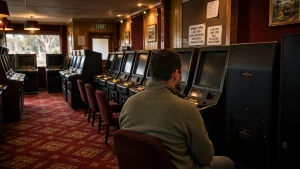
For an in-person pokie session, the useful comparison is not a universal “best” machine. It is how much information you can check before playing. Crown Perth offers a specific venue example in Western Australia; Victoria’s rules provide a clear disclosure requirement for electronic gaming machines.
Crown Perth is the only legal land-based casino in Perth. Western Australia has no legal online casino market, so this is a comparison of physical machines, not a choice between local online venues and a casino floor.
Attention: Crown Perth does not provide a machine-by-machine RTP list, only a general range for most of the floor.
The casino has more than 2,500 gaming machines. Most operate with RTP settings in the 87% to 92% range, but Crown Perth does not provide a machine-by-machine RTP list. That distinction matters if you want to compare individual machines by their stated payout percentage: a general range for most of the floor cannot tell you the RTP of the particular machine you are considering.
Western Australian disclosure rules offer another practical point of comparison. A legal pokie in the state has to show its rules, paylines and prize table. Those details help you check how the machine is structured and what its displayed prizes are before you play. They do not identify a highest-paying machine, and they should not be treated as a promise about what you will win.
If your main criterion is access to individual RTP figures, Crown Perth’s published information has a limitation: it does not provide a list assigning an RTP to each machine. If your priority is being able to inspect the rules and prize information at the machine, those disclosures give you something concrete to review. Different criteria, different answer.
In Victoria, the Victorian Gambling and Casino Control Commission (VGCCC) requires electronic gaming machines, or EGMs, to display their RTP. That makes the figure visible on the machine rather than leaving you to infer it from a broad venue-wide range.
For a visitor comparing machines, this is useful as a disclosure standard. You can check the displayed RTP for the EGM in front of you and use it as one point of comparison. The figure is not a forecast of the result of your session, and it does not tell you what the next spin will pay. A displayed number is information, not a promise.
Victoria also requires players to be at least 18 years old to use EGMs. That age rule applies to playing the machines in person; it is a separate consideration from the information displayed on them.
If you are choosing between a Crown Perth machine and a Victorian EGM, the most useful distinction is the availability of machine-specific RTP information. At Crown Perth, most machines fall within a stated range, but there is no published list linking each machine to its own RTP. In Victoria, the VGCCC’s requirement means EGMs must display their RTP.
In either state, read the information on the machine rather than assuming that a venue’s general description applies to every pokie. Check the rules, paylines and prize table where they are displayed, and compare the RTP only when the specific machine provides it. That is a more reliable basis for choosing than calling one title the best Australian pokie machine without saying what “best” means. A higher displayed figure is not a session guarantee.
A free-spins offer is not necessarily cash in your account. Spins may be promotional play, and any winnings can remain bonus funds rather than becoming immediately withdrawable. The offer’s terms determine what happens next: they may require further wagering, set cashout limits, or exclude certain games from contributing towards a requirement.
Wagering Calculation
Identify the bonus and requirement
A player receives a $100 bonus with a 30x wagering requirement.
Calculate total bets needed
Multiply the bonus amount by the requirement: $100 × 30 = $3,000.
Complete the betting volume
The player must place $3,000 in bets before the bonus becomes eligible for cashout.
The key figure to look for is the wagering requirement. A multiplier applies to the bonus amount, and the resulting total is the amount you must bet before the bonus can become eligible for cashout. It is not the amount you need to deposit, nor does placing that much in bets mean you will have that amount left. Bets can lose while you work through the requirement.
An affiliate review gives a worked illustration: a 30x requirement attached to a $100 bonus calls for $3,000 in bets before cashout. Treat that as an example of how the calculation works, not as a standard term offered everywhere. Check whether the operator calculates the requirement against the bonus alone or against the bonus and deposit together; the wording can change the total substantially.
Read the terms for the specific promotion, not just the headline. Confirm:
A large advertised bonus can be difficult to clear if the wagering requirement is high or eligible games contribute slowly. The headline value alone tells you little about how much betting is involved. If the conditions are unclear, do not assume the most favourable interpretation.
Also distinguish free spins from free play in a demo. A promotional spin is part of an offer and may create winnings subject to that offer’s rules. Demo play does not involve a real-money promotional balance. In either case, a result from one kind of play does not establish what a later real-money spin will return.
For Australian readers, promotional wording does not change the legal position: real-money online pokie games are prohibited for operators to offer to people in Australia. An offshore bonus is not a locally authorised offer, and its terms do not create local regulatory protection. Read the conditions as a description of what the operator says it will do—not as proof that bonus funds will be easy to withdraw.
RTP is a long-run measure, not a forecast for your next session. It describes the share of all wagers a pokie returns to players across a very large number of spins. That scale matters: the figure is meaningful across extensive play, while a short visit may produce results far above or below it. A high RTP does not guarantee short-term wins.
Volatility describes a different feature: the pattern of payouts. Lower-volatility pokies tend to pay smaller amounts more often; higher-volatility games pay less frequently but can deliver larger wins. Neither setting tells you whether a particular spin will pay. If you prefer more frequent, modest returns, lower volatility may better suit your preference. If you are comfortable with longer gaps between wins for the chance of a larger payout, higher volatility may appeal. The better choice depends on what you want from the game, not on a promise of profit.
RTP and volatility are not competing measures. One describes the long-run proportion returned; the other describes how payouts may be distributed. Two pokies with similar RTPs can therefore feel quite different during play. And a game with a higher advertised RTP is not automatically the best pokie to play for every person or every session. The criterion has to match your preference.
A specialist review lists Gates of Olympus at 96.5% RTP and Sweet Bonanza at 96.48%. Treat those figures as claims about the versions covered by that review, not as universal settings for every venue or offering. Some providers let operators select from several RTP settings for the same game, so the title alone may not identify the figure that applies where you play. Check the specific version’s RTP before making a comparison.
Each spin is independent. The result of the previous spin does not make a win more likely on the next one, even after a run of losses or a sequence of wins. That is why a short session cannot be read as a reliable sample of a game’s long-run RTP. Past results do not form a pattern the next spin has to correct.
The same point applies to sounds and visual effects. A celebratory sound may make a result feel significant, but it does not change the independent outcome of a future spin. Treat the display as presentation, not evidence that a payout is due.
If you are weighing which pokie to play, compare the version-specific RTP and the volatility profile, then decide whether its payout pattern fits your preference. Set a loss limit before you begin and stick to it; RTP is not a reason to extend a session or chase a result. Long-run measure. Not a session promise.
A demo lets you explore a pokie without putting your own money at stake. Real-money play changes the consequence of every spin: your balance can fall, and any winnings may matter financially. The game may look and function much the same, but the experience is not equivalent. Treat a demo as a way to learn the controls, not as evidence of what will happen when you wager.
Demo results do not predict real-money outcomes. Each spin is independent, so a run of wins or losses in free play cannot tell you what the next spin will do. The same is true when moving from a real-money session back to a demo: previous results do not carry forward. The distinction is simple. The money at risk is not.
Before you play for money, decide how much you can afford to lose and set that as a firm limit. Do not raise it because a session is going badly or because a win seems close. If reaching the limit would affect bills or other essentials, the amount is too high. A pokie is entertainment with an uncertain outcome, not a way to make income.
There is also a specific legal distinction for Australian players. Under the Interactive Gambling Act 2001, an Australian resident does not commit an offence merely by playing real-money pokies online with an offshore operator. That does not make the operator’s service legal in Australia, nor does it provide local protection if a dispute arises. If an offshore service withholds winnings, effective legal recourse may be difficult to obtain.
So the decision is not simply whether a game worked in demo mode. Consider whether you are comfortable risking real money, whether you can stick to a loss limit, and whether you accept the risks of dealing with an offshore service. If any answer is no, staying with free play—or stopping—is the more suitable choice.
A demo can show you how a game behaves on screen. It cannot rehearse the pressure of losing money you meant to keep. The difference is real.
An app changes how you access a service; it does not change the legal position or make an offshore operator locally regulated. There is no Australian licence for real-money online pokies, and Australian residents do not have local regulatory recourse against an offshore casino if a dispute arises. If winnings are withheld, effective legal remedies may be difficult to obtain. Treat the app as a route to the operator, not as evidence of protection.
Before installing anything, check who provides it and what access it requests. A link to a download outside an official app store deserves particular care: confirm the publisher and avoid installing software you cannot identify. Some services work through a mobile browser rather than a dedicated app. Either way, an app’s appearance, a jackpot banner or a smooth login process tells you nothing about the operator’s accountability.
The phrase “pokie machine API” refers to a technical connection between software systems, rather than a feature a player needs to use. For you, the practical checks are simpler: can you identify the operator, find its payment and withdrawal terms, and understand what happens if a payout is disputed? If those details are hard to locate before you deposit, that is a reason to stop.
Payment options vary by service. A specialist review of operators catering to Australians reports deposits through Visa, Mastercard and bank transfer, with cryptocurrency options such as Bitcoin and Ethereum also appearing. That is a description of reported offerings, not a guarantee that any particular app accepts them or that a payment can be recovered. Check the payment method’s own terms as well as the operator’s.
A withdrawal request may sit pending for 24–72 hours, and an operator may use that interval to encourage you to cancel it and keep playing. This is a risk to watch for, not a timetable that applies to every service. Read the withdrawal rules before depositing, save relevant account records, and do not treat a displayed balance as money already received.
There is no single “best” pokie app by name alone. Compare access, transparency and the clarity of the payment terms—not the size of a jackpot graphic. Nor is an app’s download price a useful measure of the cost of playing: the consequential expense is any money wagered, which can be lost. Set a loss limit before play and do not deposit more to pursue a pending withdrawal.
No, an app is simply a route to the operator and does not make an offshore provider locally regulated or licensed in Australia.
Identify the operator, locate the payment and withdrawal terms, and understand the process for disputed payouts.
Not necessarily, though requests may take 24–72 hours; however, be cautious if an operator encourages you to cancel the withdrawal to keep playing.
When you scan a pokie floor, names such as Lightning Link and Dragon Link may stand out because they are associated with networked games. Cash Express is another example. These are not simply different labels for one machine: each is a named game, and networked versions connect play across multiple machines or casinos.
The key distinction is how the jackpot is built. Rather than being limited to a single machine, a networked progressive jackpot can grow across the connected machines or venues. That shared pool is why the potential prize can become massive. The name on the cabinet tells you which game you are looking at; the network arrangement explains how its progressive jackpot can accumulate across a wider group of machines.
That does not make every pokie with a familiar name identical. A title is a useful way to recognise a game, but it does not tell you, by itself, how a particular machine is configured or what rules apply to its jackpot. Read the displayed game information at the machine you are considering, especially if the jackpot is the reason you are choosing it.
If you are looking for new pokie machine games, treat “new” as a question about a particular release or installation, not as a quality rating. A recognisable name may be familiar rather than new, and a networked jackpot does not establish that a game is better suited to you. It tells you something specific: the progressive prize can draw on play across connected machines or casinos.
So compare pokie machine names by what you want to find out. If you want a familiar title, the name helps you identify it. If you are interested in a progressive jackpot, check whether that game is networked and read its displayed rules. The name alone cannot answer both questions.
A network is not a promise of a win. It describes how the jackpot can build, not what any one player will receive. That is the useful distinction: recognise the title, then check the machine.
Use RTP as a comparison point, not a forecast. It describes the share of money wagered that a game returns across a very large number of spins; it does not tell you what will happen during your session. A higher figure does not ensure a win, and your results can differ sharply from that long-run measure.
Before choosing a machine, check the RTP for the exact game version and setting at the venue where you plan to play. An advertised figure may refer to a different version or setting. If the information is not displayed clearly, ask venue staff rather than assuming that figures for the same title apply everywhere.
That check can be difficult in practice. Crown Perth, for instance, does not publish a machine-by-machine RTP list, so you cannot compare every machine there using a venue-wide catalogue. Check the information available for the individual game.
A useful set of pokie machine tips is brief:
The best choice depends on what you value and what information is available. A table of verified figures beats guesswork. Your session is still uncertain.
Yes, you can try a free online pokie or simulator without placing a real-money wager. Demo results do not predict real-money outcomes.
The Interactive Gambling Act 2001 governs online gambling. It makes it an offence for operators to offer real-money online pokies to people in Australia, but an Australian resident does not commit an offence under the Act merely by playing with an offshore operator.
No strategy can predict or influence the next spin: each outcome is generated randomly, and spins are independent. You can compare a game's paytable and volatility, but these do not ensure a win.