A practical guide to checking game information, South Australian venue details, legal limits and safeguards before making plans.
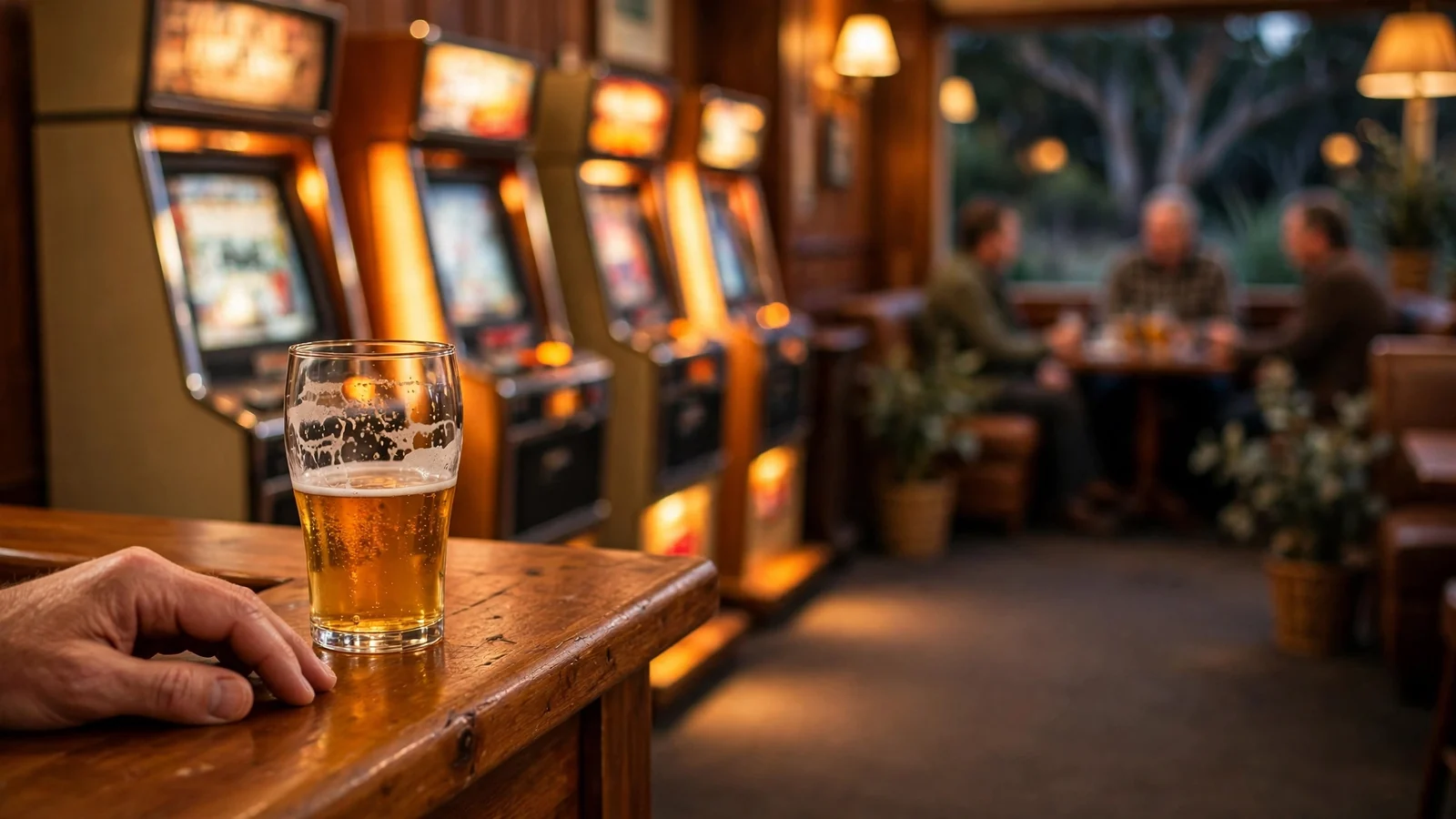
“Best” only means something when you decide what is being compared. A pokie could suit you because its rules are clear, its return setting is published, or the venue offers practical tools for keeping play within your limits. Those are separate measures, not proof that a particular game will pay out more during your visit.
For a useful comparison, keep three columns in view: how outcomes are generated, what return information is available, and which responsible-play controls you can use. A game that scores well on one measure may not be the strongest choice on another. The right fit depends on what matters to you.
A pokie uses a Random Number Generator to determine the outcome of each spin. Each spin is separate from the one before it. A previous loss does not make a win due, and a recent win does not establish that another is coming. A run of results may feel like a pattern, but it is not a reliable forecast of the next spin.
If you're looking at online pokies options for South Australia in 2026, this list gives you a concise reference to the available details for each operator. Use the information provided to decide what you may want to check further before choosing.
SkyCrown
You can make a minimum deposit of A$30. The stated payout speed is around 10–15 minutes for crypto and 1–5 days for fiat, and the listed licence is from the Tobique Gaming Commission.
Kingmaker
You can make a minimum deposit of A$30. Stated payout speeds are around 90 minutes for crypto and 1–5 days for fiat.
LevelUp Casino
You can start with a minimum deposit of A$15. The listed licence is Curacao eGaming OGL/2023/174/0082, held by Dama N.V.
Neospin
The listed licence is Curacao Gaming Control Board OGL/2023/176/0095, held by Hollycorn N.V.
House of Pokies
You can deposit from A$30, or from A$10 using PayID; stated PayID payout times are 1–24 hours. The source describes its licence as an international iGaming licence but does not name the jurisdiction.
Uptown Pokies
You can make a minimum deposit of A$20. The operator is listed as Curacao-licensed and operating since 2017.
LuckyVibe
The listed licence is Curacao Gaming Control Board OGL/2023/176/0095, held by Hollycorn N.V.
Wild Tokyo
You can make a minimum deposit of A$10. The listed licence is Curacao, and stated payout speeds are 30–60 minutes for crypto and 1–5 days for fiat.
7Bit Casino
The operator is listed as Curacao-licensed and operated by Dama N.V.
DragonSlots Casino
The listed licence is from the Curacao Gaming Authority, with Jumpman Gaming Ltd named as the operator.
That distinction matters when comparing South Australian pokies. Past results, a familiar theme, or a story about a machine being “hot” cannot establish which game will pay next. Treat claims about a game’s current run as anecdotes, not as a ranking method. Random outcomes offer no dependable shortcut to identifying a winner.
A published return-to-player figure, often shortened to RTP, is a stated setting for a game—not a promise about what you will receive in a particular session. It does not tell you when a win will occur or how large any individual payout will be. Use it as a comparison point only when the figure is clearly attached to the specific game and setting being offered.
There is another detail worth checking: a specialist review reports that some providers can let casinos choose among different RTP settings for the same pokie. If that applies, a figure associated with one version of a game may not describe the version available elsewhere. Look for information that identifies the setting, rather than relying on a game name or a general figure copied from another listing. If the setting is not made clear, you cannot make a sound RTP comparison.
This is why “best paying pokies South Australia” is not a conclusion that follows from a title, theme, or return figure alone. Even a published setting is not a forecast of your results. A comparison can describe what is disclosed; it should not turn that disclosure into a promise of higher payouts.
 Best Pokies in Sydney: How to Check VenuesLearn how to verify a Sydney venue, check opening times and compare travel routes; map results are leads, not confirmation.
 Best Pokies in Tasmania: What to Check FirstLearn how to check whether a Tasmanian venue’s gaming room is open, consider what “best” means, and plan a visit without relying…
 Bonus Buy Slots in Australia: Features and ChecksLearn how bonus buys change slot sessions, what demo play can verify, and how availability, payment checks and RTP fit into comparisons.…
Responsible-play tools belong in the same comparison because they affect how easily you can keep play within your own boundaries. Look for deposit limits, loss limits, session time limits, and self-exclusion options. These tools serve different purposes: a deposit limit restricts what you put in, a loss limit sets a boundary on losses, and a session time limit helps manage time spent playing. Self-exclusion is a stronger option for stepping away.
The useful question is not simply whether a tool appears on a page. Check whether you can find it, understand what it does, and set it before play. If a control is hard to locate or its effect is unclear, it is less useful as a practical safeguard. A venue or game cannot be called the better fit on responsible-play grounds merely because a general statement mentions safety.
When comparing South Australia casino pokies, keep the same criteria for each option:
| Criterion | What to look for |
|---|---|
| Randomness | Understand that each spin is determined separately, not by a predictable sequence. |
| Return information | Check whether a published RTP setting is clearly linked to the specific game version. |
| Play controls | Identify the available limits and self-exclusion options before you begin. |
This approach is more useful than treating popularity, appearance, or a reported win as evidence that a pokie is superior. It also helps separate game information from personal preference: a feature you enjoy may make a game more appealing to you, but it does not show that it has better payout prospects.
For the best pokies in South Australia, the defensible comparison is therefore about transparency and fit—not a promise that one machine pays more. Compare what can be checked, keep return information in perspective, and treat every spin as uncertain. That is a less dramatic verdict, but a more honest one.
If you are deciding whether to visit a South Australian venue, confirm its current opening status with that venue before setting out. A general guide cannot tell you whether a particular place is open at this moment, and an old listing may not reflect a temporary change. “Open now” is a detail to check, not something to assume from a venue’s usual pattern.
Confirming Venue Status
Check official sources
Visit the venue's own website or official social media pages for dated notices regarding opening times or temporary closures.
Call the venue
If online information is unclear, call the venue directly to ask if they are open at your planned arrival time.
Verify specific facilities
Confirm not only that the venue is open, but specifically that the pokies are accessible during your visit.
Start with the venue’s own website or its official social media page, if available. Look for a dated notice about opening times, temporary closures or changes to service. If the information is unclear, call the venue and ask directly. A third-party listing can help you identify a contact, but it should not be your final check when the trip depends on the venue being open.
Be precise about what you need to confirm. Ask whether the venue itself is open at the time you plan to arrive, and whether the area or facilities you intend to use are available then. A venue may be open while some services are not; the word “open” does not necessarily answer every practical question. If you are travelling for pokies, ask specifically whether you can access them during your planned visit.
Opening information can be easy to misread. Check the date as well as the hours, and make sure any notice applies to the day you plan to go. A weekly schedule may not capture a one-off change, while a post or listing without a date may be out of date. If your visit is close to opening or closing time, call rather than relying on a general schedule.
When you call, state the day and approximate arrival time you have in mind. Then ask whether the venue expects to be open at that point and whether there are any relevant restrictions on access. This keeps the answer tied to your actual plan instead of a broad statement about ordinary hours. If the person answering cannot confirm, ask where the venue publishes updates or when you should check again.
Do not treat a page showing a venue as open as proof that its pokies are available. Likewise, a venue’s posted opening hours do not establish that every facility operates throughout those hours. Confirm the specific access you need, especially if you would have to make a substantial detour or arrange transport around the visit.
If you are looking for a venue open early or late, verify the exact time directly. Search results and directory entries can remain visible after details change, and broad labels such as “open” may not make clear which hours they describe. Avoid building a plan around an assumed opening time simply because it seems typical for a club, hotel or other venue.
For a visit around dawn, ask whether the venue is open then and whether pokies can be accessed at that time. Apply the same check to a late-night visit: confirm the closing time for the day in question and whether access ends earlier than the venue’s general closing time. A direct answer is more useful than guessing from another venue’s schedule. There is no universal timetable to rely on.
If you cannot reach the venue, look for a recent official update and consider postponing the trip until you can confirm. A listing that lacks a date or a clear contact route is a weak basis for travel. Keep the distinction simple: a published schedule is a guide; direct confirmation is the better check when the timing matters.
A venue being open says nothing about the return setting of its pokies. Opening hours cannot establish a payout percentage, and a current status listing is not evidence that one venue’s games pay better than another’s. Those are separate questions. Do not use availability, popularity or a convenient time slot as a substitute for information about a game’s published return setting, where that information is available.
The useful comparison here is reliability of the information: a current response from the venue is more relevant to today’s visit than an undated listing. It still answers only the question asked. Confirming that the venue is open does not prove every machine is available, and it does not predict a result if you play.
Before leaving, make sure you have checked the right venue, the right day and the time you expect to arrive. If any part of the answer is uncertain, confirm it again rather than treating an old schedule as a guarantee. A short call can prevent a wasted trip. No guesswork needed.
A trip to a pokies venue starts with a precise destination, not the word “near”. South Australia covers more than one local area, and “the airport”, “the CBD” or “central” can mean different starting points depending on where you are. Set your actual origin first, then check the venue’s street address and route before setting off.
If you are arriving by air, use the airport terminal as your starting point rather than a broad label such as “near the airport”. A map result may be close to the airport boundary without being a practical stop on your route. Check the full address, the road approach and whether your journey requires a detour. If you are heading into central Adelaide, repeat the same check from your accommodation or intended CBD starting point; a result described as central may not be close to the block you have in mind.
Map pins serve as leads but do not confirm that a venue offers pokies; always verify gaming availability via the venue's own contact details before travelling.
Treat map pins as leads, not confirmation that a venue has pokies. A business listing can identify a place without establishing what facilities are available there. Before travelling, confirm the address and that gaming is offered through the venue’s own contact details. This keeps a location search from turning into an unnecessary trip. Simple distinction.
“Near me” changes with your location. A result that appears nearby while you are at the airport may be much less convenient after you have moved into the city, and the reverse can also be true. Search from the point where you will actually begin the trip. Compare the route to the venue, not just the distance shown between two map pins.
For a fair comparison, use the same starting point for each option and look at the journey as a whole. Consider whether the route fits your plans, whether you will need to change transport, and whether the destination is easy to identify. A place with a slightly longer route may be a better fit if it is directly on your way; a closer pin can be less useful if reaching it requires a substantial diversion.
Check the address against more than one reliable listing when details do not match. Give greater weight to the venue’s own published address than to an abbreviated map label or a third-party directory entry. If the listing names a suburb or locality you do not recognise, verify that you have the right South Australian destination before leaving. Similar wording in a place name is not a route plan.
 Best Pokies in Perth: What Players Can VerifyLearn how to compare pokies without treating RTP as a session forecast, and what venue information can—and cannot—confirm.
 Best Pokies in Melbourne: Venue and Access ChecksCompare Melbourne pokies venues by location and check practical access and current operating information before making a trip.
Use location terms that reflect your actual journey: the airport you are arriving at, the CBD area you will be in, or the South Australian locality you plan to visit. Broad searches can mix locations or return results that are not useful for your trip. If you are travelling from another state, confirm that the destination is in South Australia rather than relying on a short or ambiguous place label.
Queries referring to Parkes or Victoria also need a location check before you treat a result as relevant to South Australia. Search wording alone does not establish which town or venue a listing refers to. Open the map pin, read the full address and confirm it directly with the venue.
A practical shortlist needs only a few details: the venue’s confirmed address, your starting point and the route that suits your plans. Do not choose on the strength of a “nearby” label alone. Use the address to make the decision.
Searching for online pokies while in South Australia does not change the rules that apply across Australia. Under the Interactive Gambling Act 2001, operators cannot legally provide real-money online casino games, including pokies, to people in Australia. No Australian licence has been issued for an online casino, so there is no locally licensed online casino to use.
Legal Risk
Under the Interactive Gambling Act 2001, real-money online casino games are illegal in Australia, and players accessing offshore sites have no local legal recourse for disputes.
That distinction matters when an offer mentions real-money play, a no-deposit bonus or high betting limits. Those terms do not make the service lawful or provide the protections of a domestic licence. Nor does a claim that a game pays well establish that its operator is authorised to offer it here. A tempting bonus is still an offer from an operator; it is not a safeguard.
The law targets companies providing prohibited online casino services. An Australian player is not committing an offence simply by accessing an offshore site that accepts them. But “not an offence for the player” is not the same as “protected if something goes wrong.”
If an offshore casino withholds winnings, an Australian player has no legal recourse in Australia to compel payment. A site’s terms, customer-service promises or payment options cannot replace that protection. The practical risk is plain: you may have little local ability to resolve a dispute with an operator outside the Australian system.
The Australian Communications and Media Authority (ACMA) enforces the law and blocks access to illegal offshore gambling sites. Internet service providers must comply with its blocklist. A site appearing online, or remaining reachable at a particular moment, is not proof that it is lawful or dependable.
A payment method does not certify an online casino. In particular, PayID is a bank-transfer service, not evidence that a gambling site is licensed, fair or transparent about game settings. Before making any payment, consider whether your bank or card provider may reject a transaction to a known gambling site. A specialist review reports that Australian banks and credit card companies have been increasingly blocking such transactions; this can change, so do not treat payment acceptance as assured.
Do not send money simply because a deposit page loads or a transfer appears available. A successful payment says nothing about your ability to withdraw winnings, and an offshore operator’s withdrawal rules may leave you exposed. Read the terms before making any financial commitment, including conditions attached to bonuses, rather than judging an offer by its headline.
If an offshore site asks for documents before releasing funds, treat that as a further privacy and payment consideration. Before any first withdrawal, verify what identity and address documents it requires and how those documents are handled. Providing documents does not create Australian legal protection.
BetStop is not a remedy for offshore play: it applies to Australian-licensed operators and does not bind offshore sites. For that reason, searching for online pokies near South Australia, or for a real-money offer, should not be mistaken for a route to a locally licensed casino. The legal position is not an endorsement of offshore gambling.
A venue’s machines tell you little about how it handles gambling harm. Before deciding where to play, check what support is available on site and how staff respond when someone appears distressed or at risk. These are more useful measures of a venue’s safeguards than a claim that it is the “best pokies venue in South Australia”.
Ask whether a responsible gambling officer (RGO) is on duty while the pokies are operating, and how you can contact them. A report by regionriverina.com.au describes a requirement for venues with more than 20 machines to have a dedicated RGO present during operating times. The report also describes a one-month transition period for venues to appoint officers and remove certain signage.
Those details should not be treated as proof that a particular South Australian venue is covered or compliant. Ask the venue what rules apply to it and whether an RGO is currently available. If staff cannot explain how to reach the person responsible for gambling support, that is a practical gap worth weighing.
The same report describes a requirement for venues to keep a gambling incident register. It is intended to record events that may indicate a patron is at risk of gambling harm or is already affected by it. You can ask whether staff know how to raise a concern and what happens after one is identified.
A register matters only if concerns are recognised and acted on. Look for clear answers about who staff notify, how they approach a patron, and what support they can offer. You do not need access to private incident records; you are checking that a process exists, not asking for details about other customers.
Signage and its placement are part of responsible venue management. Directional signs to gaming lounges should not be in sight of ATMs or EFTPOS terminals, and signs pointing to ATMs should not be visible from gaming machines. If you notice these arrangements, ask staff how the venue handles its signage requirements.
You can also check whether staff respond calmly when someone asks for help, and whether support is easy to find without having to explain a personal situation in public. A policy on a noticeboard is less useful if no one can tell you where to go.
For South Australia pokies venues, use the same questions at each location: Is a responsible gambling contact available? Can staff explain the process for raising a concern? Are signs positioned appropriately? Does the venue describe how it records and responds to incidents?
A venue may be convenient or familiar, but neither quality establishes how well its safeguards work. No venue-specific ranking follows from these checks. The stronger choice, by this criterion, is the place that gives direct, consistent answers about support and procedure. Clear answers matter.
A venue’s opening time and its pokies’ operating hours are separate details. A venue may be open while machines are unavailable, or machine operation may stop before the venue closes. Without confirmation from the venue, a listing that appears to show a late closing time cannot establish that pokies are running then. That distinction matters when you are looking for round-the-clock pokies or trying to find somewhere to play now.
No South Australian schedule can be inferred from a general search for 24-hour venues. Check the specific venue’s current information and ask directly whether pokies will be operating at the time you plan to visit. Treat “open” as a statement about the venue unless it explicitly confirms machine hours. A long opening day is not proof of continuous machine operation.
Attention: A venue's general opening hours do not guarantee that pokies are operating during those same times.
Responsible-play safeguards address a different question: what support and controls are available while gambling takes place? Common tools include deposit limits, loss limits, session time limits and self-exclusion. They help you set boundaries or take a break; they do not make a venue open longer or establish when its machines are switched on. Decide which controls you want to use before play, rather than relying on them as a response after spending more time or money than intended.
Staff support is another part of the operating context. A report published by regionriverina.com.au says that, from 1 July, venues with more than 20 gaming machines are required to have a dedicated responsible gambling officer (RGO) on duty while those machines are operating. The report describes a requirement, not a South Australian opening-hours schedule. Do not treat it as confirmation that a particular venue in South Australia has an RGO on duty; check the venue’s arrangements and the rule that applies locally.
For a practical comparison, keep the questions distinct: when is the venue open, when are its pokies operating, and what responsible-play controls or staff support can you access during that period? A venue’s answer to one does not settle the others. If you cannot confirm machine hours directly, plan around the uncertainty instead of assuming that “open now” means the pokies are available.
 Pokies in New South Wales: Venue Access and ChecksLearn how to check venue hours and machine availability separately, compare pokies by mechanics, and understand what venue listings can and cannot…
 Best Pokies in Geelong: Venue Hours and Access ChecksLearn how to verify venue hours and gaming-area access before travelling. An online listing may show a venue as open while its…
The useful standard is confirmation, not inference. Hours can change, while responsible-play controls are there to support your choices during play—not to promise uninterrupted access. Start with the schedule, then check the safeguards. Different questions.
A search for Crown and South Australia in the same phrase does not establish that a Crown venue, or a Crown pokies room, is in the state. Treat the name and location as separate details to confirm. Before making a trip, check the venue’s own current address and contact information, then make sure the address is actually in South Australia.
This matters when results use broad labels, repeat a search phrase, or mix information about different places. A page mentioning Crown alongside South Australia may be discussing a comparison, an unrelated venue, or a location elsewhere. The wording alone is not proof. Don’t book transport or plan a visit until the venue’s location is clear.
Use a simple checklist before relying on a result:
| Detail | What to confirm |
|---|---|
| Venue identity | The full name used by the venue itself |
| Location | A complete street address in South Australia |
| Contact route | A current phone number or official contact page |
| Gaming information | Whether the venue itself confirms pokies are available |
If any of these details are unclear or point to different places, pause and contact the venue directly. A map pin or copied directory entry may help you investigate, but it should not replace confirmation from the venue.
The same standard applies to searches for the best pokies room in South Australia. “Best” has no useful meaning until you know which room is being discussed and what criterion matters to you. A search result cannot establish that a particular room exists locally, nor can it verify its machines or facilities. Confirm the place first; then assess the details that matter to your visit.
A claimed maximum cash payout needs context. Check whether it refers to a machine’s stated prize conditions, a venue’s payment process, or another restriction. Those are different things, and a headline figure without the applicable terms may mislead. Ask the venue how a payout is handled and whether conditions apply to the specific machine or prize.
When encountering a maximum cash payout figure, ask the venue if it refers to the machine's prize conditions, the venue's payment process, or other specific restrictions, as figures can vary by machine and venue.
Do not assume one figure applies across South Australia or across every pokie in a venue. Confirm the relevant terms directly before treating a payout claim as a reason to visit. If the venue cannot explain what the figure covers, it is not a sound basis for comparison.
The practical rule is simple: verify the address, then verify the claim. A familiar name is not a location.
If you are considering a club with pokies in central Adelaide, separate the question of location from the question of player safeguards. A club’s name or CBD address does not tell you what support is available on the gaming floor. Before deciding where to play, ask how staff handle concerns about gambling harm and what options are available if you want to stop.
One reported safeguard concerns a dedicated responsible gambling officer (RGO). A report by regionriverina.com.au says venues with more than 20 gaming machines must have an RGO on duty while those machines are operating, with the requirement beginning from 1 July. That threshold is a venue-level rule, not a way to identify which CBD clubs have gaming. If the officer’s presence matters to you, ask the venue directly whether the requirement applies and who you should speak to.
The same report describes a gambling incident register for recording events, including situations where a patron appears at risk of, or affected by, gambling harm. This is a record-keeping safeguard; it is not a promise that every concern will be handled in the same way. You can ask how staff respond when someone asks for help, and whether there is a clear route to an RGO or another responsible-gambling contact.
For self-exclusion, distinguish between a personal tool and a confirmed feature of a particular club. Self-exclusion is a responsible-gambling option, but do not assume a specific CBD venue offers a particular process or that one request automatically applies elsewhere. Ask the club what its process covers, how to begin it and what support is available while it takes effect. If you are already finding it difficult to stop, stepping away and seeking help matters more than comparing venues.
A useful comparison is therefore practical, not a ranking: can you identify the person to approach, understand how concerns are recorded, and get a clear explanation of the venue’s self-exclusion process? Those answers are more meaningful than a vague claim that a club is “best”. The label does little work.
“Cashless” can describe different things. PayID is a way to transfer money through the New Payments Platform (NPP); it is not, by itself, a feature built into a pokie. A bank transfer and a venue’s method for funding or using a machine are separate systems.
PayID uses an alias linked to an account, such as an email address, mobile number or ABN, instead of requiring the sender to enter bank account details. It operates through the NPP, which is supported by all major Australian banks and uses end-to-end encryption. Those details explain how a transfer can be addressed and protected in transit. They do not establish how a particular South Australian venue handles payments at its machines.
 Pokies in Brisbane: What Listings Can ConfirmLearn what “open now” can confirm, why hours may change, and how to assess venue details without treating search listings as guarantees.
 Pokies in Canberra: Hours, Venues and What to CheckLearn how to verify venue access separately from pokies availability, check current notices and confirm whether gaming areas operate at your planned…
So if a venue description refers to cashless pokies, look for a clear explanation of the machine-side process: what payment method is involved, where funds are held, and how a player can check transactions. Do not assume that a venue accepts PayID simply because PayID is available for bank transfers. Nor should a PayID option be treated as evidence that an online gambling service is licensed, that a pokie is fair, or that its return settings are transparent.
That distinction matters when comparing claims about cashless play in South Australia. A bank-transfer method answers how money may move between accounts; it does not answer whether a local pokie supports cashless play. Keep those criteria in separate columns. Convenient labels are not technical specifications.
The same caution applies when a place name appears alongside gaming information. Confirm the actual venue and its stated payment arrangements rather than assuming a result refers to South Australia or describes a machine feature. PayID is a transfer method. A cashless pokie feature is a separate claim that needs its own explanation.
You must be at least 18 to gamble legally in Australia, including on pokies. That age rule applies whether you are considering play at a venue or online. If you are under 18, do not gamble or try to access gambling services.
For adults, a sensible choice is not defined by a machine’s theme or the possibility of a large win. Consider instead which practical safeguards you can set and use. Common responsible-gambling tools include deposit limits, loss limits, session time limits and self-exclusion. Each addresses a different point of control: money going in, money lost, time spent, or access to gambling altogether.
Before playing, decide which boundary matters most to you and check whether the relevant tool is available in the setting you are using. A deposit limit can restrict how much you add; a loss limit focuses on losses; a session time limit helps you stop after a chosen period. Self-exclusion is a stronger option if you need to prevent yourself from accessing gambling. These controls are not a way to improve a pokie’s results. They are ways to put boundaries around your own participation.
If you set a limit, treat it as a limit rather than a target to raise when play is going poorly. If you find that you cannot keep to your own boundary, stepping away is more useful than searching for a different game. No pokie can make continued play safer simply because it looks more appealing.
For a comparison of South Australian pokies, player protection is a more useful measure than an unsupported claim that one game is “best.” The better choice, by this criterion, is the one you can approach within clear personal limits—or not play at all. A boundary only helps if you keep it.
Yes, Australian players can legally play on offshore sites that accept them, but no Australian-licensed online casino exists. The law prohibits companies from offering real-money online pokies to Australians without a domestic licence, and no such licences have been issued.
There is no Australian-licensed online casino, and you have no legal recourse in Australia if an offshore casino refuses to pay your winnings. Check what play limits and self-exclusion tools are available, but these do not remove the risk of using an offshore site.
It is the amount you must bet before bonus winnings can be withdrawn, expressed as a multiple of the bonus or, in some offers, the deposit plus bonus. For example, a $500 bonus with a 40x requirement means $20,000 in bets before you can withdraw winnings.
You must be 18 or older to gamble online in Australia.
Each spin is determined independently by a Random Number Generator, so past results do not predict the next one. A streak or a familiar theme is not evidence that a pokie is rigged.