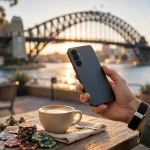
Litecoin is a different payment category from cards and mobile wallets, so acceptance, bonus terms and withdrawal options need separate checks.

For Australians, payment choices are often familiar and interchangeable. Contactless credit and debit cards are accepted almost everywhere in the country, as are mobile wallets such as Google Pay and Apple Pay. Many consumers are also comfortable moving between cards, phone-based payments and services linked to bank accounts, including PayPal. That everyday mix is the useful starting point for understanding why a cryptocurrency such as Litecoin attracts attention: it belongs to a different payment category from the tools people commonly tap, scan or link to a bank.
The distinction is not simply about what appears on a screen. A card payment, a mobile-wallet transaction and a bank-linked service each rely on established payment arrangements. A mobile wallet can make a card available through a phone, while a bank-linked service can provide another route for moving money. Litecoin, by contrast, is a cryptocurrency. Its presence in a search for online casino payments does not establish that an operator accepts it, that it can be used by Australians, or that it suits a particular transaction. Those are separate questions, not consequences of the word “Litecoin” appearing in a payment menu or a search phrase.
If you’re looking for an Australian-facing casino that accepts Litecoin, check the available payment and operator details carefully before choosing. This list highlights the specific licensing, deposit and payout information provided for each option.
SkyCrown
You can note SkyCrown’s Tobique Gaming Commission licence and A$30 minimum deposit. Its listed crypto payouts take about 10–15 minutes, while fiat payouts take 1–5 days.
Kingmaker
You have a listed A$30 minimum deposit at Kingmaker. Its stated crypto payout time is about 90 minutes, compared with 1–5 days for fiat.
LevelUp Casino
You can check LevelUp Casino’s listed Curacao eGaming licence, OGL/2023/174/0082, held by Dama N.V. The minimum deposit is A$15.
Neospin
You can refer to Neospin’s listed Curacao Gaming Control Board licence, OGL/2023/176/0095, held by Hollycorn N.V.
House of Pokies
You can note House of Pokies’ international iGaming licence, though its jurisdiction is not named in the source. Its minimum deposit is A$30, or A$10 for PayID, and PayID payouts are listed at 1–24 hours.
Uptown Pokies
You can note Uptown Pokies’ Curacao licence and that it has been operating since 2017. Its minimum deposit is A$20.
LuckyVibe
You can check LuckyVibe’s listed Curacao Gaming Control Board licence, OGL/2023/176/0095, held by Hollycorn N.V.
Wild Tokyo
You can note Wild Tokyo’s Curacao licence and A$10 minimum deposit. Its listed crypto payouts take 30–60 minutes, while fiat payouts take 1–5 days.
7Bit Casino
You can note that 7Bit Casino is listed as Curacao-licensed and operated by Dama N.V.
DragonSlots Casino
You can note DragonSlots Casino’s Curacao Gaming Authority licence and its operator, Jumpman Gaming Ltd.
That matters because familiar payment habits can create misleading expectations. If you are used to seeing contactless cards and mobile wallets accepted across everyday Australian commerce, it may feel natural to expect the same range of options in every online setting. But broad acceptance in ordinary retail does not prove availability in a particular service. A casino’s payment choices are not a reliable mirror of what Australian shops accept, and a cryptocurrency cannot be treated as a substitute for a card or wallet without checking what the relevant service actually supports.
A practical way to frame the landscape is by asking what kind of payment relationship you are dealing with. Cards and bank-linked services connect to familiar financial accounts and arrangements. Mobile wallets often provide a phone-based way to use existing payment credentials. A cryptocurrency is a different type of asset and should not be assumed to operate through the same steps or protections. The category tells you something about the nature of the method; it does not tell you whether a given operator supports it, what conditions apply, or whether a transaction will be accepted.
This is why a Litecoin casino search can be read as a request to compare a less familiar payment category with options Australians already know. It is not evidence that Litecoin is widely accepted, nor that any casino offering it is available to Australian residents. Search wording compresses several assumptions into a few words: that the service exists, that the payment method is enabled, and that a user can complete a transaction. Each assumption needs to be considered on its own. Treating the phrase as confirmation would confuse interest with availability.
The comparison also depends on what you value. If recognition and familiarity are the main criteria, cards, mobile wallets and bank-linked services have an obvious advantage in everyday Australian use: they are part of payment routines that many consumers already switch between. If your interest is specifically in cryptocurrency, the first question is different: whether a service supports the particular asset at all. A method cannot be judged more convenient or preferable in the abstract. The answer depends on the service, the transaction and the criterion you care about.
There is a boundary to what this broader context can tell you. General acceptance of cards and mobile wallets across Australia says nothing about a specific gambling operator’s payment settings. Nor does the availability of a bank-linked service imply that it can be used for every online transaction. In the same way, the word “crypto” does not establish the status of Litecoin at a particular site. Availability is service-specific; the broader payment landscape is only context.
For a reader looking at Litecoin alongside familiar methods, the sensible distinction is between recognition and confirmation. Australian consumers have widespread access to contactless cards and mobile wallets, and many are comfortable using services connected to banks. Litecoin sits outside that everyday group as a cryptocurrency, so it should be assessed as a separate category rather than assumed to work like a card, wallet or bank-linked service. That is the landscape. The individual service is another matter.
A payment method is only one part of an online service’s terms. Before comparing options, separate what you can verify from what a label suggests. A page mentioning Litecoin does not, by itself, establish that Litecoin is currently accepted, that the method works for Australian customers, or that it can be used for every kind of transaction.
A useful comparison starts with the same criteria for each option:
| Criterion | What to check |
|---|---|
| Availability | Is Litecoin explicitly listed as accepted, and does the information apply to customers in Australia? |
| Transaction scope | Does acceptance refer to deposits, withdrawals, or both? |
| Costs and conversion | Are any charges or currency-conversion terms stated? |
| Conditions | Do payment terms place restrictions on use? |
| Information quality | Are the details clear, current and consistent across the relevant terms? |
If an answer is missing, record it as unknown rather than treating it as a favourable feature. That makes the comparison less impressive-looking, but more useful.
The phrase “accepts Litecoin” can be too broad to settle a practical question. You need to know whether the method is actually available to the relevant customer, and what the stated acceptance covers. A payment option might be discussed in general promotional material while the cashier or terms set out narrower conditions. Compare the specific information, not just the headline.
For each payment method you assess, note where the claim appears and whether it is clearly about Australian customers. If the wording is ambiguous, do not infer that the method is available. The same standard applies whether you are assessing Litecoin or a familiar alternative.
A fair comparison uses the same questions for each method. If you compare one option’s deposit process with another option’s withdrawal terms, the result is not meaningful. Keep separate notes for availability, transaction scope, charges and any stated restrictions.
Familiarity may help you identify what to check, but it does not prove that one method is offered more widely in every setting. A specialist review has reported that Visa may be accepted at more Australian online casinos than American Express; treat that as a time-sensitive comparison, not a guarantee about any particular service. Check the relevant terms directly before relying on it.
A well-structured comparison can show gaps as clearly as advantages. If there is no clear statement about whether a method supports withdrawals, mark that point as unconfirmed. If charges or conversion terms are not explained, do not assume they are absent. If information conflicts between a general page and the cashier, the conflict itself matters.
This approach also helps separate a method’s general characteristics from a particular operator’s rules. A claim about cryptocurrency payments as a category does not establish the handling of Litecoin at a specific service. Nor does a payment logo prove that the option is available to you.
There is no useful overall winner without saying what the comparison is meant to measure. One reader may care most about whether a method is clearly available; another may prioritise transparent costs or clear withdrawal terms. Those are different tests, and they can produce different conclusions.
If you are comparing online payment options, write down the criterion first, then assess each method against it. A method with fewer confirmed details cannot fairly be called better merely because its name appears in a headline. Payment wording is not proof.
Finally, payment availability should not be confused with permission to provide an online casino service in Australia. A payment comparison does not make an operator’s offering lawful or endorse using it. Keep the assessment factual: what is stated, what is unclear, and what remains unconfirmed. No guesswork.
A payment method can look attractive in a search result and still be a poor fit once you compare acceptance, funding steps and what the cashier actually offers. Visa and Amex are useful reference points because they are familiar card brands, but their availability should not be treated as interchangeable. Litecoin belongs in a separate comparison column: a digital currency is not another card scheme, and a casino’s support for one method does not establish support for another.
A specialist review has reported that Visa may be accepted more broadly than Amex at Australian online casinos. That is a qualified comparison, not a permanent rule for every operator. Payment menus can differ, and the cashier is the place to verify which methods are available for a particular account. “Card accepted” is not a sufficiently precise answer if the distinction between Visa and Amex matters to you.
| Comparison point | Visa and Amex | Litecoin |
|---|---|---|
| What to verify | Whether the specific card brand appears in the cashier | Whether Litecoin is explicitly offered there |
| What the label tells you | A card option is not necessarily available for every brand | A cryptocurrency option should not be assumed from support for another coin |
| Practical comparison | Check the card-specific conditions before relying on it | Check the Litecoin-specific conditions before relying on it |
This is not a ranking. The better fit depends on your priority: broad familiarity, a particular payment route, or use of a cryptocurrency you already hold. A general label such as “crypto accepted” does not answer whether Litecoin is supported; likewise, the presence of a card option does not establish that both Visa and Amex will work.
For a card deposit, the stated process is direct: select Amex in the cashier, enter the card details and the deposit amount in Australian dollars, then submit the payment. That describes the steps, not a guarantee that a transaction will be approved. Amex availability can be narrower than Visa according to the specialist review, and a payment option displayed by an operator is still subject to its own terms and the card issuer’s handling.
The useful comparison is therefore not “cards versus Litecoin” in the abstract. It is whether the exact method you intend to use is offered, whether the relevant terms fit your needs, and whether you understand the payment route before committing funds. For Litecoin, look for the name of that specific currency rather than inferring acceptance from a general cryptocurrency reference. For a card, distinguish Visa from Amex rather than treating “credit card” as a single option.
Searches for a leading Litecoin casino, a current site, or a list of suitable operators can make the choice sound like a popularity contest. Acceptance alone would not establish that one operator is better for you, and a familiar card’s reach does not prove anything about a separate cryptocurrency option. Compare the method criteria you care about; do not let a broad label do the work of a specific check.
One practical table, kept current by checking the cashier and the payment terms, is more useful than a headline calling a site the best. The winner depends on the criterion. For card familiarity, Visa and Amex are distinct options; for Litecoin, verify Litecoin by name. No shortcut.
A phrase such as “Litecoin welcome bonus” describes what someone is looking for; it does not establish that an offer exists, that it is available in Australia, or that Litecoin qualifies for it. The same applies to searches for a no-deposit bonus or a bonus linked to online slots. Treat those phrases as prompts to examine the wording of an offer, not as proof of its availability.
Before relying on any advertised promotion, read its terms alongside the payment information. The key question is whether the offer explicitly permits the payment method you are considering. A promotion may distinguish between deposit methods, or its terms may not address Litecoin at all. Do not assume that a bonus attached to a casino account applies to every deposit route.
Start with eligibility. Check who can claim the offer, whether it is restricted by location or account status, and whether any action is required to activate it. If the terms do not clearly cover your circumstances, the headline alone cannot settle the question.
Next, look for the offer’s conditions on deposits and withdrawals. The terms may set out which deposits qualify, how an award is credited, and what restrictions apply before funds can be withdrawn. Those details matter more than the label “welcome bonus” or “no-deposit bonus”: the label does not explain the conditions attached to the offer.
Pay particular attention to any requirement to use a specified payment method. If Litecoin is not expressly included, do not infer that it qualifies simply because the casino mentions cryptocurrency elsewhere. Likewise, an offer that refers to a deposit does not, by that wording alone, confirm that every deposit method is eligible.
Check whether the stated offer is current and whether its conditions are accessible before you act. Promotional wording can be brief; the full terms carry the details. If the terms are unclear, inconsistent, or silent about a point that affects eligibility, there is no sound basis for treating that point as confirmed.
“Free” is not a complete description of an offer. It does not tell you whether there are eligibility rules, restrictions on use, or conditions governing withdrawal. A no-deposit label similarly does not establish that an offer is available to every visitor or that any particular payment method is involved.
Read the full terms rather than relying on a banner or short description. Confirm what the offer actually provides, what you must do to qualify, and what conditions apply afterwards. If a claim cannot be matched to clear terms, treat it as unconfirmed—not as a benefit you can count on.
The same discipline applies when a promotion mentions Litecoin and slot play together. That wording does not, by itself, confirm that a Litecoin deposit earns a bonus or that the offer covers particular games. These are separate details that would need to be stated in the terms. A search phrase is not a contract.
For readers in Australia, promotional wording should not be mistaken for confirmation that a real-money online casino offer is lawfully available locally. The existence of a page, advertisement, or payment reference does not establish that point.
The practical test is narrow: does the offer’s full wording clearly cover the relevant person, location, payment method, and conditions? If not, do not infer a bonus from the headline. No assumptions required.
A casino’s game catalogue and its payment methods describe different parts of a service. The catalogue tells you what kinds of games an operator says it offers; the cashier shows which payment methods it says are available. One does not establish the other. A game title or category labelled “Litecoin” would not, by itself, confirm that Litecoin can be used to pay.
The distinction matters because phrases such as “play casino games with Litecoin” can blur two separate claims: that games are offered, and that a particular payment method is accepted. Each would need to be assessed on its own. A payment option does not identify the games available, while a game listing does not tell you whether deposits or other transactions can be made with Litecoin.
The same applies to references to a “Litecoin casino game” or games associated with LTC. Those words may describe a search for a payment method alongside casino entertainment, rather than a specific kind of game. They should not be taken as evidence that games are built around Litecoin, that a game requires it, or that a particular operator accepts it.
For a careful comparison, keep the categories separate:
A Litecoin payment label also does not establish that an account is anonymous. Payment choice and identity requirements are separate matters; the label alone says nothing about what information an operator may request.
There is an important Australian context. The Interactive Gambling Act 2001 makes it illegal for operators to provide real-money online casino games to people in Australia. That includes casino-style games such as poker, blackjack, roulette and pokies. A discussion of payment terminology should not be read as an invitation to access or use such services.
So, when you encounter wording that combines Litecoin and casino games, read it as two questions rather than one: what is being offered, and what payment method is claimed to be accepted? Neither answer settles the other. Keep the categories distinct.
A payment method does not determine whether an online casino service is lawful in Australia. The relevant distinction is between the operator’s conduct and the player’s position under the law.
Legal Prohibition
The Interactive Gambling Act 2001 prohibits operators from offering real-money online casino games to people in Australia.
The Interactive Gambling Act 2001 prohibits operators from offering real-money online casino games to people in Australia. That prohibition covers casino-style services, whether a site presents them as table games, poker or pokies. Using Litecoin rather than a card or bank-linked service does not change the nature of the underlying activity or create an exception to the Act.
The Act is directed at providers. It does not explicitly make an individual player’s use of an offshore casino a criminal offence. That distinction matters, but it should not be mistaken for approval of the service or a guarantee that a particular site is lawful. The operator’s obligation remains the central legal issue.
The Australian Communications and Media Authority (ACMA) enforces the Interactive Gambling Act. Its role is to apply the law to prohibited interactive gambling services. A site’s own statements about its location, payment options or terms cannot override the Australian legal framework.
Searches about playing casino games with Litecoin can blur two separate questions: whether a service accepts a cryptocurrency and whether an operator may offer that service to people in Australia. The first is a payment detail; the second is a legal question. A Litecoin deposit, or a claim that a casino allows play without identity checks, does not settle the operator’s legal position.
Nor does the phrase “no KYC” establish that a service is outside Australian law. It describes a claimed account or verification practice, not a legal status. Treat it as a separate claim rather than evidence that play is permitted.
For a reader in Australia, the practical point is straightforward: assess the legal context before treating a payment option as an invitation to use a casino. The absence of an explicit player offence is not the same as a lawful local casino market. Different questions, different rules.
A casino’s willingness to accept Litecoin and its legal position in Australia are separate matters. A site may describe itself as accepting Australian customers or cryptocurrency, but those claims do not make its online casino services lawful to provide to people physically located in Australia. The Interactive Gambling Act 2001 prohibits operators from offering real-money online casino games to Australian residents.
That distinction matters when considering any offshore casino, including one that advertises Litecoin payments. A payment option is not evidence of Australian authorisation, local oversight or a remedy if something goes wrong. Nor does calling a service a “crypto casino” change how Australian law treats the underlying casino games.
The legal exposure described by the Act falls on operators, not on players simply for using an offshore site. That does not make the arrangement equivalent to using a locally protected service. Different question.
Australian consumer law does not protect players who use offshore casinos. If a dispute concerns an account, a payment or a withdrawal, you should not assume that Australian consumer protections will provide a route to resolution. A site’s own terms and assurances are not a substitute for those protections.
This is why an Australian Litecoin casino test cannot be reduced to checking whether Litecoin appears in a payment menu. The relevant questions include what service is being offered, whether it is directed at people in Australia, and what protections are actually available to you. An app or mobile-friendly site does not alter that legal context; the device used to access a service does not change the nature of the service.
ACMA enforces the Interactive Gambling Act. Its role is part of the Australian regulatory framework, but it should not be mistaken for a guarantee that an offshore operator will provide a local consumer remedy. A payment method, a mobile interface and an operator’s description of its audience each answer different questions.
For Australian readers, the practical point is narrow: claims that an offshore site accepts Litecoin do not establish that it is lawful to offer online casino games here or that Australian consumer law protects its customers. Treat payment claims and legal protections as distinct, and do not read acceptance of a cryptocurrency as evidence of local safeguards.
A deposit and a withdrawal are separate steps, even when both involve the same payment method. A payment option shown for adding funds does not, by itself, tell you whether that option can also be used to receive a withdrawal. Check the rules for each direction before relying on a particular route.
Verification Process
Deposit access
Check if Litecoin is listed as a way to add funds in the cashier.
Identity verification
Complete the required Know Your Customer (KYC) checks and submit necessary documents.
Withdrawal access
Verify if funds can be returned using Litecoin or if another route is specified.
Processing check
Review the operator's stated timeline for transaction completion rather than relying on labels.
For Litecoin, the practical details to establish would include whether it is accepted for deposits, whether withdrawals can be sent in Litecoin, and what steps apply between a request and its completion. The word “instant” should not be treated as a dependable description of a withdrawal: a payment method’s name alone does not establish how quickly a transaction will be processed. Nor should general claims about cryptocurrency speed or fees be assumed to describe Litecoin in every setting.
Verification can affect the sequence. Before allowing financial transactions, online casinos commonly ask customers to complete identity checks known as Know Your Customer, or KYC. You may therefore need to satisfy those checks before a deposit or withdrawal can proceed. The exact documents and review process depend on the operator, so read its requirements rather than assuming that a payment method removes them.
When comparing the two processes, keep the criteria distinct:
This distinction matters if you are assessing whether Litecoin is usable for both directions, rather than merely appearing in a deposit menu. A deposit can be accepted while withdrawal arrangements follow different rules. Clear terms matter more than an “instant” label.
No shortcut.
“Live dealer” describes how a game is presented: a human dealer appears in a streamed setting, rather than the game being shown only through computer-generated graphics. Litecoin, by contrast, is a payment method. The two labels answer different questions, and one does not establish the other.
A platform might describe live-dealer games without saying anything about cryptocurrency deposits. Likewise, a reference to Litecoin would not confirm that live-dealer games are offered, or that the payment method can be used for every part of an account. Treating those details as interchangeable is an easy way to misread an operator’s terms.
For a useful comparison, separate the points you would need to establish:
Those are separate checks, not evidence that a particular service is available or appropriate for Australians. Search wording such as “Litecoin live dealer casino” can make the combination sound like a single feature, but it does not confirm that any platform offers it. A label is not a payment policy.
The distinction matters especially in Australia. The Interactive Gambling Act 2001 prohibits operators from providing real-money online casino games to people located in Australia. That includes casino-style games presented with a live dealer. The fact that a payment method is mentioned somewhere does not change the legal status of the service.
So, when you encounter a claim combining live-dealer play and Litecoin, read it as two claims requiring separate evidence—not as a recommendation. The relevant details are the game format, the payment terms and the location to which those terms apply. If one is unclear, the combination remains unclear.
Separate features. Separate checks.
A cryptocurrency payment method and a casino’s game catalogue are separate features. Even where an operator accepts Litecoin for an account transaction, that fact alone says nothing about whether the operator offers slot-style games, whether those games can be played using a particular balance, or whether a specific game is available to Australian residents. Payment support is not proof of game access.
The same distinction applies when assessing a site described as a Litecoin casino. The label may refer only to a payment option; it does not establish that the site is safe, authorised for Australian customers, or permitted to provide online casino games here. “Trusted” and “licensed” are not meaningful guarantees unless you know who issued the licence and what that authorisation covers. Australia does not license real-money online casino games for local residents.
The legal position matters more than the payment label. Under the Interactive Gambling Act 2001, operators must not provide online casino games, including slots, to people physically located in Australia. That restriction concerns the service itself, not the currency used to fund an account. Litecoin does not change it.
For that reason, a claim about Litecoin and slots should be read narrowly. It might describe a payment feature, but it cannot by itself establish that slot games are available or lawful for an Australian player. Nor does the presence of a foreign licence make an offshore casino locally authorised. These are different checks, and one cannot substitute for another.
If you are comparing claims, keep the categories separate: payment method, game offering, and legal status. A casino’s use of cryptocurrency answers only the first question. No more than that.
Check the casino’s cashier or payment terms for American Express and confirm that it is available to Australian customers. Acceptance can vary by site, and an Amex payment may also be blocked by the card issuer.
Look for American Express in the casino’s cashier or payment information. Some Australian casinos accept Amex, but acceptance is not universal and your bank may block gambling transactions.
Yes, at casinos that accept American Express, an Amex gift card can be used for deposits. It cannot be used for withdrawals.
Amex casino deposits are processed instantly. Withdrawals to Amex can take up to five days to clear.
Yes, some Australian online casinos accept American Express deposits, but not all do. Check the casino’s cashier, and be aware that your card issuer may block gambling transactions.
Amex deposits typically have no fee, though a casino may charge a 1.5% surcharge. Currency conversion on Amex cards incurs a 3% fee, and some casinos may charge fees for withdrawals.