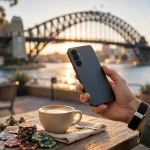
Bitcoin is a payment currency, not a game format; free play and real-money play remain distinct modes.

A Bitcoin pokie is a digital slot-style game in which Bitcoin is accepted as the payment currency. The game format and the payment method are separate things: the game remains a digital pokie, while Bitcoin is the currency associated with real-money play. That distinction matters because seeing Bitcoin mentioned does not, by itself, tell you whether a game is being played for money.
Online pokies may offer free play or real-money play. In free play, you use the game without staking Bitcoin as real money. In real-money play, Bitcoin is used as the currency for play. The label “free” or “real money” therefore describes the play mode, not a different kind of machine.
When you compare payment options, keep the criterion clear: what currency is used for real-money play? Bitcoin pokies use Bitcoin for that purpose. The term does not mean that every game is paid, that every version accepts Bitcoin, or that a free-play session has become a money game simply because Bitcoin is mentioned on a page.
Likewise, “real cash” is often used casually to mean play involving real money. Bitcoin is not cash in the ordinary sense; it is a cryptocurrency. If a description uses both terms, read them as referring to real-money play rather than assuming that Bitcoin and Australian dollars are interchangeable. The payment method tells you how a real-money balance is denominated, not whether you are in free mode.
 Dragon Link Online Pokies in Australia: What to CheckLearn how to assess claims about the game, free and real-money play, offshore licensing and Bitcoin payments without mistaking general advice for…
 Solana Casino Comparison for AustraliaCompare platform factors and follow the funding route: AUD is converted on an exchange, then SOL is sent to the casino wallet.
The useful comparison is not “Bitcoin versus pokies.” It is the same broad game format under different play conditions: free play, or play involving a real-money payment method. That is a smaller distinction than the wording can make it sound. A payment label is not a game feature.
Free play and real-money play should not be treated as two names for the same activity. The first does not involve staking Bitcoin as money; the second does. If you are reading a description of a Bitcoin game, check which mode it refers to before relying on claims about cash play. A page that discusses a game in general may not be describing a real-money session.
For Australians, that distinction also has a legal context. The Interactive Gambling Act 2001 prohibits operators from providing real-money online casino games, including pokies, to people physically located in Australia. This is about the service an operator provides; it is not an invitation to seek an offshore service or a claim that adding Bitcoin changes the position. The currency does not alter the nature of the activity.
This section is informational, not an offer to play. It does not recommend a game or operator. The content is affiliate material and may include sponsored links; that disclosure is not an endorsement or a workaround for restrictions on casino advertising.
When you encounter a reference to Bitcoin pokies, separate three ideas:
Keeping those criteria separate prevents a common misunderstanding: Bitcoin describes the payment method, while “free” and “real money” describe the play mode. Neither label changes the Australian legal restriction on operators providing real-money online casino games to people in Australia.
The practical distinction is plain. Free play is not real-money play; Bitcoin is a payment currency, not permission to offer a prohibited service.
“Casino games” is a broad category, not a single type of game. Pokies are the slot-machine category; table games include formats such as blackjack and roulette, while casino poker is another distinct format. The mechanics differ, but the Australian legal question is not decided by whether a game uses reels, cards or a table. The key issue is whether an online service offers real-money casino-style gambling to someone physically in Australia.
The Interactive Gambling Act 2001 prohibits operators from providing real-money online casino games to people in Australia. That prohibition covers pokies as well as poker and table games. So changing the game format does not create a separate legal route: the distinction helps describe what is being offered, but it does not change the restriction on the service.
Legal Restriction
The Interactive Gambling Act 2001 prohibits operators from providing real-money online casino games, including pokies, to people physically located in Australia.
This is also why “licensed” needs a precise meaning. Some offshore operators discussed in this market hold licences issued outside Australia, primarily by Curacao eGaming or the Anjouan Gaming Authority. Those are offshore licences, not Australian authorisations. Their existence does not override Australian law or make an operator locally licensed to provide real-money casino games to people in Australia.
A licence from another jurisdiction indicates that an operator is subject to that jurisdiction’s rules. It should not be read as confirmation that the operator may lawfully provide the same service in Australia. The place where the licence was issued and the place where the customer is physically located are separate parts of the picture.
That distinction matters when comparing claims about “licensed casinos.” A licence label alone does not answer whether the operator is authorised in Australia, whether Australian rules apply, or what protections a local customer can rely on. In this context, the operators under discussion are offshore, and Australian consumer protection laws do not apply to them. A foreign licence is not a substitute for those protections.
There is no need to infer that a provider is locally approved from the presence of a licence badge, a polished website or a familiar game category. Those details do not alter the legal status of the service. The relevant comparison is between an offshore licence and Australian authorisation—not between one offshore licence and another as though either settled the Australian question.
Descriptions such as “online casino games for real cash” can cover several kinds of gambling. Under the Australian framework, online casino-style games—including slots, poker and table games—are treated as prohibited interactive gambling services when supplied to customers in Australia. Calling a product a game, a casino experience or a particular game type does not by itself take it outside that category.
The legal restriction applies to the operators providing the service, not to the individual players accessing an offshore site.
The law is directed at operators providing the service. It is therefore important not to confuse the restriction on provision with a claim that an Australian player is automatically subject to criminal punishment for accessing an offshore site. The legal position described here concerns the operator’s provision of the service; it does not make an offshore licence an Australian one.
For a reader comparing real-cash casino services, the clearest way to organise the information is by jurisdiction and legal status:
| Criterion | What it means |
|---|---|
| Game category | Pokies, poker and table games are different formats within the wider casino category. |
| Licence location | The operators discussed hold offshore licences, primarily from Curacao eGaming or the Anjouan Gaming Authority. |
| Australian authorisation | An offshore licence is not an Australian licence to provide real-money online casino games to people in Australia. |
| Consumer protection | Australian consumer protection laws do not apply to the offshore operators discussed. |
The table does not rank providers. It separates criteria that are often blurred together. Which detail matters most depends on what you are assessing, but an offshore licence cannot be treated as proof of Australian approval.
This section is informational, not an invitation to use an offshore gambling service. It does not recommend an operator or describe a route around Australian restrictions. Any affiliate material elsewhere on the page may include sponsored links; that disclosure does not change the legal position or turn a prohibited service into an authorised one.
The practical distinction is straightforward: game type tells you what is being offered, while licence jurisdiction tells you where the operator is licensed. Neither changes the Australian rule against operators providing real-money online casino games to people located in Australia. An offshore licence remains offshore.
A claim that an app or casino game pays real cash does not tell you how a bonus works. The relevant comparison is between the game you play and the contribution rules attached to the bonus. Those rules can affect whether your play counts toward any stated wagering requirement, and unclear wording can lead to disagreement.
Start with the contribution percentage for each game category. A table game may contribute nothing, while pokies may contribute the full amount of a qualifying wager. Some high-return pokies may be subject to a lower cap. The difference matters: playing a game with a zero contribution will not advance a wagering requirement, even if the game itself accepts wagers. A capped contribution can also mean that play counts less than you might expect.
| Game category | Contribution stated in the available terms |
|---|---|
| Table games | 0% |
| Pokies | 100% |
| Some high-RTP pokies | Capped at 50% |
Treat the table as a guide to the stated examples, not as a universal schedule. Terms can differ between offers, and a category label alone may not settle whether a particular game qualifies. Before accepting a bonus, look for the contribution assigned to the specific game or category. If the wording does not make that clear, the uncertainty itself is worth weighing before you rely on the offer.
The practical comparison is straightforward: a higher contribution makes more of the relevant play count under the stated rule; a lower contribution makes less count. A zero contribution means none of that category’s play counts toward the requirement. That distinction can make two offers look similar at a glance but work differently in play. The percentage is the criterion—not the app label, the game’s appearance, or a broad claim about real-cash prizes.
Maximum-bet rules are a separate point to check. Bonus terms may set a maximum permitted bet while bonus play is active. Exceeding that limit may void the bonus play. In other words, following the contribution schedule does not protect a bonus if the bet-size rule is broken. Read both conditions together: one controls which wagers count, while the other can determine whether bonus play remains valid.
Keep the wording of the applicable terms available when comparing an offer with what the account displays. If a dispute arises, the useful questions are specific: which game category was played, what contribution was assigned, and whether a maximum-bet condition applied. A vague promise that an app pays real cash cannot answer those questions. Nor does a game’s contribution percentage by itself establish that a win is withdrawable; it describes how play is treated under the bonus rule.
For Australian readers, these details are information about bonus conditions, not an endorsement or invitation to use an offshore casino app. Real-money play is restricted by Australian law, and the protections available for locally regulated services do not extend to offshore operators. You must be at least 18 to participate in real-money gambling. This content is affiliate material and may include sponsored links; that disclosure does not change the legal position or make an offer suitable.
The comparison is simple, even when the wording is not: check contribution by game, then check the maximum bet. If either condition is unclear, do not treat an advertised cash claim as a substitute for the terms.
If you’re looking for real-cash online pokies in Australia in 2026, use this list as a quick reference to the operator details available here. Check the licensing and payment information that matters to you before choosing where to play.
SkyCrown
You can note SkyCrown’s Tobique Gaming Commission license and its stated payout times: around 10–15 minutes for crypto and 1–5 days for fiat. The minimum deposit is A$30.
Kingmaker
Kingmaker lists crypto payouts at around 90 minutes and fiat payouts at 1–5 days. You can start with a minimum deposit of A$30.
LevelUp Casino
LevelUp Casino lists a Curacao eGaming license, OGL/2023/174/0082, held by Dama N.V. Its minimum deposit is A$15.
Neospin
Neospin lists a Curacao Gaming Control Board license, OGL/2023/176/0095, held by Hollycorn N.V. That licensing detail is the available point of reference for you.
House of Pokies
House of Pokies lists an international iGaming licence, though the jurisdiction is not named. PayID payouts are stated at 1–24 hours; the minimum deposit is A$30, or A$10 with PayID.
Uptown Pokies
Uptown Pokies lists a Curacao license and says it has operated since 2017. Its minimum deposit is A$20.
LuckyVibe
LuckyVibe lists a Curacao Gaming Control Board license, OGL/2023/176/0095, held by Hollycorn N.V. You can use this licensing information as a reference when assessing the operator.
Wild Tokyo
Wild Tokyo lists a Curacao license and crypto payouts of 30–60 minutes, with fiat payouts stated at 1–5 days. The minimum deposit is A$10.
7Bit Casino
7Bit Casino is listed as operating under a Curacao license and is operated by Dama N.V. These are the available details for you to consider.
DragonSlots Casino
DragonSlots Casino lists a Curacao Gaming Authority license, with Jumpman Gaming Ltd as the operator. The license and operator are the available reference details.
When Australians refer to playing pokies for real money online, the key distinction is not simply where a website is based. It is whether the service is authorised to offer that form of gambling to people in Australia. The legal position is restrictive: locally licensed online casinos cannot provide real-money pokies to Australian residents.
That means a foreign licence should not be read as permission to serve the Australian market. Offshore operators discussed in this context hold licences primarily from Curacao eGaming or the Anjouan Gaming Authority. Those licences are issued outside Australia; they do not turn an online casino into a locally licensed service or override Australian law.
The Interactive Gambling Act 2001 prohibits operators from providing real-money online casino games to people physically located in Australia. The restriction covers pokies as well as other casino-style games. Offshore websites may be accessible from Australia, but accessibility is not the same as lawful local authorisation. Authorities actively block and enforce restrictions against these services.
The legal responsibility described by the Act falls on providers, not on individual players: a player does not face a fine or criminal prosecution simply for using an offshore casino. That distinction matters, but it does not make the service locally regulated or remove the practical risks of dealing with an operator based elsewhere.
Australian consumer protection laws do not apply to the offshore operators discussed here. If a dispute arises, you cannot assume that the protections and complaint routes available for Australian-regulated businesses will cover an offshore casino. A licence from another jurisdiction is not a substitute for those local protections.
The comparison is therefore straightforward. A locally licensed Australian online casino cannot legally offer real-money pokies to residents. An offshore operator may hold a foreign licence, but that licence does not authorise it to provide the service in Australia. Neither label should be confused with a guarantee that a player will have access to Australian consumer remedies.
The phrase “real cash” describes play involving money rather than free play; it does not establish that a service is lawful for Australians or that a claim about payouts is reliable. In this market, a page describing real-money pokies online should be read against the jurisdiction first: where the operator is licensed, who its licence covers, and whether Australian protections apply are separate questions.
Attention: An offshore licence does not grant an operator authorisation to provide real-money casino services in Australia, nor does it provide local consumer protections.
A polished website, an offshore licence, or a payment option does not change the legal status. Nor does a foreign licence establish that an operator is accountable under Australian consumer law. The deciding criterion is local authorisation—and locally licensed online casinos cannot offer real-money pokies to Australian residents.
You must be at least 18 to gamble for real money. This page is affiliate material and may include sponsored links; that disclosure does not alter the legal position or provide an endorsement. The distinction is narrow but important: offshore availability is not Australian authorisation.
A Bitcoin deposit is a transfer from your wallet to an address supplied by an online casino. In broad terms, the process involves copying that address from the account’s deposit area, entering it as the destination in your wallet, and sending Bitcoin. The address is the critical detail: a transfer to the wrong one is generally irreversible, and the funds may not be recoverable.
That description is not an endorsement or an invitation to use an offshore gambling service. The Interactive Gambling Act 2001 prohibits operators from providing real-money online casino games to people in Australia. Offshore operators are not covered by Australian consumer protection laws. This page contains affiliate material and may include sponsored links; that disclosure does not change the legal position or make a service suitable for Australian residents.
A transfer can be sent without the account balance updating straight away. One possible reason is delayed detection on the operator’s side: the Bitcoin may have been sent, while the account has not yet registered it. Another is address reuse. If an address has been used before, it may be harder to match a new payment to the intended account or deposit record.
An underpayment can also lead to a deposit not being recognised. The amount sent may not match the amount the operator expects for that deposit. The account may then show no credit, or the payment may need to be reviewed. Do not assume that a missing balance means the transfer failed; first compare the destination address and amount shown in your wallet with the details recorded for the transaction.
These causes call for different checks. A delayed update points to detection; an amount mismatch points to underpayment; and an address that was reused can complicate identification. The useful criterion is whether the transfer details match the deposit record—not whether the wallet shows that you pressed send.
Review the address character by character before confirming a transfer. Copying and pasting reduces the chance of a typing error, but it does not remove the need to check that the pasted address matches the one displayed for the intended account. If the destination is wrong, blockchain transactions cannot generally be reversed.
Keep the transaction details available, including the destination address and the amount sent. If the balance remains unchanged, use the operator’s stated support process and provide the relevant details rather than sending a second payment immediately. A duplicate transfer does not correct a recognition problem and could increase the amount at risk.
Bitcoin Deposit
Copy the address
Copy the Bitcoin address provided in the account's deposit area.
Enter destination
Paste the address as the destination in your cryptocurrency wallet.
Verify and send
Review the address character by character before confirming the transfer to avoid irreversible errors.
Bitcoin transfers are not protected by the same consumer framework that applies to Australian businesses. If an offshore operator does not credit a deposit, an Australian customer may have limited practical recourse. That makes the address, amount and legal context more important than a promise of quick credit.
Anyone considering gambling must be at least 18. If gambling is causing harm, the Australian Gambling Hotline can provide support.
A Bitcoin balance and a game balance are not necessarily the same measure. A casino account may show credits for a particular game, but those credits do not have a universal Bitcoin value. A specialist review describes their value as depending on the game and the current Bitcoin price. That means a displayed credit total cannot, by itself, tell you how much Bitcoin it represents.
Check what the balance is denominated in before interpreting it. If it is shown as game credits, treat it as a game-specific unit rather than a fixed amount of Bitcoin. If the account also displays a Bitcoin equivalent, that figure can change as Bitcoin’s market price changes. The label matters; a number without its unit is not a useful comparison.
 Aristocrat Online Pokies in Australia: What’s VerifiedLearn why a game label, familiar theme or casino listing cannot confirm Aristocrat authorship or Australian availability, and why no verified machine…
 Pay by Phone Casinos Australia: Phone Bill or PayID?Learn how phone-billed payments differ from PayID deposits, which are approved in a banking app through the New Payments Platform (NPP).
This distinction also affects how you read references to a cash balance or a real-money win. A credit figure is not automatically a cash amount, nor does it establish what could be converted or withdrawn. Those are separate account and operator terms. For an Australian reader, the terminology does not change the legal status of real-money online casino services.
Transaction fees are a different issue from the value assigned to game credits. Bitcoin transfers incur a miner’s fee, and the fee can vary over time. A specialist review characterises such fees as very small, but that description is not a fixed rate or a promise about what a particular transfer will cost. The fee depends on the transaction conditions at the time.
Keep the two calculations separate: the Bitcoin value associated with a game balance can move with the Bitcoin price, while the miner’s fee applies to a Bitcoin transfer. Combining them into one supposed “casino fee” obscures what each figure represents. A balance conversion and a network transaction cost are not interchangeable.
When comparing account displays, look for the denomination, any stated conversion basis and whether the displayed Bitcoin equivalent is current. For a transfer, check the fee shown by the wallet or service handling it before confirming. Neither a game-credit total nor a past fee description is enough to determine the present cost.
This page is affiliate material and may include sponsored links. That disclosure does not alter the distinction between game credits, Bitcoin value and transfer fees. Short version: check the unit.
“Free play” and real-money play describe different kinds of activity, not two routes to the same payout. In free mode, you use game credits without staking money. Those credits let you try the play format, but they are not cash and should not be treated as a balance you can withdraw. A winning result in free play therefore does not, by itself, create a real-cash claim.
Real-money play involves staking funds, so a result may affect a cash balance under the operator’s rules. That distinction matters when you see claims about free pokies that supposedly let you win real cash without a deposit. A free game can show a win on screen; that does not establish that the displayed amount is payable. Check what the game mode actually permits, rather than relying on the word “win”.
The comparison is simple:
| Point | Free play | Real-money play |
|---|---|---|
| What is at stake? | Game credits | Money |
| Does a displayed win automatically become withdrawable cash? | No | Not automatically; the operator’s rules apply |
| What does the mode demonstrate? | How the game works | Play involving a monetary stake |
If your only criterion is trying the format without staking money, free play is the relevant mode. If your criterion is a cash payout, free play does not meet it. Neither label alone tells you whether a particular result can be withdrawn; the terms attached to the real-money service govern that question.
In Australia, real-money online casino games are prohibited services for operators to provide to people located in the country. This distinction is descriptive, not an invitation to use an offshore service. Australian consumer protection laws do not apply to offshore operators discussed on this page. You must be at least 18 to participate in real-money gambling where it is lawful.
This page is affiliate material and may contain sponsored links. A label is not a payout.
For an Australian reader, preparation needs to be separated from access to real-money gambling. The Interactive Gambling Act 2001 prohibits operators from providing online casino games, including pokies, to people in Australia. This section does not recommend opening or funding an offshore casino account. Australian consumer protection laws do not apply to offshore operators.
 New Australian Online Pokies: Legal and Payment ChecksLearn how Australia’s Interactive Gambling Act treats offshore real-money pokies, and how payment searches, bonuses and withdrawal terms differ.
 Osko and Casino Sites in Australia: What Is VerifiedLearn how to assess Osko acceptance claims, distinguish bank transfers from Osko, and understand the Interactive Gambling Act 2001 context.
If you are learning how Bitcoin is acquired, the first step is an exchange: cryptocurrency exchanges allow customers to buy Bitcoin using fiat currency. That is a separate task from creating an account with a gambling operator. Buying Bitcoin does not make a real-money casino service lawful in Australia, and it does not provide the protections of a locally regulated online casino.
Account registration, where an operator offers it, generally involves entering basic information and creating a secure password. Treat those details as account credentials, not as a guarantee that the operator is authorised to serve people in Australia. A password should be difficult for someone else to guess and kept private. The practical comparison is straightforward: an exchange account is used to acquire cryptocurrency, while an operator account is tied to that operator’s service. Neither changes the legal status of online casino play for people in Australia.
This page is affiliate material and may include sponsored links. That disclosure is not a recommendation to use an offshore gambling service. No locally licensed online casino can lawfully offer real-money pokies to Australian residents. A search for a casino for real cash may return offshore services, but their availability does not make them locally licensed or bring them under Australian consumer protection law. The distinction matters before any account is created.
Keep the preparation limited to understanding the two separate account types and the legal context. Bitcoin ownership is not the same as permission to play. That is the boundary.
A Bitcoin withdrawal begins in the casino account’s cashier or withdrawal form. You copy your wallet’s receiving address and paste it into the form, then check the address carefully before submitting. A Bitcoin transfer sent to the wrong address is generally unrecoverable; blockchain transactions cannot simply be reversed.
A specialist review reports that most Bitcoin withdrawal transactions are completed within an hour. Treat that as a reported timing, not a promise about when money will reach your wallet. The clock may not start when you press “withdraw”: the operator may first need to approve the request, and its own processing can take longer than the blockchain transfer.
That distinction matters. A request can remain pending in an operator’s queue even when no Bitcoin transaction has yet been sent. Common causes of delay include a backlog awaiting approval, incomplete identity checks, or batch processing limited to business hours. Once a transaction has been submitted, its progress is separate from the operator’s decision to approve it.
If a withdrawal appears stuck, check its status in your account and contact the operator through its stated support channel. Keep the request details and any transaction reference. Do not send more money to unlock, release or accelerate a withdrawal. A demand for an extra payment is not proof that the original request is being processed.
For Australians, this describes a payment process, not an endorsement of offshore gambling. Real-money online casino services are prohibited for operators providing them to people in Australia, and Australian consumer protection laws do not apply to the offshore operators discussed. You must be at least 18 to gamble for money. This page contains affiliate material and may include sponsored links; that disclosure does not change the legal position or provide consumer protection.
A request to withdraw winnings can bring account checks that were not completed during registration. The timing varies by operator: stage-two verification may be requested at the first withdrawal or after cumulative deposits reach a threshold somewhere between AUD 2,000 and AUD 5,000. That range is not a universal rule, so read the account terms rather than treating a particular trigger as guaranteed.
Checks may cover identity and address, as well as whether you control the cryptocurrency wallet used to deposit. A specialist review has reported crypto-specific requests such as signing a message from the deposit address or supplying a wallet screenshot that shows the sending transaction. Keep records of transactions and account details; they can help you answer a legitimate request without guessing.
A further security review may follow a significant win, especially on a new account or a first large withdrawal. Reviews can be justified, but some operators may also use them to stall payment. Ask what is being checked, what documents are outstanding and how the decision will be communicated. Keep copies of messages and submitted documents. A vague answer is not a resolution.
Do not send additional money to release a withdrawal that appears stuck. A demand for another payment is not proof that the review is genuine.
For Australians, there is a more fundamental issue: the Interactive Gambling Act prohibits operators from providing real-money online casino games to people in Australia. Offshore operators are outside Australian consumer protection laws, and a dispute may therefore be difficult to resolve locally. This information is not an endorsement or an invitation to play; real-money gambling is for adults aged 18 or over. This page is affiliate material and may contain sponsored links.
No. Operators are prohibited from providing real-money online casino games, including pokies, to people in Australia; using Bitcoin does not change that.
Some operators hold offshore licences, but those are not Australian authorisations and do not override Australian law. Australian consumer protection laws do not apply to the offshore operators discussed.
Operators may trigger additional verification at a first withdrawal or after cumulative deposits of AUD 2,000–5,000. Bonus play can also be voided if you exceed the operator’s maximum bet limit.