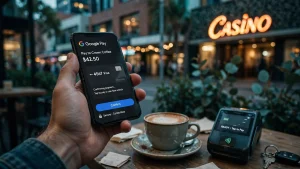
Osko’s presence in Australian banking does not prove that an online casino supports it, and bank-linked options may be different services.

A claim that an online casino accepts Osko needs to be treated as a specific payment claim, not as a general feature of Australian banking. Osko’s presence in the wider payment landscape does not establish that a particular gambling service supports it. Nor does a reference to bank-linked payments prove that Osko is available: payment methods are not interchangeable simply because they involve a bank account.
That distinction matters when assessing whether an online casino takes Osko in Australia. A clear claim would need to identify the payment method itself and explain the relevant conditions. Without that, terms such as “bank transfer” or “instant payment” do not settle the question. They may describe a different service, or omit conditions that determine whether a transaction is possible. The name of a payment method is not a substitute for evidence of acceptance.
There is also a legal boundary that changes how this subject should be read. Under the Interactive Gambling Act 2001, operators must not provide real-money online casino games to people located in Australia. The law applies to the operator’s provision of the service; it does not explicitly criminalise an individual for using an offshore site. The Australian Communications and Media Authority (ACMA) is responsible for enforcing the Act.
If you’re looking for a casino site to use with Osko in Australia, check that its available bank-transfer option supports Osko before depositing. These verdicts stick to the payment, deposit and licensing details available for each site.
SkyCrown
You can note SkyCrown’s Tobique Gaming Commission licence and A$30 minimum deposit. Its listed payout times are around 10–15 minutes for crypto and 1–5 days for fiat.
Kingmaker
Kingmaker lists a A$30 minimum deposit. Its stated payout times are around 90 minutes for crypto and 1–5 days for fiat.
LevelUp Casino
LevelUp Casino lists a A$15 minimum deposit and a Curacao eGaming licence, OGL/2023/174/0082, held by Dama N.V.
Neospin
Neospin’s listed credential is a Curacao Gaming Control Board licence, OGL/2023/176/0095, held by Hollycorn N.V.
House of Pokies
House of Pokies lists PayID payouts of 1–24 hours and a A$30 minimum deposit, with PayID deposits from A$10. Its source describes its licence as international but does not name the jurisdiction.
Uptown Pokies
Uptown Pokies is listed as operating under a Curacao licence since 2017, with a A$20 minimum deposit.
LuckyVibe
LuckyVibe’s listed credential is a Curacao Gaming Control Board licence, OGL/2023/176/0095, held by Hollycorn N.V.
Wild Tokyo
Wild Tokyo lists a Curacao licence and a A$10 minimum deposit. Its stated payout times are 30–60 minutes for crypto and 1–5 days for fiat.
7Bit Casino
7Bit Casino is listed as operating under a Curacao licence, with Dama N.V. as its operator.
DragonSlots Casino
DragonSlots Casino is listed under a Curacao Gaming Authority licence, with Jumpman Gaming Ltd as the licensee.
That distinction is not permission or a recommendation. Offshore casino services are not a lawful consumer offering in Australia, and Australian consumer law does not protect people who use offshore casinos. A payment claim cannot change either point. If a site says it supports Osko, that statement would concern its payment arrangements; it would not establish that providing casino games to Australians is lawful, or that a player has the protections available when buying a lawful local service.
For a reader considering the phrase “casino sites that accept Osko Australia 2026,” the useful dividing line is therefore between what a payment claim says and what it can prove. It may indicate that an operator says it accepts a named method. It cannot, by itself, establish the operator’s legal status in Australia, the reliability of the claim, or the protections available to a customer. Those are separate questions, not details that can be inferred from a logo or a short payment description.
The same caution applies to requests for the “best” Osko casino. A best-option label requires a stated criterion and reliable, comparable information. If acceptance itself has not been established, a ranking based on Osko support would rest on an uncertain starting point. Calling a service “best” would add confidence, not evidence.
 Paysafecard at Australian Casino Sites: What’s KnownLearn why Australian-facing casino claims, Paysafecard mentions and legal status must be checked separately; a search query alone confirms none of them.
 Casinos That Accept Litecoin in AustraliaCompare Litecoin with cards, mobile wallets and bank-linked services, and review bonus terms, withdrawals and Australian access before treating it as an…
Keep the scope narrow: Osko support is a claim about a payment method, while Australian law governs whether an operator may offer real-money online casino games to people in the country. Neither question answers the other. ACMA’s enforcement role is part of that legal context; it does not verify an operator’s payment claims or turn an offshore service into a protected local option.
For you, the practical reading is simple: do not treat a payment label as proof of lawful availability, consumer protection, or a dependable transaction. Those are different standards. A claim is not a safeguard.
A claim that an Australian-facing online casino accepts Osko cannot be treated as established merely because it appears in a headline, payment-method graphic or promotional description.
This distinction matters because payment claims can sound more definite than the details behind them. A logo may indicate a service is discussed, not that it is available to every customer or usable for every transaction. A general statement about bank-linked payments is not proof of Osko support, either. Without clear, current terms tied to a particular service, the claim remains unconfirmed.
For a payment method to be described accurately, the underlying information would need to say that the method is accepted by the relevant service and explain the conditions attached to that acceptance. A passing mention of Osko does not answer whether it applies to deposits, withdrawals, or both. Nor does it show whether availability depends on a customer’s circumstances or on the payment arrangements in place.
Those are not minor distinctions. A method named on a page might be unavailable for a particular transaction, while a bank transfer description might not specify the payment rail used. Do not read one label as proof of another. In particular, references to fast bank payments cannot be converted into a definite Osko claim unless the service explicitly identifies Osko and its role.
The same caution applies to wording such as “mobile casino” or “pokies site.” Those descriptions tell you what kind of service is being discussed; they do not verify its payment support. A site’s use of familiar Australian payment language does not establish that it accepts Osko, and it does not establish that the service is lawful for Australian customers.
Payment availability is also separate from identity and account procedures. Online casinos commonly ask customers to complete identity checks before they carry out financial transactions. That requirement does not confirm that Osko is offered, nor does an account check turn an unconfirmed payment claim into a verified one. They answer different questions.
If a payment description leaves the method, transaction type or conditions unclear, the careful reading is simply that those details have not been established. Avoid filling the gaps with assumptions based on how Osko works elsewhere or on a service’s description of its other payment options. Familiarity is not confirmation.
A useful way to assess a claim is to separate its components: Does it explicitly name Osko? Does it say which transaction the method is intended for? Are the relevant terms clear? These checks help you understand what a statement actually asserts. They do not amount to a recommendation to open an account or use an online casino.
 Skrill Casino Sites in Australia: What to VerifyLearn how to distinguish an Australian-facing casino from confirmed Skrill support, and why deposit access does not establish withdrawal or game availability.
 Casinos That Accept PayID in Australia: What to CheckLearn how to verify PayID in a casino cashier, compare acceptance and costs, and distinguish payment support from game availability.
There is a more fundamental issue than payment acceptance. Under the Interactive Gambling Act 2001, operators must not provide real-money online casino games, including pokies, to people physically located in Australia. This concerns the operator’s conduct; the law does not make a player criminally liable simply for using an offshore casino. However, Australian consumer law does not protect players who use offshore casinos.
So a claim that an online casino accepts an Australian payment method would not establish that the service is lawful to offer in Australia, or that a customer would have the protections available for ordinary domestic purchases. Payment compatibility and legal status are separate matters. One cannot be used as evidence of the other.
When a payment claim is unclear, keep the uncertainty intact. Do not infer support from a bank-transfer label, a mobile-friendly layout or broad wording about payment options. And do not mistake an account-verification requirement for proof of payment availability. Separate claims, separate evidence.
An amount attached to an Osko deposit description is not, by itself, a confirmed minimum. Deposit thresholds and available payment methods are operator-specific details; they cannot be inferred from wording that pairs a payment service with an AUD figure. The same applies to claims that a particular cashier accepts Osko: a familiar method name does not establish that the option is available to you.
Legal Warning
Under the Interactive Gambling Act 2001, operators must not provide real-money online casino games to people in Australia, and Australian consumer law does not protect players using offshore casinos.
There is also a legal boundary behind any payment discussion. Under the Interactive Gambling Act 2001, operators must not provide real-money online casino games to people in Australia. The Australian Communications and Media Authority enforces the Act. Australian consumer law does not protect players who use offshore casinos. These points matter before considering how a deposit might be made; they are not a recommendation to use an offshore service.
A useful payment claim would need to distinguish the minimum deposit from other possible amounts, such as a maximum transaction limit or a cashier’s suggested entry. It would also need to identify whether the payment option is actually offered to Australian customers and whether the stated amount applies to that option. Without those distinctions, a figure beside “Osko” can be mistaken for a working cashier rule when it may be no more than a search phrase or an outdated claim.
Do not treat a generic AUD amount as an Osko minimum. Nor should you assume that a bank-linked payment service follows the same steps as a card deposit. A method’s name does not establish the recipient details, processing path, availability, fees or transaction limits. Those terms belong to the specific payment arrangement, not to the word “Osko” alone.
That distinction is practical, not semantic. A deposit process is only clear when the payment method and the amount are both stated in the relevant cashier terms. A page that says “Osko accepted” without showing an applicable deposit option or conditions leaves an important part of the transaction unexplained. A stated amount without a confirmed method leaves the same gap in reverse.
A specialist review describes an American Express deposit process at casinos that offer the method: select Amex in the cashier, enter the card details and the deposit amount in AUD, then submit the payment. That description concerns a card transaction. It does not establish how an Osko payment would be initiated, what details it would require, or whether an Osko option is available.
The same review reports that Amex deposits are processed instantly. Treat that as a description of the reported card process, not as a general promise about every casino or payment channel. Instant processing for Amex cannot be transferred to Osko by analogy. Payment networks and cashier arrangements are not interchangeable merely because both may be used to add funds.
American Express Deposit
Method Selection
Select Amex in the cashier.
Enter Details
Provide the card details and the deposit amount in AUD.
Submit Payment
Submit the payment to complete the process.
A specialist review also reports that Amex deposits are available at some Australian online casinos. “Some” is important: it does not mean every operator accepts the card, and it says nothing about Osko acceptance. Availability can depend on the particular cashier and its current terms. A method appearing in an article is not proof that the same method remains available in a live payment interface.
There is a further legal limit on how to read card information in this market: credit card payments must not be accepted for online gambling services. The Amex process above is therefore a description of what a specialist review reports, not an invitation to use a credit card for gambling or a claim that such a payment should be accepted in Australia.
When comparing a deposit statement, separate four questions:
| Check | What the statement needs to clarify |
|---|---|
| Method | Is the named payment option actually identified? |
| Amount | Is the AUD figure a minimum, a maximum, or another cashier value? |
| Availability | Does the claim apply to Australian customers and the relevant cashier? |
| Processing | Is the timing stated for this method, rather than borrowed from another one? |
This avoids the common leap from “a payment method exists” to “this casino accepts it at a particular amount and processes it in a particular way.” Those are separate claims. The Amex steps and reported instant processing answer questions about that card flow only; they cannot fill in Osko’s terms.
If a payment description does not make the method and amount clear, the responsible conclusion is not to convert the wording into a deposit rule. And if the service involves an offshore casino, remember that Australian consumer law does not protect players using it. Clear payment language would not change the legal position.
A withdrawal has more than one point at which “fast” might be claimed: an operator may approve a request, a payment method may process it, and funds may take further time to clear. Those stages should not be collapsed into a single instant-payout promise. Treat “instant” as an unsubstantiated label unless the relevant service’s terms clearly explain what it means and when the funds become available.
That distinction matters when you are comparing searches for instant Osko withdrawals at Australian pokies sites. A rapid transfer between accounts is not, by itself, evidence that a gambling operator supports that payment route or that a requested withdrawal will arrive immediately. Nor does a deposit method establish a matching withdrawal method. The cashier’s payment rules, any account checks and the receiving institution’s handling are separate parts of the process.
A specialist review gives a specific, qualified comparison for Amex: casino withdrawals can take as long as five days to clear. That is not a general payment timetable, and it should not be transferred to Osko. It is also not a promise that every Amex withdrawal will take that long; the stated period describes a possible clearance time, not a guaranteed result for an individual request.
The same specialist review notes two conditions that affect the comparison. A player must previously have deposited with Amex before withdrawing through it, and not every Australian-facing casino permits withdrawals to that card. Because acceptance can differ between operators and may change, a payment logo or deposit option alone does not settle whether a withdrawal to Amex is available. The withdrawal terms are the relevant place to look.
For a useful comparison, keep three questions in separate columns: is the method accepted for withdrawals, what conditions apply, and what timing is actually stated? “Instant” answers none of those on its own. The Amex information at least supplies a reported clearance period and a prior-deposit condition; it cannot establish Osko availability or timing.
Attention: A fast-looking payment claim cannot replace legal protections or make an unlawful service safe.
Payment speed is only one consideration, and it does not establish that a service is lawful or that your money is protected. Under the Interactive Gambling Act 2001, operators may not provide real-money online casino games, including pokies, to people physically located in Australia. The Australian Communications and Media Authority enforces that law. The legal responsibility described here concerns providers; players are not criminally liable merely for using an offshore site.
That does not mean an offshore service carries the protections you might expect from a domestic consumer transaction. Australian consumer law does not protect players who use offshore casinos. A fast-looking payment claim cannot replace those protections or make an unlawful service safe. Dry distinction, but an important one.
If you encounter a claim that an Osko payout is immediate, look for the actual withdrawal conditions rather than relying on a headline. A meaningful statement would need to identify whether Osko is supported for withdrawals, whether the claim refers to approval or receipt of funds, and what qualifications apply. Without those details, “instant” is not a dependable expectation. It is a label.
The same care applies to claims about “no deposit” offers or real-money pokies. Promotional language does not clarify payment timing, and it does not change the legal position for online casino services in Australia. No offer or speed claim should be read as proof that a withdrawal route is available, that a payout will clear immediately, or that recourse exists if a dispute arises.
For a timing comparison, the defensible statement is narrow: a specialist review reports that Amex casino withdrawals may take up to five days to clear, with a prior Amex deposit required and withdrawal acceptance not universal. That comparison says nothing about Osko. It would be misleading to attach the Amex period to Osko, or to turn an unsupported instant label into a promised arrival time.
A “best” payment option only makes sense against a stated criterion. Acceptance, transaction limits and fees can point in different directions, so a single winner would conceal the trade-offs. For Osko, a ranking would also require reliable evidence of which services accept it; a payment method’s general features do not establish that any particular casino supports it.
A "best" payment option ranking requires a stated criterion, as acceptance, transaction limits, and fees can point in different directions.
Limits illustrate why comparisons need careful wording. A specialist review reports that Amex limits can be higher than those for Visa or Mastercard, but that is not a rule you can apply to every service. The same type of review notes that individual casinos set their own Amex deposit and withdrawal limits, which may differ. A larger ceiling is only an advantage if the payment method is accepted and the limit suits your circumstances. Bigger is not automatically better.
Fees need their own comparison. A method with a low stated fee may still involve other charges, while one with a higher limit may be irrelevant if the merchant or card issuer blocks the transaction. Check the applicable terms for the particular payment method and transaction, rather than treating a general comparison as a promise. For Osko, do not assume card limits or fee arrangements apply: they concern a different payment method.
A useful comparison table would separate the criteria instead of collapsing them into a score:
| Criterion | What it tells you |
|---|---|
| Acceptance | Whether the payment method is available for the transaction |
| Limits | The permitted transaction range under the relevant terms |
| Fees | Charges that may apply to the transaction |
| Conditions | Any restrictions that could affect use |
Bonus offers do not settle the payment question either: an advertised promotion cannot establish that Osko is accepted, nor does it make a payment method better on acceptance, limits or cost.
There is also a legal boundary to keep in view. The Interactive Gambling Act 2001 prohibits operators from providing real-money online casino-style games to people in Australia. Australian consumer law does not protect players who use offshore casinos. That makes an “Australian best” label especially poor evidence of safety or suitability; it should not be treated as an endorsement or an invitation to use an offshore service.
So define the criterion before comparing. If acceptance matters most, verify that directly; if limits or fees matter, assess those separately and against the relevant terms. No ranking is the honest result.
A payment option and access to a particular game are separate questions. Even if a cashier lists a way to transfer funds, that alone does not establish which games, if any, can be accessed through it. The same distinction applies to Osko: a reference to an Osko payment does not verify support for any game or category.
This matters because payment details can look more conclusive than they are. A cashier concerns the movement of money; game availability concerns the service being offered. Neither should be treated as proof of the other. In particular, a payment label cannot establish that a service is lawful to provide to people in Australia.
The legal position is relevant here. Under the Interactive Gambling Act 2001, operators must not provide real-money online casino games to people physically located in Australia. The Australian Communications and Media Authority enforces that law. Australian consumer law also does not protect players who use offshore casinos. A payment method does not change those limits or create consumer protections.
Before processing financial transactions, an online casino may require you to complete a Know Your Customer assessment. This is an identity-checking step, not confirmation that a given payment method works for a particular game. Nor does completing the assessment make the underlying service lawful for Australian customers.
Keep the questions distinct: does the cashier display a payment option, what transaction conditions apply, and what service is being offered? An answer to one does not settle the others. The distinction is plain; the labels often are not.
So, descriptions such as “games with Osko” should not be read as evidence that Osko provides access to a particular game. A payment claim needs to be assessed as a payment claim, while game access and legal status require separate consideration. No game-specific support follows merely from a payment reference.
For a careful comparison, record the payment method and the game-related claim in separate fields rather than combining them into one verdict. That keeps an unconfirmed payment association from being mistaken for verified game support. It also avoids treating a cashier listing as an endorsement or as assurance that Australians can lawfully use the service.
Australian consumers have a broad everyday payment mix. Contactless credit and debit cards are accepted almost everywhere in the country, and mobile wallets such as Google Pay and Apple Pay are similarly widespread. People are also comfortable moving between cards, mobile wallets and services connected to bank accounts, including PayPal.
That context helps explain why a payment method’s familiarity can be mistaken for proof that a particular service accepts it. A payment option may be common in shops or useful across online services without being available for every transaction type. The same distinction applies when considering whether an Australian-facing casino supports Osko: general payment habits do not establish acceptance by an individual operator.
Nor does the use of a bank-linked service settle the question. PayPal, for instance, belongs to the broader range of services Australians may use alongside cards and mobile wallets; that does not make its availability evidence of Osko support. Each method has to be treated as a separate option, and a general description of consumer behaviour cannot confirm which methods a particular site enables.
There is also a legal boundary behind the payment question. Under the Interactive Gambling Act 2001, operators must not provide real-money online casino games to people physically located in Australia. Australian consumer law does not protect players who use offshore casinos. Payment familiarity does not change either point, and it should not be read as an endorsement or assurance about access.
For a careful comparison, keep three things separate: what Australians commonly use in everyday payments, what a specific service actually accepts, and whether the activity is lawful for an operator to provide in Australia. Only the first is described by broad national payment habits. Those habits cannot establish that any Australian casino accepts Osko, uses it for a transaction, or offers it as a cashier option.
Common does not mean confirmed.
A payment option for deposits does not automatically work for withdrawals. For Osko, the relevant distinction is whether a service explicitly lists it as a withdrawal method, not whether a bank-linked payment appears somewhere in a cashier. Without clear terms stating that Osko payouts are supported, its availability and processing time should be treated as unconfirmed.
If you are checking an online payment policy, look for separate wording about deposits and withdrawals, any eligibility conditions, and fees. A method described only for adding funds does not establish that winnings can be sent back through it. Nor does the word “instant” on a payment description establish how quickly a withdrawal is approved or reaches your account.
Amex provides a separate comparison, not evidence about Osko. A specialist review reports that some casinos may refuse withdrawals to Amex or apply an extra withdrawal fee. It also describes Amex deposits as generally fee-free while noting that charges depend on the casino and withdrawals may incur fees. Those statements concern Amex and should not be carried over to Osko. Different payment rails, different rules.
Specialist reviews report that some casinos may refuse withdrawals to Amex or apply an extra withdrawal fee, and that Amex deposits are generally fee-free though charges depend on the casino.
Before relying on any payout route, read the cashier and withdrawal terms for the specific service, and check whether the method is available for withdrawals rather than deposits alone. Account verification can also be required before financial transactions, so a listed payment method does not by itself settle what happens to a withdrawal.
There is a more important Australian context. The Interactive Gambling Act 2001 prohibits operators from providing real-money online casino games to people in Australia, and the Australian Communications and Media Authority enforces the law. Australian consumer law does not protect players who use offshore casinos. A payment claim is not a safeguard, and a stated payout method does not change the legal position.
So an Osko withdrawal should not be assumed from a deposit reference, a general payment label, or an Amex comparison. Treat the method, conditions, fees and timing as separate points to establish—and do not mistake an unconfirmed payout claim for a dependable route.
Osko and card payments are different routes, so details about one should not be transferred to the other. A casino’s handling of Amex, for instance, says nothing by itself about whether it accepts Osko. Treat each payment option as a separate condition to check.
A specialist review reports that some online casinos do not accept Amex. Even where a cashier offers it, a payment can still be declined: Amex may block transactions to a particular website, and an Australian bank may block gambling-related Amex payments at the issuer level. Acceptance, then, can depend on more than the payment logo displayed at checkout.
That distinction matters when comparing card payments with an Osko casino payment method. Card acceptance is subject to the card provider and, potentially, the issuer. Those restrictions are specific to card transactions; they do not establish how Osko payments are handled. Nor does an Amex option in a cashier confirm that Osko is available there.
If you are checking a payment option, look for its name in the cashier and read the terms attached to that option. Keep the evidence specific: an Amex rule applies to Amex, and an Osko claim needs confirmation for Osko. Similar purposes do not make payment methods interchangeable.
The same care applies when you see a claim that a casino accepts Osko. Confirm that the cashier identifies Osko itself, rather than assuming that a bank-linked payment route or card option means the same thing. If you are comparing with a card, check that card’s acceptance and issuer restrictions separately.
For Amex, the practical issue is whether the casino accepts the card and whether the issuer permits the transaction. For Osko, verify the payment method itself. No shortcut.
A payment method and a game category are separate questions. A reference to Osko does not, by itself, establish that a particular service accepts it or that any specific game can be accessed through it. Fees also cannot be transferred from one payment method to another by assumption.
For comparison, a specialist review reported that an Amex transfer may attract a 1.5% surcharge, while Amex currency conversion may incur a 3% fee. Those are distinct charges: one concerns a transfer surcharge, the other currency conversion. Neither figure describes an Osko charge. Check the relevant payment terms before making any financial decision; fees and acceptance can depend on the service and payment provider.
The legal context matters in Australia. The Interactive Gambling Act 2001 prohibits operators from providing real-money online casino-style games, including slots, to people physically located in Australia. Australian consumer law does not protect players who use offshore casinos. A payment option does not change either point.
Keep the comparison narrow: payment acceptance, any stated fee, and currency conversion are separate criteria. A claim about one cannot establish the others. No shortcut there.
Limits are set by each casino and can vary. Check the casino’s cashier or payment terms for its Amex limits.
Check the casino’s cashier for American Express as a deposit option; some casinos do not accept it. Jackpot City Casino, Spin Palace, Ruby Fortune, Ignition Casino, Joe Fortune and PlayAmo are listed as supporting Amex deposits for Australian players.
Yes, at casinos that accept American Express, gift cards can be used for deposits only.
Look for American Express in the casino’s cashier or payment terms, and confirm that it is available for deposits. Some casinos do not accept Amex, and an issuer may also block a payment to a particular website.
Some casinos allow Amex withdrawals, but others do not; you generally need to have deposited with Amex first. Withdrawals can take up to five days, and fees may apply.