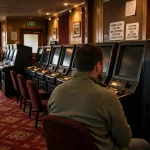
Bonus buys provide direct entry to a round, but outcomes remain random; demos and game terms help assess mechanics, access and value.

A bonus-buy feature changes how you enter a slot’s bonus round. Instead of making ordinary spins and waiting for the game to trigger that feature, you pay to enter it directly. The purchase replaces the usual build-up through base-game play; it does not change the fact that the bonus round’s outcomes are random.
That distinction affects the shape of a session. With ordinary play, you make a stake on each spin and may reach a bonus after an unpredictable run. With a buy feature, you choose when to attempt the bonus, but the choice is not a shortcut to a particular result. A purchased round can still produce a small return or no return against its cost. Access is immediate; a favourable outcome is not.
The feature also changes what you are paying for. An ordinary spin can produce a base-game result and may contribute to a naturally triggered bonus. A buy option directs the cost towards entering the bonus round instead. The game’s rules should explain what the purchase activates and how its outcomes work. Treat the buy price and the bonus mechanics as separate details: knowing the entry cost does not tell you what the round will return.
Bonus-buy features and availability can vary by game and casino, so check the terms and the slot details before you play. This list gives you a concise reference to the operator information available for this page.
SkyCrown
You can note SkyCrown's listed Tobique Gaming Commission licence and its payment timings: crypto payouts are around 10–15 minutes, while fiat payouts take 1–5 days. The minimum deposit is A$30.
Kingmaker
You can use the listed payment details to assess whether Kingmaker suits your budget and preferences: the minimum deposit is A$30, with crypto payouts around 90 minutes and fiat payouts taking 1–5 days.
LevelUp Casino
LevelUp Casino lists a Curacao eGaming licence, OGL/2023/174/0082, held by Dama N.V. Its minimum deposit is A$15.
Neospin
Neospin's listed credential is a Curacao Gaming Control Board licence, OGL/2023/176/0095, held by Hollycorn N.V.
House of Pokies
House of Pokies lists an international iGaming licence, though the source does not name the jurisdiction. You can deposit from A$30, or from A$10 using PayID; PayID payouts are listed at 1–24 hours.
Uptown Pokies
Uptown Pokies is listed as operating under a Curacao licence since 2017. Its minimum deposit is A$20.
LuckyVibe
LuckyVibe lists a Curacao Gaming Control Board licence, OGL/2023/176/0095, held by Hollycorn N.V.
Wild Tokyo
Wild Tokyo lists a Curacao licence and a minimum deposit of A$10. Its listed payout times are 30–60 minutes for crypto and 1–5 days for fiat.
7Bit Casino
7Bit Casino is listed as Curacao-licensed and operated by Dama N.V.
DragonSlots Casino
DragonSlots Casino lists a Curacao Gaming Authority licence held by Jumpman Gaming Ltd.
Sweet Bonanza illustrates the difference between a trigger and a purchase. A specialist review describes four or more scatters as awarding ten free spins in its account of the game’s ordinary bonus trigger. It also describes multiplier bombs appearing during free spins, with their values combined before being applied to a winning tumble. These are details reported by that review, not a guarantee that every version works identically. The key point is that the free-spin round is a bonus event; buying entry, where offered, changes how you reach it, not the random nature of its results.
So, what are bonus-buy slots? They are slots with an option to purchase access to a bonus feature rather than relying solely on normal play to trigger it. The option may make a session feel more direct, but it also concentrates your stake into one entry decision. You are choosing a route into the feature, not choosing its outcome. That is the essential trade-off.
A demo can help you read a slot’s rules before deciding whether its bonus-buy feature fits the way you want to play. Treat it as an inspection tool, not a preview of what a short real-money session will return. The useful question is not whether a few spins went well, but what the game information says and how its mechanics work.
 Adelaide casino: hotel stays, deals and visit detailsLearn how to verify whether accommodation is formally linked to Adelaide’s casino, compare room-deal conditions and separate confirmed venue details from
 Low-Volatility Slots in Australia: What to KnowLearn how lower volatility relates to hit frequency, payout size and session risk, and why frequent small wins do not guarantee a…
 Best Pokies in Perth: What Players Can VerifyLearn how to compare pokies without treating RTP as a session forecast, and what venue information can—and cannot—confirm.
Start with the rules or paytable. Look for the stated return to player (RTP), the symbols and win conditions, and any explanation of the bonus feature. If the demo lets you open the bonus-buy option, inspect its description there too. The aim is to understand what the game says it will do, not to infer a reliable outcome from a handful of spins.
RTP is a theoretical calculation of how a game is expected to return across an enormous volume of spins, potentially millions. It is not a promise that a particular player will receive that share back, nor a forecast for one session. A displayed RTP describes long-run statistical behaviour; a short run can look very different.
When comparing two stated RTP figures, the higher one indicates a theoretically better return over time, all else being equal. That is a useful comparison, but it does not turn the figure into a guarantee or tell you what will happen next. RTP is a measure of expected performance across repeated play, not a personal result.
The paytable or rules are usually where a slot displays its RTP. Check the information inside the game rather than relying on memory or a title alone. If you cannot find the figure, you cannot make an RTP comparison with confidence. A demo is useful precisely because it gives you room to locate and read the game information without treating the first few outcomes as evidence.
Each spin is generated independently by a Random Number Generator (RNG). The result of the previous spin does not make a particular result more or less due on the next one. A run of wins does not establish that another is coming, and a string of losses does not mean the game owes a return.
This matters when testing a bonus-buy slot in demo mode. A few tries can show where controls and explanations are, but they cannot validate the RTP or reveal a dependable pattern. Outcomes are random events, not a sequence that gradually corrects itself within your session.
It also means that demo results should not be treated as a miniature statistical study. You may see a feature trigger quickly, or not see it during the time you spend inspecting the game. Neither observation changes the stated theoretical return. The sample is simply too limited to stand in for the vast number of spins behind the calculation.
Use a simple checklist as you explore:
These checks help you judge whether you understand the game, not whether it is likely to pay in a later session. If the explanation is unclear, pause rather than filling the gaps with assumptions. A polished screen is not a substitute for readable rules.
The distinction is especially important when a bonus feature is involved. The demo may let you inspect how the game presents that feature, but its results do not establish what a future purchase will return. Nor does the feature change the basic meaning of RTP: the figure remains a theoretical measure over extensive play, while each spin remains an independent RNG outcome.
Keep the decision criterion plain. First, find the stated RTP; then read the rules that explain the game. Use demo play to check that information and understand the interface, not to predict a winning streak or estimate a short-session return. Random means random.
“Free” can refer to two different things in a slot listing: a game opened in demo mode, or a promotional balance described as available without a deposit. They are not interchangeable. A demo lets you practise without receiving promotional funds; a no-deposit offer, if one is presented, is a promotion with conditions that need to be read separately.
That distinction matters when you are looking for bonus-buy games to try without staking real money. Seeing “free” beside a game does not establish that its bonus-buy feature is enabled in demo mode. Nor does it show that a promotional balance can be used to buy a bonus. Those details depend on the specific game version and promotion, so a headline alone cannot settle them.
"Free" can refer to either a game in demo mode or a promotional no-deposit balance; these two options are not interchangeable.
A demo can be useful for familiarising yourself with a game’s interface and seeing how its features work in that mode. But it does not mean you have received a cash balance, and it does not turn a promotional claim into a verified offer. Conversely, wording about a no-deposit bonus should not be read as a promise that you can practise every feature for free. Check what the description actually says and whether it identifies the mode, eligible games and applicable conditions.
The same care applies to phrases such as “free bonus-buy slots” or “buy a bonus for free.” They may sound like a single product, but they can blur several separate questions: Is the game available in demo mode? Is the bonus-buy option usable there? Is a promotional balance being offered? If so, what does its wording permit? Each point needs its own answer. A broad label does not provide one.
Treat an advertised balance as a promotion, not as a synonym for demo play. Before relying on a claim, read its terms and confirm what it applies to; do not infer a cash value, eligibility, or feature access from the words “free” or “no deposit” alone. No particular free-play option or offer can be assumed from those labels.
If your aim is simply to explore a game without staking, focus on whether the game itself offers a demo and what that mode lets you access. If you are assessing a promotional balance, look for the written conditions rather than assuming it works like unrestricted practice. Different questions, different checks.
 Best Video Slots in Australia: How They WorkExplore how video slots work across devices, how free play differs from real-money play, and what to check in RTP; each spin…
 Best Pokies in South Australia: What to CheckCompare how pokies use a Random Number Generator, what return information is available, and which venue and responsible-play checks matter—not payout promises.
 Best Pokies in Sydney: How to Check VenuesLearn how to verify a Sydney venue, check opening times and compare travel routes; map results are leads, not confirmation.
A free-play demo can help you see how a game is laid out: where its controls sit, how its symbols appear and what information is available on screen. If the demo includes a bonus-buy option, it may also show how that feature is presented in that particular version. Those observations are useful, but they describe the demo you are viewing—not every version of the game.
The important distinction is configuration. Online pokies use a Random Number Generator (RNG), and each game has a theoretical return to player (RTP). A specialist review reports that the operator selects the RTP build. That setting may not be shown on the game’s lobby tile, so a free demo’s appearance alone cannot establish which RTP build you would encounter elsewhere.
Nor does seeing the same title and artwork prove that two versions have identical settings. A demo can be a preview of its own configuration; it is not a certificate for another casino’s version. A familiar name is not a configuration check.
Use free play to inspect the game itself, not to infer details that the demo does not display. Before depositing, open the in-game information panel or paytable in the version you are considering and confirm its stated RTP. If the relevant information is unclear or unavailable, the lobby listing cannot fill that gap.
This matters when comparing free demo slots with bonus-buy features. The feature may be visible in a demo while the RTP information you need is elsewhere—or may differ in another build. Treat the demo as a way to understand what is on its own screen, rather than evidence that a wagering version will match it.
A free-play demo describes only its own configuration and is not a guarantee that a real-money version at another casino will have the same RTP settings.
The practical rule is simple: check the version, not just the title. A free bonus-buy demo may clarify how that demo behaves, but it cannot confirm the settings of a separate casino version. Same game name. Different question.
A bonus-buy feature does not change the legal status of the service offering it. In Australia, the Interactive Gambling Act 2001 prohibits operators from providing online pokies to people in the country. The restriction also covers online casino-style games such as poker and table games. It applies to the operator providing the service; it does not make an individual player liable simply for playing at an offshore site.
That distinction matters when you encounter a game advertised as having a bonus buy. A website may display the game or describe a way to enter its bonus round, but that does not mean an Australian-licensed online casino is offering it. Locally licensed Australian operators cannot provide online pokies. Where a game is accessible to Australian players, the service is therefore being supplied from offshore rather than under a local online-casino licence.
“Offshore-licensed” describes the operator’s position in another jurisdiction. It does not mean that the service is approved under Australian law or covered by Australian consumer protections. Offshore operators sit outside those protections, leaving a different legal and practical position from a locally regulated service. The feature’s name does not bridge that gap. A casino bonus buy remains part of an online gambling service, not an exception to the rules.
 3-Reel Slots in Australia: How to Compare GamesLearn why three reels do not predict payouts, how to check RTP and paytables, and what an RNG means for each independent…
 High-volatility slots in Australia: how they workLearn how RNG independence, payout volatility and bankroll choices differ. Each spin is independent, so a feature is never due.
 Casino in Perth: Stays, Dining and What to CheckCompare Perth casino accommodation, dining, parking and visit details, and learn why offshore online casino services are not regulated under Australian law.
Sweet Bonanza is described as available to Australian players only through offshore-licensed casinos in a specialist review. That is a statement about reported access, not an endorsement or assurance that a particular site is currently reachable, lawful to operate in Australia, or covered by local protections. Availability can also be disrupted when access to a website is blocked.
The same distinction applies to other games with a buy-in bonus option. Seeing a title mentioned online, or finding a page that describes a bonus-buy casino, does not establish that Australian operators may provide it. Nor does it establish that a given offshore site can continue to serve Australian users. Game availability and legal permission are separate questions.
The law focuses on the service provider. It prohibits operators from offering online pokies to Australian residents, while individuals are not penalised simply for playing at offshore sites. That does not turn offshore access into a locally regulated arrangement. In short, the player’s position and the operator’s obligations are not the same thing.
The Australian Communications and Media Authority (ACMA) oversees compliance with federal interactive-gambling rules and enforces the Interactive Gambling Act. Its powers include asking Australian internet service providers to block websites that provide prohibited interactive gambling services or advertise them in Australia. Blocking is one way the regulator acts against services it considers unlawful; it does not create a local licensing route for online pokies.
Legal Status
In Australia, the Interactive Gambling Act 2001 prohibits operators from providing online pokies to people in the country.
ACMA reports that, following enforcement action, it has blocked more than 1,455 illegal gambling and affiliate websites since November 2019. It has also been reported that more than 210 illegal services withdrew from the Australian market after enforcement began in 2017. Another published tally gives the figure as over 190. These totals differ, so the withdrawal count should not be treated as one settled figure.
A block can affect what appears accessible from Australia, but a site’s presence or absence at a particular moment is not proof of legal status. A website may be reachable before a block takes effect, or become inaccessible after an enforcement step. Search results and game listings are not a substitute for understanding the underlying restriction.
This is why labels such as “best bonus-buy casinos” can obscure the key issue. A ranking or game catalogue cannot make an offshore operator locally licensed, and the feature itself does not establish that a service is permitted. The relevant legal frame is that Australian operators cannot offer online pokies, while ACMA monitors and enforces the rules applying to prohibited services.
For readers looking at a named title or a casino buy-bonus option, the practical distinction is straightforward: a game listing may describe what a product offers, but it cannot establish that the operator is authorised to provide online casino games in Australia. Offshore access may be reported, but it exists outside Australian consumer protection and can be subject to ACMA blocking. The legal position is not a game feature.
A lobby tile can help you identify a game, but it cannot tell you which return-to-player (RTP) configuration is running. That distinction matters when you are comparing pokies with a bonus-buy option: recognising the feature and knowing the game’s configured RTP are separate checks.
A specialist review reports that the operator selects the RTP build, which is not shown on the lobby tile. Treat the tile as an identifier, not a specification sheet. It may show a game’s title or artwork, but the figure relevant to the version available to you needs to be confirmed inside the game.
Before wagering, open the game and find its information panel, rules or paytable. Look for the RTP stated there and confirm that you are viewing the information for the game that has actually loaded. If the figure is unclear, absent or inconsistent with another description, do not assume that the lobby listing settles the question.
This is the practical answer when you are asking which games let you buy a bonus: first establish that the feature is available in the particular game, then verify the configuration in its own information. A name or image alone cannot confirm either detail. Where the feature is described in promotional copy, treat that as a prompt to check the game itself, not as a substitute for its rules.
The same approach applies when comparing two games that both offer a bonus buy. Record the RTP shown in each game’s information panel, alongside the game name and the version you opened. That makes the comparison about the configurations presented to you rather than about labels in a lobby. If you revisit a title in another setting, check again; the same name does not establish that the displayed RTP is identical.
A bonus-buy label answers a limited question: the game offers a way to enter a bonus feature through a purchase option. It does not, by itself, tell you what RTP applies to that version. Nor does a familiar title confirm that another listing uses the same build. Keep those checks distinct, and do not infer one from the other.
If you cannot locate the in-game information panel, or cannot tell which RTP it applies to, you have no reliable basis for treating a figure elsewhere as the configuration in front of you. Pause rather than filling in the gap from memory, an old review or a lobby description. A clear figure in the loaded game is the useful comparison point.
That also keeps the question “how do you buy a bonus on a slot machine?” in proportion. The purchase control, where present, is a game feature; the paytable and information panel are where you check the game’s stated configuration. Finding the control is not verification. Read the details before wagering, and make comparisons only between figures that are actually displayed for the versions you are assessing. The tile is not enough.
 7-Reel Slots in Australia: Features and Free PlayExplore seven-reel slots, paytables, free play and Australian access; one described Sweet Bonanza version awards 10 free spins for four or more…
 Brisbane Casino Guide: Hotel Rooms, Dining and FacilitiesCompare room categories, booking terms, dining options and practical details, including whether a hotel is operating and connected to the casino venue.
Finding an online game and understanding how a payment method works are separate tasks. A bonus-buy feature tells you something about the game; it does not tell you which deposit methods a site accepts, how a transaction is processed or what conditions apply to a payment.
A specialist review reports that several offshore operators it tested accepted PayID. Treat that as a limited report about the operators and checks covered, not as a guarantee that PayID is available elsewhere or remains available now. Payment options can differ between services and may change. The presence of a familiar method is not evidence that a gambling service is authorised in Australia.
Keep the checks distinct:
A payment logo or a named method answers none of those questions by itself. Nor does a deposit option establish how withdrawals work. No withdrawal time should be inferred from the availability of a deposit method; those are separate processes, governed by the applicable terms. Read the details rather than filling the gaps with assumptions.
PayID is therefore a narrow point of comparison, not a recommendation or a reason to choose a site. If a service lists it, check the service’s own current payment information and consider the legal position before taking any action. Do not assume that a method accepted by one operator will be available, handled in the same way or subject to the same conditions elsewhere.
The same distinction applies when you are looking for bonus-buy pokies in Australia: finding a game online does not settle questions about payment, and payment access does not establish that the game or service is lawful. Keep each decision on its own line in your comparison. A convenient-looking payment label is not a complete payment policy.
When assessing a site, keep these three distinct:
Sweet Bonanza provides a useful example of why a game’s name alone is not enough to identify its return setting. A specialist review reports an RTP of 96.51% for the game, but versions can display a different figure. Treat that percentage as a reported configuration, not as a guaranteed setting for every copy of Sweet Bonanza.
RTP, or return to player, is a theoretical measure calculated across a very large number of spins. It does not predict what will happen in a short session, and it does not mean that a player will receive that proportion of their stake back. Each spin is a separate random event, so previous results do not determine the next one. The figure describes long-run expected performance under the configuration to which it applies.
That distinction matters when you are looking at a particular bonus-buy slot. A headline figure can make two games appear easy to compare, but the comparison is meaningful only if the figures refer to the versions actually being considered. For Sweet Bonanza, 96.51% is a reference point reported by a specialist review—not a universal value attached permanently to the game’s title.
The practical reading is therefore narrow: the reported percentage tells you what one reviewed version was said to return theoretically over extensive play. It says nothing reliable about the results of your next spins, and it cannot establish that another version has the same setting. A familiar title is not a configuration label.
 Five-Reel Slots in Australia: RTP and RulesLearn how RTP, randomness, paytables and bonus mechanics shape comparisons. A stated RTP is calculated across vast numbers of spins, not a…
 Progressive Jackpot Slots: How Pools Grow and PayLearn how spins fund progressive pools, where jackpots are won and which bet rules matter; contribution rates vary by game, and estimates…
A bonus-buy feature may be the reason a player looks at a game, but it is separate from the RTP figure. The percentage does not tell you whether a bonus purchase is available in a particular version, nor does it describe the cost or outcome of such a feature. Those details should not be inferred from a game’s name or from a return figure quoted elsewhere. Keep the measures distinct.
For a clean record, note the game title, the displayed RTP, and where that figure appears. If the in-game information gives a value other than 96.51%, the displayed value is the relevant one for that version. If no figure is visible in the material you are checking, the review figure cannot fill that gap. This is a simple comparison rule, not a prediction method.
Sweet Bonanza is thus a concrete example of the limits of headline statistics. Its reported 96.51% RTP gives you a specific figure to recognise, while the qualification about differing versions prevents that figure from being treated as fixed across all configurations. Neither fact makes the game inherently better than another. The more useful question is whether the number belongs to the version in front of you.
That is the distinction worth keeping: a reported RTP can describe a reviewed build, while the game title identifies a product that may appear in more than one configuration. The percentage is precise; its application is not universal. A decimal point is not a promise.
Compare RTP Settings
Identify the reported figure
Note a reference point, such as the 96.51% RTP reported for Sweet Bonanza in a specialist review.
Check the loaded version
Open the in-game information panel of the specific version you are playing.
Verify the actual value
Compare the displayed figure to the reported one; if it differs, the in-game value is the relevant one for that version.
A bonus-buy option is a feature to note, not a verdict on a game. If you are comparing pokies that let you buy access to a bonus, separate the question “Does it have the feature?” from “Is this the version I want to play?” The first is a yes-or-no detail; the second needs information you can verify.
Start with the game’s displayed RTP. A higher RTP theoretically offers a better return over time than a lower one, but neither figure predicts what will happen in a short session. RTP is generally shown in the game’s rules or paytable, so use that information rather than an estimate attached to a game name or lobby tile.
Next, confirm the configured version. A specialist review reports that the operator selects the RTP build and that the lobby tile does not show which build is in use. Open the game’s own information panel and check the figure there before wagering. If the game’s displayed details do not establish the configuration, the lobby listing cannot fill that gap. Conveniently placed tiles are not configuration data.
A useful comparison table can stay simple:
| Check | What it tells you |
|---|---|
| Bonus-buy feature | Whether the game offers the feature you are looking for |
| In-game RTP | The theoretical return figure for the displayed configuration |
| Game information panel | The details to check for the version presented |
Do not let the feature column outweigh the others. Two games may both offer bonus buys, yet the figures shown in their information panels may differ. Conversely, a higher displayed RTP is not a promise of better results in your session; it is a theoretical comparison over a vast number of spins.
So, when weighing the best bonus-buy slots for your own criteria, treat “best” as conditional: the feature may matter to you, while the verified RTP build may matter more. Record what each game actually displays, and compare like with like. The name alone does not settle it.
If you are weighing which bonus-buy game to examine, use its displayed return to player (RTP) as a first filter—not as a verdict. A useful starting criterion is an RTP of 96% or higher. That threshold helps you compare the figures shown for games, but it does not identify a guaranteed winner or say what a particular session will return.
Do not infer the figure from a game’s name, provider or lobby tile. Open the game’s information or paytable and check the RTP shown for the configured version. The displayed figure is the one relevant to your comparison; a title alone cannot confirm it.
A simple record keeps the choice disciplined:
| Check | What to note |
|---|---|
| Displayed RTP | The percentage in the game’s information |
| Configuration | The version shown in that same panel |
| Decision | Whether it meets your chosen threshold |
For a game you might buy a bonus in, apply the same test before making any deposit. If the in-game information gives a lower figure than you expected, reassess rather than relying on a number remembered from elsewhere. If no RTP is displayed clearly, you do not have a sound basis for comparing it on this measure.
RTP is a selection criterion, not a session forecast. A higher percentage indicates a theoretically better return over time than a lower one, but it cannot tell you what will happen in the next spins or bonus. The practical answer to “which slot should I buy a bonus in?” therefore begins with a verified figure, then stops short of promising an outcome.
One measure, not a promise.
Yes. Check the game’s rules or paytable, or its in-game information panel before wagering; the RTP build can vary by operator.
Yes, several offshore operators accept PayID. Online pokies are restricted in Australia, and offshore operators are outside Australian consumer protection.
A higher RTP theoretically offers a better return over time, though it does not predict what you will win in a session.
Look for slots with an RTP of 96% or higher, then verify the figure in the game’s rules, paytable or information panel. RTP is a long-run measure, not a guarantee for your session.
RTP is a theoretical statistical measure of a game’s expected return across a vast number of spins, often millions. It does not predict the result of an individual spin or session.