Understand what Plinko slot return figures mean, how casino-site checks can affect withdrawals, and why bonus credit is not cash.

A Plinko-style game presented as a slot belongs to the slot category for the purpose of reading its return figures. The familiar Plinko name may suggest a board, falling objects or a particular visual theme, but it does not turn a slot’s published return into a guarantee about an individual result. The figure describes a game-level measure, not what you should expect to receive from a single session.
For KA Gaming titles, slot return-to-player percentages typically sit between 94% and 96%. That range is useful as a starting point when interpreting provider information. It is not a promise that a particular game will return a fixed share of your stake, nor a forecast of how much you will have after playing. A percentage can describe the theoretical relationship between stakes and returns over extensive play; an individual outcome can differ sharply from that theoretical measure.
RTP, or return to player, is expressed as a percentage. Read it as a theoretical property of the game, rather than a personal payout rate. A figure of 94% does not mean that each player gets 94 cents back for every dollar staked, or that the game must return a particular amount by the end of a session. Likewise, a figure at the upper end of KA Gaming’s stated range does not establish that a title will produce better short-term results for you.
Choosing a Plinko casino in Australia means checking the details that matter to you, including licensing information, deposit minimums and payout methods. Use these operator notes as a starting point and verify the current terms before you play.
SkyCrown
SkyCrown lists a Tobique Gaming Commission licence and a A$30 minimum deposit. Its stated payout times are around 10–15 minutes for crypto and 1–5 days for fiat.
Kingmaker
Kingmaker has a A$30 minimum deposit. Its stated payout times are around 90 minutes for crypto and 1–5 days for fiat.
LevelUp Casino
LevelUp Casino lists a Curacao eGaming OGL/2023/174/0082 licence held by Dama N.V. Its minimum deposit is A$15.
Neospin
Neospin lists a Curacao Gaming Control Board OGL/2023/176/0095 licence held by Hollycorn N.V. That licensing detail is the key verified point available here.
House of Pokies
House of Pokies lists an international iGaming licence, though the jurisdiction is not named in the source. PayID payouts are stated as 1–24 hours; the minimum deposit is A$30, or A$10 for PayID.
Uptown Pokies
Uptown Pokies lists a Curacao licence and is described as operating since 2017. Its minimum deposit is A$20.
LuckyVibe
LuckyVibe lists a Curacao Gaming Control Board OGL/2023/176/0095 licence held by Hollycorn N.V. The licensing information is the verified detail available here.
Wild Tokyo
Wild Tokyo lists a Curacao licence and a A$10 minimum deposit. Its stated payout times are 30–60 minutes for crypto and 1–5 days for fiat.
7Bit Casino
7Bit Casino is listed as Curacao-licensed and operated by Dama N.V. These are the verified details available here.
DragonSlots Casino
DragonSlots Casino lists a Curacao Gaming Authority licence, with Jumpman Gaming Ltd named as the operator. That licensing information is the verified detail available here.
The distinction matters because a percentage looks precise even when it cannot answer the question many players have in mind: “What will happen if I play this now?” RTP does not resolve that. It cannot tell you whether a short run will result in a gain or a loss, how quickly the balance may change, or when a particular result might appear. Those are not conclusions you can draw from the return percentage alone.
Keep the comparison narrow. If you are reading information for two KA Gaming slot-style titles, their RTP figures can help you compare the stated theoretical return measure. They do not, by themselves, tell you which game is more enjoyable, which has a more suitable pace, or which will produce a better result in a session. “Higher RTP” means higher on that criterion only. The winner depends on what you are comparing.
A title described as Plinko may be grouped or marketed as a slot-style game, but the label alone does not identify its RTP. Nor does a shared theme establish that two titles use the same rules or have the same return figure. To assess a specific game, look for information tied to that exact title and provider, rather than transferring a percentage from one Plinko-themed slot to another.
 Casino in Hobart: What to Confirm Before VisitingLearn how to distinguish live poker, tournaments, accommodation and other casino facilities, and which details require direct confirmation.
 Online keno casinos in Australia: legality and checksLearn how to assess offshore keno sites, check game and bonus terms, and understand the legal limits: Australia has issued no online…
This is particularly important when a page presents a collection of games under one broad label. A category description can tell you how the games are being grouped; it cannot stand in for each game’s own details. If a figure is shown without a clear connection to the title in question, treat it as a general statement, not as confirmation of that game’s return.
A “Plinko slot machine” is also not necessarily a physical machine. In online casino language, “slot” often refers to the game format, while “machine” may be part of a familiar phrase rather than a description of hardware. For the narrow task of interpreting RTP, the important point is the game’s classification and its own stated return information—not the wording used to describe its appearance.
When you encounter an RTP figure for a Plinko-branded slot, check three things:
These checks keep the number in proportion. KA Gaming’s typical slot RTP range of 94% to 96% gives you a broad reference for its titles, but it does not establish that every KA Gaming slot has the same RTP. The specific title matters. So does the difference between a theoretical measure and a short-term outcome.
If a page gives only a general percentage range, that is all the range can support. It cannot tell you the precise RTP of an unnamed game. If it does identify a specific figure for a specific title, read it as that title’s stated theoretical return—not as a forecast, a guarantee or a reason to expect a particular result.
That is the useful boundary: RTP helps describe a game, but it does not predict your play. A figure, not a promise.
“Plinko” can describe a game, while “casino” can describe the website or operator presenting it. Those labels answer different questions. A game title tells you what a particular product is called; a casino site is the service through which games may be displayed and accounts managed. Treating the two as interchangeable can make a page sound more informative than it is.
A game title identifies the product, while a casino site identifies the service provider; the two labels are not interchangeable.
A Plinko-style game commonly shows a ball dropping through rows of pegs towards spaces at the bottom. That visual format may be presented as a standalone game or grouped with other casino-style games. The name alone does not tell you who made it, who hosts it, what rules apply, or whether the version shown is available in a particular jurisdiction. Those details belong to separate parts of the product information.
A page headed “Golden Plinko” may use that wording to identify a particular game, a themed version, or simply a category within its own menu. It does not, by itself, establish that “Golden Plinko” is a casino company. Likewise, finding Plinko listed on a casino website does not mean the website developed the game. The operator may present products made by other providers.
For a reader, the practical distinction is straightforward: identify the game and the hosting service separately. A game’s rules and presentation concern the product. The website’s terms, account arrangements and service availability concern the operator. One label cannot stand in for the other.
This distinction also matters when a site uses broad wording such as “online casino with Plinko”. That phrase can mean only that Plinko appears somewhere in a site’s catalogue. It says nothing on its own about the exact version, its provider, the rules attached to it, or whether the same title is offered consistently. A listing is a pointer, not a full description.
“Live Plinko” is another label that needs context. In casino menus, “live” may suggest a presentation involving a studio, a host or a real-time broadcast, but the word alone does not verify how a particular game works. It is not enough to establish that a person is physically handling the game, that outcomes are generated in a particular way, or that the experience matches a familiar television format.
Look for the game’s own description and rules rather than inferring its mechanics from a category heading. If a page does not explain what “live” refers to, the label remains ambiguous. That is not a minor distinction: a visual style and the system determining an outcome are different things.
Attention: Labels like "live" or "pokies" describe presentation or grouping and do not verify the game's actual mechanics or legal status in Australia.
The same caution applies to “Plinko pokies”. The word “pokies” is familiar in Australia, but adding it to a game name does not establish that the product is a physical machine or a regulated local service. It may simply be a site’s way of grouping casino-style games. The category label describes how the site chooses to organise its menu, not necessarily the product’s technical form.
A game catalogue can be visible without establishing that the service is lawful to provide to people in Australia. The Interactive Gambling Act 2001 restricts operators from offering real-money online casino games to people physically located in Australia. That distinction is important when interpreting pages that present a Plinko game alongside casino branding.
Some offshore online casinos accept Australian payments while operating under offshore licences. Payment acceptance is not proof that an operator is authorised to provide online casino services in Australia, nor does it establish that a particular game is available lawfully here. A payment option answers a payment question; it does not settle the legal status of the service.
So, if you see a page described as an “online casino Plinko game”, separate three claims that may have been blended together: that a game called Plinko exists, that a particular website lists it, and that the website may offer it to a person in Australia. Evidence for one does not automatically establish the others. The wording can be neat. The distinctions are not.
When you encounter a Plinko listing, check what each piece of information actually identifies:
| Detail shown | What it may identify | What it does not establish by itself |
|---|---|---|
| Game title | The name used for a product or variant | Its provider, rules or local availability |
| Provider name | The company associated with making a game | The identity or legal status of the hosting operator |
| Casino menu category | How a website groups its listings | Whether the game is a physical pokie or a locally permitted service |
| “Live” wording | A claimed presentation style | How outcomes are produced or what the game involves |
| Payment methods | Ways a site says it accepts funds | Whether it may lawfully offer casino play in Australia |
This is the more reliable comparison: game identity on one side, website identity and service status on the other. A “Plinko casino” label can blur them together, but it cannot make them the same thing.
A balance displayed beside a Plinko game is not necessarily money you can withdraw. It may show funds currently assigned to your account, while the amount available for cashout depends on the account’s status and the site’s withdrawal rules. Treating those figures as interchangeable can make a displayed win look more accessible than it is.
For any real-money casino game, the useful comparison is between the visible balance and the amount the account actually permits you to request. Before interpreting a balance as cash, check whether it is marked as withdrawable, whether your identity has been verified and whether a minimum cashout threshold applies. A number on screen is not the same as a completed payment.
First withdrawals commonly involve KYC checks. A site may request identity documents such as a passport or driver’s licence, along with a utility bill. These documents help establish who holds the account and confirm relevant personal details. If the submitted information does not match the account, or a document is unclear, the review may need further attention before a payment can proceed.
That means a delay can arise before any transfer is initiated. The game result may already appear in the balance, but the account still has to pass the cashout process. Read the withdrawal instructions before relying on a balance as available money: identify what documents are requested, how they must be submitted and whether verification is needed before making a withdrawal request.
A first-time check is not the same thing as a game outcome. The result determines what the game credits; the site’s account and payment procedures determine whether that credit can be sent out. Keep those steps separate when assessing what a displayed win means.
Offshore sites commonly set minimum withdrawal thresholds in the A$75–A$150 range. A balance below the applicable minimum may therefore be visible without being eligible for a cashout request. The relevant threshold is the one stated by the particular site, not the upper or lower end of a general range.
This matters when you are comparing the balance with the amount you can actually access. If the minimum is higher than the available balance, the account may not accept a request yet. If you are close to the threshold, a small difference can determine whether a withdrawal option is available. Check the terms for the minimum before treating a game balance as money ready to leave the account.
The practical table is short:
| Question | What it tells you |
|---|---|
| Is the balance marked withdrawable? | Whether the displayed amount is eligible for a request |
| Has KYC been completed? | Whether identity checks may still hold up processing |
| What is the minimum withdrawal? | Whether the available balance meets the cashout threshold |
The table does not make the conditions simpler. It makes them visible.
A Plinko game may show a changing balance during play, but that display does not explain every condition attached to the account. The game interface and the withdrawal page answer different questions: one shows the game’s account balance, while the other sets out whether funds can be requested and what checks apply. For a Plinko game involving real money, the withdrawal page is the more relevant place to confirm cashout eligibility.
Do not infer a withdrawal deadline, processing speed or guaranteed payment from a game screen. A displayed result alone cannot establish that a payment has been approved or sent. The information to check is concrete: the balance available for withdrawal, any stated minimum, and whether KYC remains incomplete.
Australian readers should also keep the legal setting in view. The Interactive Gambling Act 2001 prohibits operators from providing real-money online casino games to people located in Australia. A search for a Plinko game using real money does not change that restriction. Players are not criminalised for using offshore sites, but that does not make the operator’s service lawful to offer in Australia.
Legal Restriction
The Interactive Gambling Act 2001 prohibits operators from providing real-money online casino games to people located in Australia.
Cashout mechanics should not be mistaken for reassurance about the service itself. A stated threshold and a document checklist describe conditions; they do not guarantee that a withdrawal will be approved or arrive. If gambling is causing harm, stop and seek support rather than trying to recover losses. Casino gambling is for adults aged 18 or older, and gambling can cause serious harm to vulnerable people.
The sensible reading is plain: a game balance is a figure, a withdrawable balance is an eligibility status, and a completed cashout is a separate outcome. Check each one on its own.
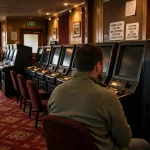
A Plinko-style casino game and a poker machine can both involve a stake and an uncertain outcome, but that does not make them the same product. Plinko is a digital game built around a ball dropping through a field of pegs towards a result. Pokies are physical electronic gaming machines, commonly found in venues such as hotels and clubs. The format, setting and way a result is produced differ.
That distinction matters when discussing gambling’s impact in Australia. Figures reported about poker machines describe losses on those machines, not losses on Plinko games. They cannot be transferred from one category to another simply because both involve gambling. Nor does a comparison of formats establish that one is safer or less harmful.
A report published by gamble.com.au put Victorian poker-machine losses at $2.6 billion over the year it covered. It also said that total was more than $44.7 million above the figure recorded in 2015. These are reported losses from poker machines in Victoria—not a measure of all gambling, and not a statistic about digital Plinko.
The same report highlighted one venue in Melbourne’s north: Epping Plaza Hotel. It attributed more than $21 million in revenue to the hotel’s 100 machines over the year discussed. That venue-level figure helps show how large the reported totals can be in a concentrated setting. It does not mean that each machine generated the same amount, or that a Plinko game has comparable financial effects.
The reporting makes a particular point: poker-machine losses are a substantial local issue, measured across venues and machines. A Plinko game may look different on a screen, but the figures above offer no direct basis for estimating its impact. Different products need their own evidence.
The scale of poker-machine losses has sat alongside debate about whether stakes on those machines should be constrained. Senator Nick Xenophon and MP Andrew Wilkie put forward a proposal to cap poker-machine bets at $1. That was a proposed limit for pokies, not a rule governing Plinko games and not a description of a limit currently applying across all gambling products.
A policy proposal also needs to be read for its scope. Here, the proposal concerned physical poker machines. It should not be presented as though it covered every casino-style game, or as proof that digital games and venue machines operate in the same way. Similar language about bets does not erase the difference in product.
For a reader comparing the subjects, keep the categories separate: the Victorian loss figures relate to pokies; the named venue example concerns its machines; and the $1 cap was a proposal directed at poker-machine betting. None of those details establishes a loss figure, limit or risk level for Plinko.
The comparison is useful as context, not as a shortcut. Victoria’s poker-machine debate shows that gambling losses and the design of betting limits are matters of public concern. It does not provide a ready-made verdict on a plinko ball game or any other digital casino-style format. Claims about those games need evidence specific to their mechanics and use.
Whatever the format, gambling can cause serious harm, particularly to vulnerable people. If you are under 18, gambling is not appropriate. If you are an adult, a familiar visual style or a different setting does not remove the need to consider the possibility of harm. The categories differ. The consequences can still matter.
A useful review makes clear what it has actually checked. A statement about a particular Plinko-style title is not evidence about every game with “Plinko” in its name, and a casino-wide rating does not establish the details of any one title. Keep those claims in separate columns.
For a game-specific assessment, look for the exact title and provider, then check whether the review gives a return-to-player figure and explains where it came from. KA Gaming slot RTP percentages typically fall between 94% and 96%, but that range is not a figure for every KA Gaming game, nor does it verify a particular Plinko title. A sound review links any percentage to the named game rather than borrowing a provider-wide range and presenting it as a game result.
RTP is a theoretical return calculated over extensive play, not a prediction of what you will receive in a short session. It also does not show that a particular player will get that return. If a review quotes a number without identifying the title or its basis, treat it as an unsupported detail, not a useful comparison.
A review of Plinko Rush or Plinko Deluxe should identify the product being discussed. The same applies to names such as Plinko Verde: a label alone does not establish who made the game, what its return figure is, or which site hosts it. “Casino” in a title is not proof that the product is a casino operator.
The same standard applies to claims linking a Plinko game to MrBeast. A name or image in promotional material does not, by itself, verify an endorsement or connection. Look for clear, attributable evidence; if the review simply repeats the claim, it has not established it.
Broad statements such as “trusted,” “fair” or “best” need a stated criterion and evidence. A review that describes its method—what title it checked and which game details it confirmed—lets you judge the scope. One that shifts from a game’s features to sweeping claims about a casino has changed the subject.
If you see a free-play label, assess what the review says that label means, rather than assuming it proves anything about the game’s return or the site’s overall claims. These are separate questions.
A concise review can still be useful if its evidence is specific. Check the title, provider, return figure and basis for each claim; then distinguish those details from opinion about a casino. If the review does not show how its conclusion follows from the information it presents, the conclusion is only an assertion.
That distinction matters.
A Plinko-branded game does not sit outside Australian law because it has a different name or layout. The relevant question is whether an operator provides a prohibited interactive gambling service to someone physically in Australia. Under the Interactive Gambling Act 2001, offering real-money online casino games to people here is illegal for the operator. A licence issued overseas does not change that Australian restriction.
The Australian Communications and Media Authority (ACMA) is the federal regulator responsible for enforcing the Act and monitoring compliance with federal interactive gambling laws. Its role is not limited to issuing general guidance: it can ask Australian internet service providers to block websites that provide prohibited interactive gambling services or advertise them in Australia. A site appearing in search results, or remaining reachable at a particular moment, is not proof that its service is lawful or authorised for Australians.
ACMA’s enforcement figures indicate the scale of that work. Since November 2019, it has blocked more than 1,455 illegal gambling and affiliate websites following enforcement action. Blocking is one tool, not a statement that every similar-looking site has been assessed or that access will remain unchanged.
There is also a reported-count discrepancy about services that have left the market. One figure says more than 210 illegal services have withdrawn since ACMA began enforcing the rules in 2017; another account puts the number above 190. These are conflicting reported totals, not figures that should be combined. The difference is a reminder that enforcement counts depend on the reporting and date used.
For someone considering an offshore casino, the legal distinction matters: the restrictions target operators providing the service, while players are not criminalised simply for using an offshore site. That does not make the service permitted in Australia, protected by Australian regulation, or reliably accessible. ACMA’s blocking actions show that access can be interrupted, and a foreign licence does not replace compliance with Australian law.
So, whether a site calls its product Plinko, casino Plinko, or something else, the label is not the test. The governing issue is the service being offered to people in Australia and the operator’s obligations under the Act. Read a site’s claims in that context; a polished game page is not evidence of Australian approval.
“Free play” can describe a version of a Plinko-style game that lets you try its mechanics without staking your own money. The balance shown in that mode is part of the demonstration, not a cash balance: it does not represent funds you can take away. A free spin, where offered, is another form of access to a game, but the label alone does not tell you whether any resulting credit is withdrawable.
Free play is a no-stake demonstration mode where the balance is not real money. Bonus credit is an amount attached to an account that often requires meeting wagering requirements before winnings can be withdrawn.
Bonus credit is different. It is an amount attached to an account under stated terms, rather than a no-stake demonstration. The credit may be restricted to particular games or play conditions, and winnings derived from it can remain subject to wagering requirements. So “bonus” does not mean “cash”, and a displayed amount should not be treated as money freely available to you.
The calculation matters. A specialist review describes a $100 bonus with a 40x wagering requirement: the stated requirement would mean placing $4,000 in bets before bonus-derived winnings could be withdrawn. That is an illustration of one offer described by one review, not a rule that applies to every bonus. The operator’s own terms would determine what counts toward the requirement, which games qualify and whether other conditions apply.
When you see wording such as “free Plinko” or “free spins”, separate the mode of play from the value of any credit. Check whether you are being shown a demo balance, bonus funds, or winnings subject to conditions. Those labels are not interchangeable.
The useful comparison is straightforward: free play may let you explore without staking cash, while bonus credit comes with terms that can restrict how it is used and when related winnings become eligible for withdrawal. If the conditions are unclear, the headline amount tells you little.
Casino gambling is for adults aged 18 or older, and it can cause serious harm to vulnerable people. A free-play label does not make a real-money offer risk-free.
Crypto and a casino script describe different parts of an online gambling service. Crypto is a payment method: it concerns how funds are sent or received. A script is software used to build or run a site or game. Seeing both terms together does not mean that a particular Plinko game uses crypto, or that a payment method tells you anything about the software behind it.
That distinction matters when you assess a claim. A site might accept cryptocurrency while its games come from a separate provider. A script might support a Plinko-style game without determining which payment options are available. Neither label, by itself, establishes who operates the service, how a game works, or whether its claims have been independently checked.
A specialist review has reported that crypto withdrawals can clear faster than other methods. It also notes the trade-off: network fees and the spread applied when converting between currencies can reduce what reaches your wallet. The displayed withdrawal amount and the amount received may therefore differ.
To compare the figures, look for the withdrawal amount, any stated network charge, the conversion rate used and the currency in which the balance is settled. A quoted processing speed is only one part of the calculation; it does not tell you the net amount after costs. Fast, but not free.
The word “script” may refer to a software package or the code used to create a site or game. It is not, on its own, a quality mark. It does not verify that a game is fair, that a payment will be handled as described, or that an operator has been independently assessed. Those are separate claims, and each needs its own evidence.
Cryptocurrency is a payment method, while a script is the software used to run the site; neither establishes the fairness or legality of the service.
When these terms appear together, keep the questions separate: what software is being described, and what payment method is being offered? For Australian readers, a crypto option or software label does not change the legal status of a real-money online casino service.
A bonus headline describes credit offered under conditions; it does not tell you how much can be withdrawn. Bonus-derived funds may remain subject to wagering checks, so the useful comparison is not just the bonus amount. It is the required turnover, which games count, and what happens if you breach a term or withdraw early.
A specialist review gives one worked example: a $100 bonus with a 40x wagering requirement calls for $4,000 in bets before bonus-derived winnings can be withdrawn. The arithmetic is the bonus multiplied by the stated wagering multiple. That figure is turnover, not a prediction of how much you will lose or a promise that you will finish with winnings.
Other published bonus descriptions may state requirements in the 30–50x range. Treat that as reported wording, not a universal rule. Read the specific terms attached to the offer: they should identify the amount the multiple applies to, the eligible games, any contribution differences, and the expiry or withdrawal conditions. If the terms are unclear about whether the requirement applies to the bonus alone or another amount, the headline is not enough to calculate the obligation.
For instance, a promotion associated with a Plinko-style title may sound generous while its wagering condition makes the credit difficult to convert into withdrawable funds. The game name does not determine the bonus calculation; the written offer does. A reference to a particular title, such as Gods of Plinko, also does not establish that a bonus is available or that its terms match another promotion.
Use a simple comparison: bonus value, wagering multiple, calculation base, eligible play, and withdrawal conditions. A no-deposit label changes neither the arithmetic nor the restrictions attached to bonus-derived winnings. If one offer has a lower multiple but applies it to a larger base, it may require more turnover. Compare the actual calculation, not the banner. The larger headline may lose.
A reference to the UK may indicate that you want information about a Plinko game or casino discussed in a British context. It does not establish that the service accepts Australian customers, is available from Australia or is lawful for an operator to provide here. A country label is a clue about the material you are looking at, not a local approval.
“Lucky” is less specific. It may be part of a game or casino’s branding, or simply a way of describing the experience someone hopes to find. The word tells you nothing reliable about a game’s design, the operator behind it or whether the service is suitable for Australian readers. Treat the name as a label, not evidence.
A reference to Casino Guru points towards information associated with that review brand. It does not, on its own, establish that a particular Plinko title was independently assessed, that a review covers the operator rather than the game, or that its conclusions apply to Australia. Check what the material actually identifies: the game, the casino, or both. Those are different subjects.
For Australian readers, the legal distinction matters. The Interactive Gambling Act 2001 restricts operators from providing real-money online casino services to people in Australia. A player is not criminalised merely for using an offshore site, but that does not make the operator’s service lawful to provide here or mean it is available without access restrictions. Do not read a foreign label or review as a recommendation to use an offshore casino.
Compare each claim against its scope: which product it names, whom it concerns, and which country it addresses. If those details are absent, the label establishes very little. Useful distinction.