A game name alone does not verify an online version, official app, payment arrangement or connection to a machine game.

The name “Dragon Link” points to a particular game in the mind of someone looking for it. By itself, though, a name does not confirm that a specific online pokie is available, that an online edition matches a machine version, or that a page using the name is connected to an official product. Those are separate claims, and each needs evidence of its own.
That distinction matters when you are comparing pages about Dragon Link online pokies in Australia. A page may use familiar game wording while describing general online pokie arrangements, or it may discuss Bitcoin payments without establishing anything about the game named in its heading. A shared topic is not proof of a shared product.
A useful comparison starts with the claim being made, not how confidently it is presented. Is the page identifying a particular game, explaining a general process, or simply using the name as a label? Those categories should not be collapsed. If a page explains how online pokie credits or Bitcoin transfers work in general, treat that as background about those processes—not as confirmation of Dragon Link rules, features, or availability.
Choosing a Dragon Link online pokies site in Australia means weighing the details that matter to you before you play. Use these operator notes as a concise reference when considering your options for 2026.
SkyCrown
SkyCrown lists a Tobique Gaming Commission licence and a minimum deposit of A$30. Its stated payout times are around 10–15 minutes for crypto and 1–5 days for fiat.
Kingmaker
Kingmaker lists a minimum deposit of A$30. Its stated payout times are around 90 minutes for crypto and 1–5 days for fiat.
LevelUp Casino
LevelUp Casino lists a Curacao eGaming licence, OGL/2023/174/0082, held by Dama N.V. Its minimum deposit is A$15.
Neospin
Neospin lists a Curacao Gaming Control Board licence, OGL/2023/176/0095, held by Hollycorn N.V.
House of Pokies
House of Pokies lists an international iGaming licence, though its jurisdiction is not named. PayID withdrawals are stated at 1–24 hours; the minimum deposit is A$30, or A$10 for PayID.
Uptown Pokies
Uptown Pokies lists a Curacao licence and has been operating since 2017. Its minimum deposit is A$20.
LuckyVibe
LuckyVibe lists a Curacao Gaming Control Board licence, OGL/2023/176/0095, held by Hollycorn N.V.
Wild Tokyo
Wild Tokyo lists a Curacao licence and a minimum deposit of A$10. Its stated payout times are 30–60 minutes for crypto and 1–5 days for fiat.
7Bit Casino
7Bit Casino lists a Curacao licence and is operated by Dama N.V.
DragonSlots Casino
DragonSlots Casino lists a Curacao Gaming Authority licence, held by Jumpman Gaming Ltd.
For a specific product, relevant evidence would need to connect the name to an identifiable game and support the details being asserted. A title in a page heading, a promotional image, or a repeated phrase is not enough on its own. Nor does a page become authoritative because it describes online play in fluent, specific language. Specificity only helps when it is tied to the claim in question.
This is especially important with terms such as “Dragon Link pokie” or “Dragon Link online slot.” They can describe what a reader hopes to find, but the wording does not settle whether the page refers to a verified online game, a physical machine, or a general discussion using that name. The label is a starting point, not a check.
The same test applies when Bitcoin appears alongside the game name. General information about sending Bitcoin to an online casino concerns a payment process. It does not establish that a particular Dragon Link game accepts Bitcoin, operates on a given site, or has a particular credit value. Keep the payment claim and the game claim in separate columns. Otherwise, a real detail about one can make an unsupported detail about the other look equally solid.
A clear guide should mark that boundary instead of filling gaps with plausible-sounding product details. For you, the practical rule is simple: accept a general explanation as general, and require product-specific evidence before treating it as a fact about Dragon Link. The distinction is less exciting than a confident feature list. It is also more useful.
 Safe Online Pokies in Australia: Rules and RisksLearn how Australian rules, offshore licences and Bitcoin transfers affect risk. The Interactive Gambling Act 2001 prohibits operators from supplying real-money
 Casinos That Accept Neosurf in Australia: What to CheckLearn why search terms do not confirm Australian availability, and what to verify about Neosurf deposits, withdrawals and casino bonus claims.
This page uses affiliate material and may include sponsored links. That disclosure does not verify any game claim or make a product description more reliable; assess each claim on its own evidence.
A machine name can sound precise while leaving the product unidentified. “Dragon Link” may be used in descriptions of a physical cabinet, an online game, or a general category of entertainment. The wording alone does not tell you which one is meant. Treating those uses as interchangeable turns a name into evidence it cannot provide.
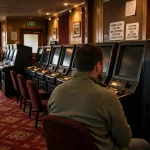
For a physical machine, the useful distinction is between a label and a verifiable identity. A photograph or short description bearing the name does not, by itself, establish who made the cabinet, which game it contains, or whether the image shows a real product rather than promotional artwork. Nor does a machine-related description establish that a particular cabinet is available in Australia. Those are separate claims, and each needs its own supporting details.
Online descriptions require the same care. A page using the Dragon Link name does not automatically establish that it presents an official digital edition of a physical machine. A familiar title, similar artwork, or matching theme is not enough to show that two products share a developer, rules, or other defining characteristics. Without reliable identification details, the most that can be said is that the page uses that name.
The word “machine” can point to hardware, a game played on hardware, or simply a way of describing a digital game. That ambiguity matters when you compare claims. A listing that talks about a casino machine may not be describing an online version; a page styled as an online game may not establish any connection to a physical cabinet. One label cannot answer both questions.
The same applies to wording that places “Dragon Link” beside “online” or “Australia.” It may signal the subject a page wants to discuss, but it does not prove an Australian release, local availability, or official status. A location in a heading is not a distribution record. A page’s confident tone is not a substitute for product identification. Dry, but useful.
When assessing a description, separate its claims into clear categories:
If a page blurs these categories, you cannot safely carry its claim from one to another. A physical-machine reference does not prove an online edition exists. An online listing does not establish that an Australian machine release exists. Similar artwork does not resolve either point.
Look for concrete identification information rather than relying on the title alone. A description should make clear what kind of product it concerns and provide details that let you distinguish it from other uses of the same name. If it offers only a broad label, treat the description as broad too. Do not fill the gaps with assumptions about the cabinet, the software, or the relationship between them.
Images need the same restraint. Artwork can help show what a page is referring to, but it does not independently confirm the product’s maker, release status, or connection to a physical machine. A screenshot may depict an interface; it does not establish the history or official status of the software shown. A photograph may depict a cabinet; it does not establish where or when it was released.
This distinction is especially important when a description uses several terms at once, such as “casino machine,” “online game,” and “Australian version.” Read each as a separate assertion. Ask what evidence supports each one, rather than assuming that confirmation of one confirms all the others. If the description does not distinguish the format or identify the product clearly, the honest result is uncertainty—not a more specific claim assembled from suggestive wording.
“Dragon Link pokies machine” is therefore not a complete product specification. It tells you the subject someone has named, but not whether they mean a particular physical unit, a digital edition, or an Australian release. Keep those possibilities separate when reading listings and descriptions. The label is a starting point, not proof.
This is affiliate material and may include sponsored links. That disclosure does not verify a product identity or an Australian release.
In Australia, locally licensed online casinos are prohibited from offering real-money pokies to residents.
Free play and real-money play are different modes, not two names for the same offer. Online pokies may be presented with a choice between them, but that general distinction does not establish that a particular game or service provides either mode to you in Australia. A page’s wording is not proof of availability.
In free play, the point is to use a game without wagering real money. In real-money play, money is at stake. That difference matters more than a familiar title or a button labelled “play”: the mode determines whether you are simply accessing a no-money version or engaging in gambling. If you are comparing the two, start with that criterion. Other claims about a game do not answer the basic question of which mode is actually being offered.
A free-play label should be read narrowly. It describes a mode, not a promise that a specific title is available, that the mode works in Australia, or that it can be changed into real-money play. Likewise, finding a title described as a pokie does not tell you whether the page refers to free play, real-money play, or something else. Keep the claims separate. A name identifies what a page says it is about; it does not settle the terms of access.
This distinction is useful when you encounter references to free Dragon Link pokies or an online version for no money. Treat those phrases as descriptions of the kind of experience being sought, not confirmation that an official or accessible free mode exists. The same caution applies to a review: a discussion of a title does not, by itself, prove that you can try it for free. The mode must be stated clearly, and the statement must relate to the service you are considering.
Real-money play requires a separate assessment. The fact that online pokies can be offered in free or real-money modes in general does not mean both modes are legally available from every provider in every country. In Australia, locally licensed online casinos are prohibited from offering real-money pokies to residents. So a general description of a real-money option should not be read as permission or evidence that such an option is available through a locally licensed casino.
That legal distinction does not turn free play into proof of a real-money route. Nor should a free version be treated as a preview that guarantees the same access, conditions, or outcome in a money-based mode. The relevant question is simply which mode is being described. If a page is unclear about that, its label leaves the central point unresolved. Clear wording matters.
For a reader seeking a no-money experience, the useful comparison is whether a clearly identified free mode is actually offered. For someone looking at real-money play, the key issue is not whether the same name appears in a free-play context; it is whether the service and the activity are lawful in the relevant jurisdiction. These are different tests. Passing one does not answer the other.
Do not let the word “free” carry more meaning than it can support. It does not establish that a game is official, that a particular provider makes it available, or that a real-money version is permitted. And a real-money label does not override Australian restrictions on locally licensed casinos. Read the mode and the legal context as separate criteria, rather than treating one as evidence for the other.
The practical distinction is modest but important: free play describes play without a real-money wager; real-money play involves money and raises a different legal question. General availability of both modes across online pokies does not settle the status of any particular title or service for an Australian resident. Keep the comparison at that level, and do not mistake a mode label for confirmation of access.
A search for real-money Dragon Link pokies points to a straightforward distinction: wanting to find an online casino game is not the same as being able to access a lawful Australian service offering it. In Australia, the legal boundary is set by the activity and the player’s location, not by the wording on a website or the name attached to a game.
The Interactive Gambling Act 2001 makes it illegal for operators to provide real-money online casino games to people physically located in Australia. That prohibition covers casino-style services such as pokies, poker and table games. A site’s use of terms such as “Dragon Link casino” or “play for real money” does not alter the position. Nor does a service become locally authorised simply because it accepts Australian visitors or displays prices in Australian dollars.
This is an operator-facing restriction. The legal framework described here does not make an individual player liable to a fine or criminal prosecution merely for playing through an offshore casino. That distinction should not be mistaken for approval, protection or a guarantee of access. Australian authorities actively block and enforce restrictions against offshore casino services, so a site’s apparent availability at one moment does not establish that it is lawful to provide the service in Australia or that access will continue.
The operators discussed in this context hold licences issued offshore, primarily by Curacao eGaming or the Anjouan Gaming Authority. Those are foreign licensing jurisdictions, not Australian authorisations. If a service says it is licensed offshore, that statement identifies where its licence comes from; it does not change the Australian rule on providing real-money casino games to residents.
The practical distinction matters when you assess claims around real-money play. “Licensed” is not a complete answer unless you know which regulator issued the licence and what that means for you in Australia. An offshore licence cannot be read as permission to offer prohibited services to people physically located here. The label may describe the operator’s status in another jurisdiction, but it does not erase the local boundary.
Australian consumer protection laws do not apply to the offshore operators discussed. If a disagreement arises with such a service, you cannot assume the same Australian protections or complaint routes that would apply to a locally regulated business. A foreign licence and Australian consumer safeguards are separate things. Confusing them is an expensive shortcut.
For that reason, a real-money search should not be treated as a recommendation to register, deposit or play. A result appearing online is not proof that a service is lawful for Australian residents, locally licensed, or covered by Australian consumer protections. The criterion that matters for the legal question is whether the operator is providing a real-money online casino service to someone physically in Australia. A game title, an offshore licence, or a site’s own description does not replace that test.
Legal Prohibition
The Interactive Gambling Act 2001 makes it illegal for operators to provide real-money online casino games to people physically located in Australia.
A phrase such as “Dragon Link online casino real money” expresses an intended activity; it does not establish the identity, availability or authorisation of a particular game. Keep the two questions separate: what the service offers, and whether an operator may lawfully offer it to a person in Australia.
When a site presents real-money pokies as available to Australians, its wording should be read against the Australian restriction, not as proof of local approval. Offshore licensing does not make an online casino locally licensed, and a page aimed at Australian readers does not make the service Australian-regulated. The safer conclusion is narrow: the operator may hold a foreign licence, while Australian law prohibits it from providing real-money online casino games to people located here.
This is not a matter of choosing the strongest-sounding label. For a person comparing claims, the relevant criteria are the operator’s jurisdiction and the protections that actually apply. On those criteria, offshore status is not equivalent to Australian regulation, and Australian consumer protection laws do not cover the offshore operators discussed. No wording on a promotional page changes those points.
This page is affiliate material and may include sponsored links. That disclosure does not endorse or recommend an offshore casino, and it does not change the legal position. Real-money gambling services should not be promoted to Australian audiences. Any gambling-related content is for adults aged 18 and over; that age threshold does not make a prohibited service lawful.
The practical takeaway is limited but important: searches expressing an interest in real-money pokies do not confer permission on an operator to serve Australian residents. The governing boundary concerns the operator’s provision of the service to people physically in Australia. An offshore licence remains offshore, and Australian consumer protections do not extend to the operators discussed.
A casino may refer to an offshore licence when describing its regulatory status. That is not the same as being authorised in Australia, and it does not bring an offshore operator within Australian consumer protection laws. For anyone weighing claims associated with a Dragon Link casino, the distinction matters more than the label: a foreign licence does not give you the local protections you might expect from an Australian-regulated service.
The operators discussed in this context hold offshore licences, primarily from Curacao eGaming or the Anjouan Gaming Authority. Those names identify licensing jurisdictions; they do not establish that Australian laws apply to a particular operator, or that an Australian authority can resolve a dispute with it. A licence claim should therefore be read narrowly. It indicates a stated offshore regulatory connection, not a guarantee of an outcome if something goes wrong.
Consumer Protection
Offshore licenses do not bring operators under Australian consumer protection laws, leaving you without local recourse in disputes.
That difference affects how much weight to put on assurances about account access, balances, or complaints. If an operator and a customer disagree, the absence of Australian consumer protection laws can leave the customer without those local protections in the dispute. A logo or licence number on a website does not change that legal position. Nor should a licence claim be treated as proof that a particular game or service is available, approved, or protected for Australian residents.
The comparison is straightforward:
| What an offshore licence may indicate | What it does not establish for an Australian customer |
|---|---|
| The operator claims a connection to a foreign licensing jurisdiction | Australian consumer protection laws apply |
| The operator presents itself as licensed offshore | An Australian regulator will resolve an individual complaint |
| A licence is displayed alongside casino branding | The service has local authorisation or carries local safeguards |
This is not a recommendation to use an offshore casino, nor a way to assess one as suitable. Real-money online casino services are prohibited for operators to provide to people in Australia. An offshore licence does not remove that boundary or convert the service into a locally protected option.
If you are comparing what a site says with what it can actually guarantee, separate the claims: licensing jurisdiction, Australian legal status, and consumer recourse are different questions. For this market, the decisive point is that Australian consumer protection laws do not apply to the offshore operators discussed. The distinction is not fine print. It is the framework.
Bitcoin transfers are address-based: the sender enters a destination, and the transaction is recorded on the blockchain. In a casino payment flow, the deposit destination is supplied by the operator; a withdrawal destination is supplied by the account holder. These are separate directions, and an address for one should not be assumed suitable for the other.
A deposit process, described without recommending its use, involves copying the address displayed by the casino and sending Bitcoin to it from a wallet. Before any transfer, the destination needs to be checked against the address shown for that specific transaction. Do not rely on an address saved from an earlier payment or copied from an unrelated message. A changed or mistyped character can direct funds somewhere else.
For a withdrawal request, the wallet address is copied into the casino’s withdrawal form. Check the pasted value carefully before submitting it, and make sure it is the address for the wallet you control. A successful form submission does not itself confirm that the destination is correct.
The central risk is irreversibility. Blockchain transactions sent to an incorrect address are generally unrecoverable; there is no ordinary card-style chargeback that can reverse the transfer. If the destination is wrong, the funds may be lost. Slow down at the address field. It is the least forgiving part of the process.
A casino payment screen may also display a QR code or other address information. Treat that as payment data, not as proof that the operator or transaction is safe. Keep records of the address and transaction details for your own reference, and never share wallet recovery phrases or private keys to “verify” a payment. Those credentials provide control of the wallet, not evidence of a deposit.
This practical description is not an invitation to make a real-money payment. Real-money online casino services are prohibited for operators serving people in Australia, and offshore operators do not come under Australian consumer protection laws. This page is affiliate material and may contain sponsored links; that disclosure is not an endorsement. Anyone considering gambling must be at least 18, but age does not change the legal or transfer risks.
Bitcoin Transfer
Copy the address
Copy the destination address supplied by the casino for deposits or your own wallet address for withdrawals.
Verify the value
Carefully check the pasted address character by character before submitting the transaction.
Execute transfer
Send the funds from your wallet, keeping in mind that blockchain transactions are generally irreversible.
For Bitcoin pokies Australia searches, the useful distinction is simple: address accuracy concerns the movement of funds, while it says nothing about a game, jackpot, or payment outcome. If a withdrawal appears stuck, do not send additional money to unlock it. A new transfer cannot repair a wrong address, and may create another loss.
A reported win does not mean a withdrawal will be approved immediately. Delays can come from an operator’s approval queue, identity checks that are still incomplete, or payment batches handled during business hours. Those causes call for different responses: confirm what verification is outstanding, ask whether the request is awaiting review, and check when the operator processes payments. Keep copies of the request and any replies.
A security review after a significant win may be a genuine check, but some operators may also use reviews to stall, particularly when the account is new or the withdrawal is a first large one. Ask for a clear explanation of the review and what remains unresolved. Do not deposit more money to unlock a stuck withdrawal. A demand for another deposit is not a sensible way to resolve a pending payout.
Bonus disputes often turn on wagering contribution rules. A table game and pokies may count differently towards a bonus requirement, and the terms may state those contributions in percentages that are easy to overlook. Before accepting a bonus, check which games count, how much each contributes, and whether other conditions can void bonus play. If a dispute arises, compare the operator’s explanation with the terms that applied when the bonus was accepted; save a copy of those terms.
These points concern payment and bonus handling, not a method for producing wins. No set of tips can establish that a particular game will pay out or that a withdrawal will be approved.
For people in Australia, real-money online casino services are prohibited for operators to provide locally, and Australian consumer protection laws do not apply to offshore operators. This is not a recommendation to use one. You must be at least 18 to participate in real-money gambling. This article is affiliate material and may include sponsored links.
A listing or download carrying the Dragon Link name does not, by itself, establish who published it, whether it is connected to a particular game, or whether it is available for use in Australia. Treat the name as a claim to check, not proof of origin. An app icon and familiar wording can be copied; neither identifies the publisher.
Before installing anything, check the publisher information and the app’s permissions through the platform you use. Be cautious with files offered through unfamiliar websites or messages, especially if they request unusual access or prompt you to enter account or payment details. If the publisher cannot be identified clearly, do not install the app.
The same distinction applies to claims about a casino app. A page describing an app does not establish that the app is official, nor that it can lawfully provide real-money casino games to people in Australia. Australian law prohibits operators from providing those services to people physically located in the country. A download link does not change that boundary.
A figure described as a slot’s return to player (RTP) is not proof that an app is genuine, either. It is a separate claim about game mathematics and should not be treated as confirmation of a publisher, a game version or an Australian release. No RTP figure should be inferred from the Dragon Link name alone.
Bitcoin does not authenticate an app. In a Bitcoin transfer, a sender copies the receiving address supplied for a transaction and sends funds from a wallet; that payment step cannot establish who controls the app or whether its claims are legitimate. A mistaken crypto transfer is generally unrecoverable, so do not send funds to an address supplied by an unverified app.
This page is affiliate material and may contain sponsored links. That disclosure is not an endorsement or a substitute for checking what a link leads to. A label is easy to copy. Verification is harder.
A name is not a playing guide. Instructions for a particular game need to match its actual rules: how a round starts, what the controls do, and how any features affect the result. Without those details, step-by-step directions for Dragon Link would risk describing a different game under a familiar label.
The same limit applies to claims about winning. No strategy can be presented as a reliable way to secure a result without evidence about the game’s rules and how outcomes are determined. Betting patterns, timing claims and supposed “systems” should not be treated as an edge merely because they sound precise. Precision is not proof.
If you encounter instructions attached to a game, compare them with the rules shown within that exact product before relying on them. Pay particular attention to the stated conditions for a feature or payout; a name or promotional description cannot substitute for those terms. If the rules are unclear, you cannot make a sound comparison between what a guide promises and what the game actually does.
That is the useful distinction: general descriptions can explain how to assess instructions, but they cannot supply Dragon Link-specific moves or a winning formula. Treat confident claims of guaranteed wins with particular care. No guarantee.
“Happy and Prosperous” may look like the name of a Dragon Link game, but the phrase alone does not establish that a particular game, machine or feature exists under that title. It could be wording used in a listing, a search result or a player’s description. Without reliable identification, those possibilities should not be treated as equivalent.
The distinction matters because a title can sound specific while leaving the product unclear. A mention of “Happy and Prosperous” does not identify who made a game, which version is meant, or whether the wording refers to a feature rather than a title. Nor does the phrase establish that an edition is available in Australia. A confident label is not the same as confirmation.
If you encounter the wording, assess the claim attached to it rather than relying on the name. Look for details that can be checked independently, such as an identifiable publisher or an official product description. If those details are absent or inconsistent, the sensible conclusion is that the title remains uncertain—not that the game has been confirmed.
This is a narrow point, but an important one: “Dragon Link: Happy and Prosperous” should not be read as proof of a distinct, recognised release. The wording may describe what someone is looking for; it does not, by itself, verify what they will find. No title can do that work alone.
Keep the categories separate: a phrase, a product name and a confirmed game are not interchangeable. That is the useful test here. It avoids turning suggestive wording into a claim about a specific machine or feature, and avoids treating a search result as proof of an official identity. Short version: the name is not evidence.