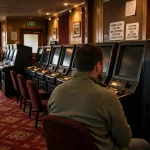
A practical guide to randomness, game information and session decisions when playing pokies in Australia.

People looking for tips to win at pokies often mean one of two things: a way to make better decisions, or a method that supposedly makes the machine pay. Those are not the same. You can make choices about whether to play and how to respond to the experience; you cannot use a pattern, ritual or timing trick to steer the result of a spin.
A pokie spin is random and independent of the spins before it. A run of losses does not make a win due, and a recent win does not make another one more likely. The machine does not remember that it has “held back” or “paid out” recently. A sequence can look meaningful to a person watching it, but that appearance does not give you a way to predict what comes next.
This is why systems based on streaks do not provide a reliable route to winning. One approach might suggest changing the bet after a loss; another might say to keep playing until a machine has paid out a certain number of times. Neither changes the randomness of the next spin. The same applies to choosing a particular time of day or relying on a lucky charm. These actions may feel reassuring, but they do not improve your chance of winning.
Pokies tips are most useful when paired with a clear look at the practical details behind each casino. Use these verdicts as a quick reference while deciding which options suit your priorities.
SkyCrown
SkyCrown lists crypto payouts at around 10–15 minutes and fiat payouts at 1–5 days. Its minimum deposit is A$30, and it is licensed by the Tobique Gaming Commission.
Kingmaker
Kingmaker lists crypto payouts at around 90 minutes and fiat payouts at 1–5 days. You can start with a minimum deposit of A$30.
LevelUp Casino
LevelUp Casino’s listed licence is Curacao eGaming OGL/2023/174/0082, held by Dama N.V. Its minimum deposit is A$15.
Neospin
Neospin is listed under Curacao Gaming Control Board licence OGL/2023/176/0095, held by Hollycorn N.V. That licensing detail is the available point of reference for your consideration.
House of Pokies
House of Pokies lists PayID payouts at 1–24 hours and a minimum deposit of A$30, reduced to A$10 for PayID. Its source describes the licence as international iGaming but does not name the jurisdiction.
Uptown Pokies
Uptown Pokies is listed as operating under a Curacao licence since 2017. Its minimum deposit is A$20.
LuckyVibe
LuckyVibe is listed under Curacao Gaming Control Board licence OGL/2023/176/0095, held by Hollycorn N.V. The licence is the available specific detail to consider.
Wild Tokyo
Wild Tokyo lists crypto payouts at 30–60 minutes and fiat payouts at 1–5 days. Its minimum deposit is A$10, and it is licensed in Curacao.
7Bit Casino
7Bit Casino is listed as licensed in Curacao and operated by Dama N.V. These are the available specific details for your reference.
DragonSlots Casino
DragonSlots Casino is listed under a Curacao Gaming Authority licence, with Jumpman Gaming Ltd named as the operator. The available details give you a licensing and operator reference point.
A useful approach begins by separating decisions under your control from outcomes that are not. You can decide whether a game or activity is worth your time, whether to continue, and whether the experience still feels acceptable to you. Those choices can help you act deliberately. They cannot turn a losing mathematical proposition into a profitable one.
That distinction matters because many supposed tricks sound practical. “Play after a dry spell,” “switch machines after a win,” or “use a fixed sequence” all offer a sense of control. But none changes the underlying independence of spins. A sequence can be fixed; its result is not. A ritual can make the experience feel more orderly; it cannot make the machine respond differently.
If you are comparing advice, ask what the proposed method actually changes. Does it alter the machine’s rules, or only the player’s behaviour? If it is only a change in timing, bet pattern or personal ritual, it is not a way to influence the outcome. The distinction is plain, even when the sales pitch is not.
Every game has an expected return over time. Expected value is a mathematical average across many plays, not a forecast of what will happen to one person in a short spell. For pokies, that average is negative for the player: the house edge means the expected value of play is below zero. No betting progression or “winning system” reverses that.
 Best Pokies in Adelaide: Venue Hours and ChecksLearn how to confirm a venue’s current hours and whether pokies are operating; online listings may not reflect schedule changes or closures.
 Adelaide casino: hotel stays, deals and visit detailsLearn how to verify whether accommodation is formally linked to Adelaide’s casino, compare room-deal conditions and separate confirmed venue details from
A strategy can change how quickly money is put at risk, or how a player experiences a sequence. It cannot create positive expected value where the game’s underlying mathematics does not allow it. Increasing a bet after a loss, for example, does not recover the loss by making the next spin more likely to win. It simply exposes more money to the same independent uncertainty.
That does not mean every short run ends in a loss. A player can win in the short term; randomness allows both wins and losses to occur. But a short-term win is not proof that a system works. Nor does a losing run show that a win is now imminent. Neither result changes the expected value of future spins.
Claims about tricks to win on the pokies often rely on stories: someone followed a pattern, picked the right moment, and won. A story can describe what happened to one person, but it cannot show that the method caused the result. Random outcomes produce striking coincidences as well as ordinary sequences.
A more useful test is whether the claim explains a genuine change in the game’s mathematics. If it cannot identify one, treat it as a belief or a personal routine, not a winning method. A confident tone is not evidence. Neither is a memorable streak.
So, what can tips for winning pokies honestly offer? They can correct misconceptions, help you recognise unsupported promises and clarify the limits of personal choice. They cannot promise a win, identify a “due” machine or make a spin more favourable through timing. The practical value lies in understanding those limits, not in searching for a secret pattern.
The key distinction is simple: choices can shape your conduct, but they cannot control a random result. No system removes the house edge, and no lucky habit changes the next spin. That is the limit.
“Pokies” is the everyday Australian term for slot machines. It is the word you are likely to encounter in local conversation and media; elsewhere, the same games are commonly called slots. The label is local, but it does not change what the games are or the rules that apply when they are offered online.
The legal distinction is between a game’s name and the service providing it. Under the Interactive Gambling Act 2001, operators are prohibited from providing real-money online casino games to people physically located in Australia. That category includes pokies, as well as online poker and table games such as blackjack and roulette. Calling a product a slot, a pokie or a casino game does not move it outside that framework.
An offshore licence is issued by a regulator outside Australia. It may describe the operator’s status in the place that issued it, but it does not amount to an Australian authorisation to supply real-money online casino games to people in Australia. In other words, a foreign licence and permission to operate in the Australian market are not interchangeable.
This distinction matters when a site presents a licence as a general assurance. The relevant question is not only whether a licence is named, but what that licence covers and where the service is being offered. A regulator overseas cannot change the Australian rule governing operators who provide prohibited interactive gambling services to customers here. A licence label is not a local permission slip.
The Interactive Gambling Act places the prohibition on the provider, not on an individual simply for accessing an offshore service. That does not make the service lawful for an operator to offer in Australia. The two points can sit together: the law prohibits operators from supplying these games to people in the country, while a player does not incur a fine or criminal prosecution merely for playing at an offshore casino without a local licence.
That separation is worth keeping clear. “The player is not liable” does not mean “the service is authorised”. Nor does an offshore licence turn a prohibited service into one that is approved for Australian customers. Those are different claims about different parties.
A website being visible, or a game appearing to load, would not by itself establish that the service is lawful to provide in Australia. Technical access and legal permission answer different questions. The regulatory frame treats online casino-style games supplied to people in Australia as prohibited interactive gambling services; an overseas operating address does not alter that classification.
The Act also sets substantial daily penalties for breaches: up to A$360,000 for individuals and A$1.8 million for bodies corporate. These penalties concern those violating the Act, not an ordinary player merely accessing an offshore casino. The amounts underscore where the law places its focus: the provision of the service.
Legal Prohibition
Under the Interactive Gambling Act 2001, operators are prohibited from providing real-money online casino games to people physically located in Australia.
For readers comparing information about pokies, this is a useful first filter. Separate descriptions of a game from claims about the legal status of the platform carrying it. A familiar Australian term, a foreign licence, or a page that is accessible does not establish that real-money online casino play is authorised for people located in Australia. Keep the categories distinct.
That is the legal context behind Australian pokies terminology: “pokies” is simply the local name for slots, while the Interactive Gambling Act governs whether operators may provide online casino-style games to people in the country. The name is familiar. The legal boundary is separate.
A bonus headline tells you what may be credited to an account; it does not tell you how much you can withdraw. If a wagering condition applies, the bonus and any associated winnings remain subject to that condition until the required turnover is completed. The key comparison is therefore not the advertised amount alone, but the amount you must bet and the rules attached to those bets.
The calculation is straightforward when the requirement is stated as a multiple of the bonus: multiply the bonus by that multiple. A specialist review gives a $100 bonus with a 40x requirement as an example. The required turnover is $100 × 40, or $4,000 in total bets. This is turnover, not a fee or a guaranteed loss of exactly $4,000; it is the sum of qualifying bets required under the stated condition.
The same calculation produces a different figure when the multiple changes. In another example cited by a specialist review, a A$100 bonus with a 30x requirement means A$100 × 30, or A$3,000 in required wagering. The difference between those examples is not a prediction of what a player will win. It shows why the multiplier matters: the same bonus amount can come with a different turnover target.
Before accepting an offer, check what amount the multiplier applies to and which bets count towards it. The terms may define the qualifying balance or exclude particular games or transactions. Do not assume that the wording on a banner answers those questions. A bonus can look generous while its conditions make the route to withdrawal substantially more demanding than the headline suggests.
Bonus Turnover Calculation
Identify the bonus amount
Determine the credit provided, such as a $100 bonus.
Find the wagering multiplier
Locate the requirement multiplier in the terms, for example, 40x.
Calculate total turnover
Multiply the bonus by the multiplier ($100 × 40) to find the required turnover, which is $4,000 in total bets.
Free spins need the same scrutiny. Any winnings they generate may be real account winnings, but a wagering requirement can still apply before withdrawal. A specialist review describes requirements in the 20x–40x range for free-spin winnings; treat that as a reported range, not a rule for every offer. Check the individual terms for the applicable multiplier, qualifying games and any withdrawal conditions before deciding what the offer is worth to you.
The maximum bet is another term with direct consequences. A specialist review reports active-bonus limits in the A$5–A$10-per-spin range, with a breach capable of forfeiting the bonus. The safer practical ceiling is A$5 per spin while a bonus is active, and the offer’s own limit may be lower. Read that condition before playing: a bet that exceeds the stated cap can put the bonus at risk, even if the balance appears to allow it.
A quick comparison table can keep the arithmetic visible:
| Offer detail | What to check |
|---|---|
| Bonus amount and multiplier | Multiply them to find the stated turnover requirement |
| Qualifying bets | Confirm which play counts towards turnover |
| Maximum bet during the bonus | Keep each spin within the offer’s limit |
| Withdrawal conditions | Check what must be completed before funds can be withdrawn |
The useful “trick” is reading the terms before the first spin, not treating a bonus as cash ready to withdraw. A larger headline is not automatically the better offer; the better fit depends on the required turnover and restrictions you are willing to accept.
A game’s information screen gives you something concrete to inspect: its stated RTP. Check the figure for the specific version you are viewing rather than relying on a general description, an old comparison table or a claim attached to a different configuration. If you are comparing games, use the same criterion for each. An RTP above 96% is a useful threshold for narrowing a comparison, but it is not a promise about what you will receive.
RTP describes the share of total bets a game is designed to return over a very large number of spins. It is not a forecast for your next session. A short run can differ sharply from the stated figure without showing that the game is malfunctioning or that a better result is due. Treat the information screen as a declaration about long-run design, not a reading of current fortune.
There is also a difference between a declared figure and session analysis. A specialist review reported examining 6,847 sessions and finding a median RTP of 96.2% against the games’ declared values. That is a report about the sessions included in that analysis; it does not establish a universal result for every game, version or future session. The sample’s median is not a replacement for the RTP stated on the game’s own information screen, and it cannot tell you what an individual play will return. Useful context, not a forecast.
 Pokies in Canberra: Hours, Venues and What to CheckLearn how to verify venue access separately from pokies availability, check current notices and confirm whether gaming areas operate at your planned…
 Canberra Casino Guide: Claims to Verify Before BookingLearn how to check hotel-casino links, room terms, poker details and facility claims. Search listings alone do not establish a connection.
Next, look for a clear statement about the game’s random number generator (RNG) and any independent testing or certification. eCOGRA and GLI are names associated with RNG certification. If a platform refers to either, check what the statement actually covers: a certification claim is a transparency point to verify, not evidence that a particular spin will pay or that a game offers a winning edge. The label should not be treated as a substitute for the game’s own information.
A demo mode can also help you inspect the interface and find where the rules and RTP are displayed. A specialist review reported demo availability across the sites it assessed, but that is a report about the sites covered by that review, not a guarantee that every platform or game offers a demo. Check the game itself before relying on this option. Nor does a demo’s run of results establish how real-money spins will behave; the mode is useful for learning the controls and reading the displayed information.
A practical comparison can be kept to three columns: the game’s stated RTP, what the platform says about RNG testing, and whether a demo is available. Record the exact claims rather than turning them into a single “trustworthy” score. Each answers a different question: the RTP describes long-run return design, certification concerns testing, and a demo concerns access to a practice interface. None predicts a result.
That distinction is the useful part of careful checking. Pokies tips and tricks cannot make random outcomes predictable; information can only help you judge what is being disclosed. Read the stated figure, separate it from reported session data, and treat certifications and demos as checks on transparency—not as a reason to expect a win. Clean categories. No hunches.
A Dragon Link title is a name, not a set of odds. If you are assessing its figures, start with the RTP shown on that game’s information screen rather than assuming every version carries the same return. Compare the stated value with other games only when the figures are presented on the same basis. A title’s familiar name or presentation cannot tell you its RTP.
RTP means the share of all bets a pokie is designed to pay back across millions of spins. It describes a long-run average, not a forecast for your session. A stated RTP does not mean that a particular player will receive that proportion back, or that any run of spins is due to pay. The number is useful for comparing declared returns; it is not a personal result calculator.
Volatility describes the pattern of wins, not whether the game is profitable. A lower-volatility game can produce smaller wins more frequently. For someone working with a limited session budget, pairing that pattern with a high RTP may make the balance last through more spins. That can extend play time, but it does not raise the chance of ending ahead. More spins are still more spins; duration is not an edge.
The comparison is easiest to keep clear in a simple table:
| What you are comparing | What it can tell you | What it cannot tell you |
|---|---|---|
| Stated RTP | The game’s declared long-run return figure | What you will get back in one session |
| Volatility | Whether wins tend to be smaller and more frequent or less frequent and more variable | Whether the game will produce a profit |
| Session fit | Whether the game’s pattern suits the time and funds you have set aside | Whether a particular spin is more likely to win |
For Dragon Link, therefore, the practical “tip” is to treat the title as a prompt to inspect the displayed information, not as evidence of a special approach. If the RTP is not visible or is unclear, there is no sound basis for comparing that version by return. A figure shown for another game, another version or a general game category should not be substituted.
There is a separate point for anyone in Australia: the Interactive Gambling Act 2001 prohibits operators from providing real-money online casino games, including pokies, to people physically located in the country. This discussion is not a recommendation to access or play an offshore real-money game. The game’s figures can be understood as information about how RTP and volatility work, without turning them into a promise or a playing plan.
The criterion depends on what you are trying to assess. RTP is the comparison for declared long-run return; volatility is the comparison for the frequency and size pattern of wins. Neither makes Dragon Link a route to profit, and neither changes the randomness of its spins. A longer session may feel more substantial. Mathematically, that is all.
Volatility vs RTP
While RTP describes the long-run return, volatility describes the pattern of wins—whether they tend to be smaller and more frequent or larger and more variable.
A large prize can dominate a pokie’s advertising, but the headline amount tells you little about how likely it is to land. For a typical $5,000 prize on a $1 machine, the stated odds are 9,700,000 to 1. That is a measure of how rare the prize is, not a schedule or a prediction for your next session.
The distinction matters when you compare a dramatic win story with a claim that a particular approach makes winning likely. A story can confirm that a prize was paid; it cannot show that the same result is likely to happen again, or that a player’s method caused it. Prize odds put the claim in context. They do not offer a route to the prize.
Gaming machines are required to return between 85% and 92% of all money bet over their lifetime. This is a long-run measure across play, not a promise that a particular player will receive that share back. It also implies a house edge over time: the portion of total bets not returned as prizes.
The range is useful for understanding the general maths, but it does not tell you which outcome will come next. A pokie’s lifetime return is built from a very large volume of bets. Your own results may differ sharply from that average over a short session. A return figure is not a personal repayment rate.
 Best Pokies in Tasmania: What to Check FirstLearn how to check whether a Tasmanian venue’s gaming room is open, consider what “best” means, and plan a visit without relying…
 Casino Stays in Tasmania: Hotels and Visit PlanningLearn how to distinguish a casino-property room from separate accommodation, and compare location, room details and cancellation conditions.
That is the difference between the long-run picture and a headline prize. The return range describes money flowing back across extensive play; the prize odds describe the rarity of one particular payout. Neither predicts an individual session. A big prize can exist alongside a negative long-run expectation, because rare outcomes do not cancel the house edge for every player.
When you see a claim about a winning approach, separate three things: the prize amount, the odds attached to that prize, and evidence that the approach changes those odds. The first may be eye-catching; the second gives scale; the third is what a claim would need to establish. A testimonial or a list of tips is not, by itself, evidence that the chances have improved.
This is also why a “near miss” or a run of small payouts should not be read as a sign that a larger prize is due. Neither tells you that the machine is moving towards a particular result. The prize odds remain a statement about rarity, not a countdown.
A fair comparison therefore asks what the figure actually measures. Is it a rare top prize, or a long-run return across all bets? Is it evidence about a particular result, or simply a story about someone who won? Treating these as different measures makes winning claims easier to assess without mistaking possibility for probability.
The blunt point is that a prize can be real and still be exceptionally unlikely. The long-run return can be defined and still say nothing precise about your next session. Keep those limits in view when judging tips, prize stories or claims of a reliable way to win. A headline is not a forecast.
Attention: A headline prize is a measure of rarity, not a schedule, and does not cancel the house edge for every player.
A session budget is a limit on what you are prepared to spend, not a forecast of what the pokies will return. Set it before opening a game, and treat the amount as money that may be lost in full. A planned limit is useful only if you stop when you reach it.
You can estimate theoretical loss with this formula:
Expected loss = bet size × number of spins × (1 − RTP)
For instance, enter your intended bet size and spin count, then express the game’s RTP as a decimal in the calculation. The result estimates the average loss across a very large number of spins under that RTP. It is not a bill for your next session, and it does not say when wins or losses will occur.
That distinction matters. A session can finish with a result far above or below the estimate because individual spins vary. The calculation does not predict a winning streak, set a safe minimum bankroll, or make a particular outcome more likely. Use it to understand how planned play could add up, not to justify spending more.
Start with the amount you can afford to lose without affecting rent, bills, savings or other essentials. Keep that money separate from funds for daily needs. Once the session begins, do not top up the budget because results have gone against you, and do not raise it after a win. Those are changes to your limit, not corrections to the odds.
Deposit limits can put a boundary around the money available to play. A session timer can also mark a stopping point, helping you notice how long you have been playing before the next spin takes over your attention. Set these controls in advance where they are available; deciding on a limit while you are already playing makes it easier to move the line.
Your bet size and planned number of spins are inputs to the estimate, but they are not promises about how many spins you will actually complete or what the session will return. If you change either, the theoretical estimate changes too. Recalculate rather than treating an earlier figure as still relevant.
The practical test is simple: can you stop when the limit is reached, without borrowing, chasing losses or using money set aside for something else? If not, do not start the session. A budget is a boundary, not a strategy for winning.
A phone can make each spin feel like a small, separate action: swipe, watch the result, swipe again. That ease removes pauses that might occur when you play on a larger screen or have to navigate between controls. The interface does not change how a pokie generates results, but it can change how quickly you reach the next one.
A specialist review noted that mobile play’s simpler swipe controls and reduced friction can raise the number of spins in a session. More spins per minute mean theoretical expected loss accumulates faster, even though the expected loss per spin has not changed. The distinction is about pace, not prediction: a rapid run of results cannot tell you what the next spin will do.
That makes the screen’s convenience worth treating as a practical risk. If you find yourself spinning automatically, pause the session rather than letting the interface set its rhythm. Put the phone down between plays, disable any control that makes repeat spins effortless, or leave the game when you notice that you are no longer choosing each action deliberately. These are ways to slow the sequence, not ways to improve the outcome.
Mobile play can also make time less visible. A session that feels brief may contain more spins than you intended because little stands between one result and the next. The relevant measure is not how quickly the app responds; it is whether the pace still feels deliberate to you. If the answer is no, stopping is clearer than trying to regain control by spinning more slowly while the game remains open.
Convenience is not an advantage in the mathematics. It can simply make the same underlying cost arrive sooner. Keep that difference in view: a faster interface changes the pace of play, not the odds of an individual spin. A pause restores perspective, not probability.
The name 5 Dragons is a starting point, not a performance measure. Before choosing a session, open the game’s information screen and find its stated RTP. Do not infer a return from the title, its theme or what happened in a previous session. Those details cannot tell you the game’s figure.
RTP describes the share of total bets a pokie is designed to return over a very large number of spins. It is a long-run measure, not a forecast for your next run. A short session can finish well above or below the stated rate; the figure does not promise a particular outcome.
Use the same comparison rule for 5 Dragons as for any other pokie: look for an RTP above 96%, and compare the displayed figure rather than relying on the game’s name. If the information screen shows a different rate from one you have seen elsewhere, use the value displayed for the game you are actually considering. The screen is the relevant reference point.
Keep the decision narrow. Checking RTP can help you compare stated long-run returns; it cannot identify a winning session or turn a game into a reliable source of profit. There is no title-specific trick in the name “5 Dragons”. A neat label, unfortunately, is not a mathematical advantage.
If the stated RTP meets your comparison threshold, that tells you only how it ranks on that one measure. It does not establish that the game suits every preference, or that your session will track the long-run figure. Treat the number as a comparison tool, not a prediction.
A demo mode can help you learn a game’s controls without placing a real-money bet. You can see where the spin button sits, how the paytable opens and what happens when a feature appears. That is useful preparation for understanding the interface; it is not practice that improves your odds.
A specialist review reported demo modes across every platform it assessed. Treat that as a report about those reviewed services, not a promise that a demo will be available for every game or in every location. In Australia, real-money online casino games are prohibited services under the Interactive Gambling Act 2001. A demo should not be read as an invitation or route to real-money play.
The main benefit of a demo is familiarity. It can reduce interface surprises: you can inspect the controls and learn what on-screen labels mean without confusing a feature animation with a payout rule. If a game’s information is unclear, the demo cannot fill in missing terms; it only shows how the software behaves.
Most importantly, simulated spins do not train a machine to favour you. Every spin is random and independent of those before it. A run of wins in a demo does not make a win more likely on the next spin, and a run of losses does not mean a win is due. The same principle applies to real-money outcomes.
So use a demo, where available and lawful, as a way to understand the interface—not as evidence of likely results or a rehearsal that changes randomness. Familiarity is useful. Prediction is not.
Calculate the wagering requirement as the bonus amount multiplied by its wagering multiplier—for example, a A$100 bonus at 30x requires A$3,000 in bets. The game’s house edge is 1 minus its RTP; the wagering requirement does not change that edge.
No—operators are prohibited under the Interactive Gambling Act 2001 from providing real-money online casino games, including pokies, to people in Australia. An offshore licence does not make that service authorised in Australia.
Set deposit limits and use session timers to help control how long you play and how much you spend. Remember that no system can remove the house edge or make a win due.
Yes. Each spin is random and independent of previous results, so a winning or losing streak does not predict the next outcome.
Check the wagering requirement and calculate the total bets it requires; for example, a A$100 bonus at 30x requires A$3,000 in bets. While the bonus is active, stay within the casino’s maximum bet limit, which is commonly A$5–10 per spin at Australian-friendly casinos.
No strategy makes pokies positive expected value, because the house edge leaves expected returns below zero. Choosing a game with higher RTP can reduce the per-spin house edge, but it cannot eliminate it.